
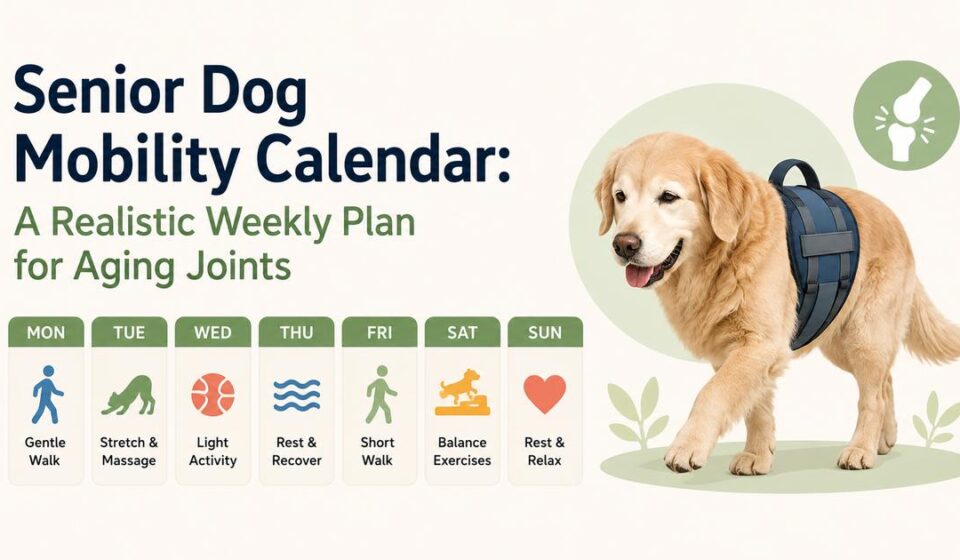
Our old lab used to fly down the stairs every single morning, full sprint, practically airborne by the third step, and then one day, seemingly overnight though obviously it wasn’t really overnight, she just stopped. Stood at the top, looked down, took the stairs one at a time like she was doing careful math in her head with every single step. That transition from sprinting to careful is basically the story of every aging dog eventually, and it happens gradually enough that a lot of owners don’t fully register it until it’s already fairly advanced, the way we didn’t until a friend visiting the house actually asked, genuinely concerned, if she’d gotten hurt somehow. She hadn’t.
Why Senior Dogs Need an Actual Structured Approach
Aging joints benefit hugely from consistency, and inconsistent activity- long stretches of complete rest suddenly followed by an intense weekend hike because the weather’s finally nice- tends to aggravate joint issues considerably more than a steady, moderate routine ever would on its own. This pattern is genuinely common: a busy week with minimal activity followed by an overly ambitious weekend trying to make up for it, and it’s one of the more avoidable contributors to joint pain flare-ups in older dogs specifically.
A calendar based approach helps because it builds real consistency by design rather than leaving activity level to whatever energy or free time happens to exist on any given day. It also creates a natural structure for noticing changes over time, since a fixed, predictable routine makes any real deviation from baseline far more obvious and easier to catch early.
Monday: Gentle Movement to Start the Week
Starting the week with lower intensity, shorter duration movement rather than an ambitious long walk sets a good tone and avoids overloading joints right after what’s often a more sedentary weekend for a lot of households, owner included.
A shorter walk, fifteen to twenty minutes depending on the individual dog’s current condition and typical baseline, at a comfortable pace that lets the dog set the actual speed rather than being pulled along faster than feels genuinely comfortable, works well here. Watching for any obvious stiffness at the start of the walk that eases up as the dog warms up is normal and expected. Stiffness that doesn’t ease at all, or that seems to actually worsen partway through, is worth genuinely noting and tracking over the following days.
Tuesday: Rest With Optional Light Enrichment
A full rest day, or close to it, matters just as much as active days do in any real mobility plan, and it’s honestly the day most owners tend to skip over entirely without much thought, feeling like every day needs some form of dedicated exercise to actually count as good care.
Light mental enrichment, puzzle feeders, gentle sniffing walks around the yard with zero real distance pressure at all, provides stimulation without demanding much from joints specifically. This kind of day allows genuine recovery time, particularly important for dogs already managing some diagnosed level of arthritis or general joint discomfort.
Wednesday: Swimming or Water Based Movement if Available
Water based exercise is genuinely one of the best options for senior dogs with joint issues, since buoyancy in water reduces impact on joints considerably while still allowing real, meaningful muscle engagement and cardiovascular benefit.
For dogs with access to a safe pool, a dog specific hydrotherapy facility, or a calm, shallow body of natural water, a supervised swim session provides real exercise benefit with genuinely minimal joint stress compared to basically any land based activity available. Not every dog loves water though, and forcing a genuinely reluctant swimmer defeats the whole actual purpose here, which is comfort alongside real activity, not activity forced through obvious stress and resistance.
For dogs without water access, a slow, flat walk on soft, forgiving ground, grass rather than pavement specifically, serves as a reasonable lower impact alternative on this day of the weekly structure.
Thursday: Strength Focused Gentle Movement
Building and maintaining muscle around aging joints genuinely helps support those joints and can meaningfully reduce pain over time, since the surrounding muscle takes on some of the load that a weakening joint alone can no longer fully handle.
Gentle exercises like slow, controlled sit to stand repetitions, a handful at a time rather than pushing for a high count, or short, very gradual incline walks if the dog’s condition genuinely allows it, help maintain muscle strength around vulnerable joints. This shouldn’t feel like a strenuous workout at all. Just enough purposeful, controlled movement to genuinely engage muscle without any actual joint strain involved.
Working with a vet or a canine physical therapist to identify specific exercises appropriate for a dog’s particular condition and diagnosis matters a real lot here, since generic exercise recommendations don’t always account for a specific dog’s actual limitations, and the wrong exercise applied with good intentions can genuinely do real harm instead of the intended help.
Friday: Shorter Walk With Real Focus on Comfort
Similar structure to Monday, shorter and gentler, acknowledging that the accumulated activity across the week can add up by Friday even in a genuinely well designed, carefully paced plan.
Paying real attention to how the dog’s moving compared to earlier in the week specifically. More stiffness by Friday than was present on Monday might suggest the current week’s overall activity level needs some real adjustment going forward, either lighter days built in or more built in rest between the more active days on the calendar.
Saturday: The Bigger Outing, Done Thoughtfully
Weekends often allow more time for a longer outing, and that’s genuinely fine, even good, as long as it’s approached thoughtfully rather than treated as some kind of dramatic, sudden step up from the rest of the week’s much more moderate pace.
A somewhat longer walk or a new, interesting environment to genuinely enjoy, still at a comfortable pace with real breaks built in as needed rather than pushed through, provides real enrichment without overdoing it. Bringing water along, and watching closely for real signs of fatigue rather than just pushing straight through to some predetermined distance or time goal, matters more on this particular day than any other day of the week, given it’s typically the most demanding one on the whole calendar.
Sunday: Rest and Recovery Before the Cycle Repeats
Closing the week with genuine rest allows real recovery before Monday’s routine begins again, and this rhythm, active and rest days genuinely balanced rather than every day looking roughly the same regardless of what came before, tends to support joint health considerably better than either constant activity or, at the other extreme, complete overall inactivity ever could on their own.
Joint Support Beyond Just the Exercise Calendar
Diet plays a real role in joint health, and maintaining an appropriate weight specifically matters enormously, since excess weight puts direct, measurable additional stress on joints that are already working harder than they used to as a dog ages. A vet can help identify whether weight management specifically should be part of an aging dog’s overall care plan going forward.
Joint supplements, glucosamine and chondroitin being the most commonly recommended and researched, can genuinely help some dogs, though real effectiveness varies quite a bit by individual and the research overall is honestly a bit mixed depending on which specific studies you look at closely. Worth discussing directly with a vet rather than just picking something off a shelf based purely on marketing claims that sound convincing.
Orthopedic bedding, providing genuine joint support during rest specifically, and reducing the discomfort of lying on hard flooring for extended periods throughout the day, matters more than a lot of owners initially assume before actually trying it and seeing the real difference.
Home Modifications That Genuinely Help
Ramps or stairs for getting on and off furniture, or into a car, reduce joint strain from repeated jumping, which adds up considerably over time even for a dog that seems perfectly capable of it in any single individual moment you happen to observe.
Non slip flooring, or simple rugs and runners placed over slippery hardwood or tile, prevents the kind of slipping that can genuinely injure already vulnerable joints, and it’s a real common issue in homes with a lot of hard flooring and an aging dog whose grip and general stability aren’t quite what they used to be even a couple years earlier.
Recognizing When the Calendar Needs Real Adjustment
A mobility calendar isn’t some fixed, unchanging plan meant to stay exactly the same indefinitely. Regular reassessment, watching for changes in stiffness, willingness to move, obvious signs of pain like limping or reluctance around stairs, helps catch the moment when a plan needs real adjusting rather than continuing on with something that’s quietly stopped actually working as well as it once did.
Any sudden, significant change in mobility deserves an actual vet visit rather than just adjusting the home calendar alone and hoping it resolves on its own, since sudden changes specifically can indicate something beyond typical, expected age related joint wear that genuinely needs real professional evaluation and attention.
Final Thoughts
A senior dog mobility calendar isn’t about somehow fighting the reality of aging, which isn’t really possible for any of us in the end. It’s about building a real, thoughtful structure that supports comfort and genuine quality of life as joints naturally change over time, rather than either overdoing it out of good intentions or under doing it out of well meaning caution that ends up limiting a dog more than it actually needs to. Our old lab still takes the stairs one at a time these days, and that’s genuinely fine. The actual goal was never getting her to sprint again. It was making sure those careful, one at a time steps stay as comfortable as we can realistically make them for as long as we possibly can.



[…] cat started wheezing a little every time I lit a candle, and it took me embarrassingly long to connect the two. I’d light one in the evening, she’d curl up near the couch, […]
[…] friend of mine had a horse spike a fever on a Tuesday. By Thursday, the whole barn was on lockdown, nobody in, nobody out, and everyone standing around the wash rack talking in that low, worried […]