
We brought our puppy home on a Friday, and by Sunday morning she’d had diarrhea three separate times, and I genuinely panicked, called the emergency vet line convinced something was seriously wrong. The vet tech on the phone was kind about it but also, understandably, had clearly explained this exact scenario a hundred times before to a hundred other panicked new puppy owners just like me. Puppy digestive systems are genuinely sensitive, and a lot of the common early problems come down to a handful of predictable, preventable mistakes rather than anything actually medically serious.
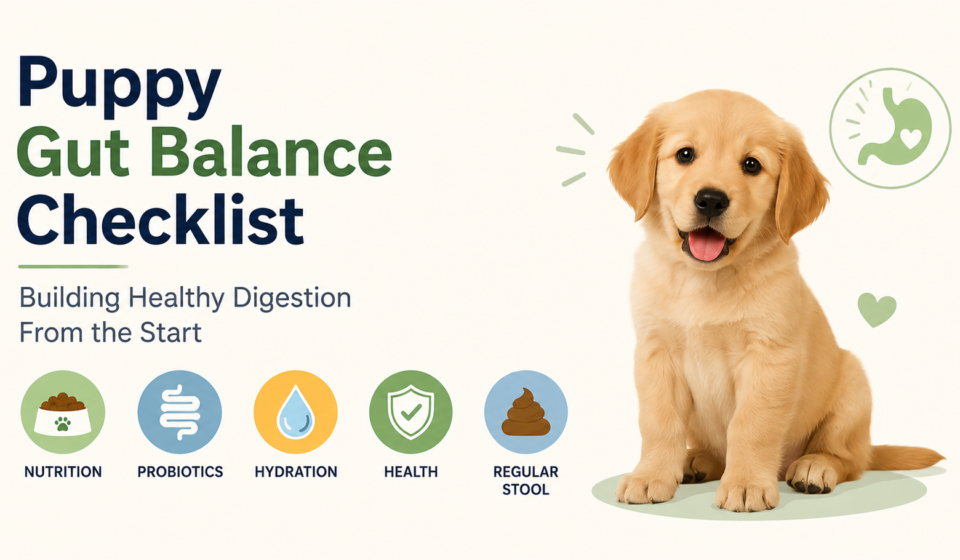
This is a real checklist for building solid gut health early, based on what actually causes most of the common puppy digestive issues and what genuinely helps prevent them before they start.
Why Puppy Gut Health Deserves Real Early Attention
A puppy’s digestive system and gut microbiome are still developing for months after birth, and that early period shapes digestive resilience well into adulthood in ways that are honestly still being actively studied by veterinary researchers. Unlike an adult dog with an established, stable gut microbiome that can handle occasional dietary changes without much drama, a puppy’s system is genuinely more fragile and reacts strongly to things an adult dog might barely notice at all.
This sensitivity isn’t a flaw needing to be fixed exactly. It’s just the normal, expected state of a developing system, and understanding that upfront helps a lot with not panicking, like I did that first weekend, every single time something looks a little off in the litter box department.
Food Transitions, Done Slowly and Deliberately
Sudden food changes are probably the single most common cause of puppy digestive upset, and it’s an easy mistake to make since a lot of new owners simply switch straight to whatever food they’d already planned to feed, on day one, without any real transition period built in at all.
Starting at roughly seventy five percent old food and twenty five percent new, then shifting the ratio gradually across the following week, tends to work well for most puppies without causing much disruption at all.
Asking the breeder or shelter specifically what food the puppy was already eating before coming home, and bringing some of that exact food along for the transition period, prevents a lot of the kind of chaos we went through that first weekend, when we’d switched cold turkey on day one without really thinking it through at all.
Probiotics, Which Genuinely Help but Aren’t Magic
Puppy-specific probiotics can support a developing gut microbiome, particularly during stressful transitions like a new home, a food switch, or after a course of antibiotics for something unrelated. Not every puppy needs probiotics as a permanent daily supplement forever, but they’re genuinely useful during specific higher-risk windows like the first couple of weeks in a new home.
Worth choosing a product formulated specifically for puppies rather than a generic one made for adult dogs, since the specific bacterial strains that actually help can differ somewhat by age and by what the gut’s currently dealing with developmentally
Treats and Table Scraps, the Sneaky Culprit
New puppy owners, understandably excited about a new dog in the house, often give more treats than they realize during the first few weeks, training treats especially, plus whatever well meaning family members sneak the puppy on the side without necessarily mentioning it.
Treats should stay a genuinely small percentage of total daily calories, generally cited as under ten percent, and rich, fatty, or unfamiliar treats specifically can trigger digestive upset fast in a system that’s still developing and adjusting. Human food, even small amounts that seem harmless, introduces ingredients a puppy’s gut hasn’t adapted to at all, and something as simple as a bit of fatty meat trimmed off dinner can trigger a genuinely rough night for both puppy and owner.
Hydration and Its Real Connection to Digestion
Proper hydration supports healthy digestion directly, and puppies, being small and active with a lot of energy to burn, can dehydrate faster than people generally expect, especially during warmer weather or after a lot of vigorous play.
Fresh water always available, changed at least daily, and monitoring actual water intake, particularly during any period of loose stool or vomiting when fluid loss happens faster than usual, matters more than people often think about upfront.
Recognizing Normal Puppy Digestion vs Genuine Warning Signs
Some digestive variation is genuinely normal in puppies and doesn’t necessarily need alarm or an emergency vet call every single time something looks slightly different than usual. Stool consistency naturally varies a bit with diet, activity level, and stress, and an occasional slightly soft stool, especially after a food transition or a stressful day, usually isn’t cause for real concern on its own.
Warning signs actually worth real attention include persistent diarrhea lasting more than a day or two, blood in stool, repeated vomiting, visible lethargy alongside digestive symptoms, or a puppy that stops eating and drinking entirely. These combinations suggest something beyond normal adjustment and genuinely warrant a vet visit rather than just waiting it out at home hoping it resolves naturally.
The distinction between normal puppy digestive variation and an actual problem worth real concern often comes down to duration and combination of symptoms, rather than any single isolated incident on its own. My own puppy’s rough first weekend resolved on its own within about two days once the food transition slowed down and things settled, which, in hindsight, was well within that normal adjustment range, even though it felt genuinely alarming to me at the time.
Feeding Schedule and Portion Consistency
Irregular feeding times and inconsistent portion sizes can disrupt digestive rhythm in a developing system that genuinely benefits from real predictability during this early period. A consistent schedule, feeding roughly the same times each day, and measured, consistent portions rather than free feeding or wildly varying amounts meal to meal, supports more stable digestion overall.
Puppies generally need more frequent, smaller meals than adult dogs, often three to four times daily depending on age and breed size specifically, since their smaller stomachs and higher energy needs make this frequency genuinely necessary rather than optional. Following breed and age specific feeding guidelines, adjusted with actual vet input where genuinely needed, works better than a generic one size fits all schedule applied to every puppy regardless of size.
Environmental Stress and Its Real Effect on Digestion
Stress affects digestion in dogs just as it can in people, and a new puppy dealing with a brand new environment, new people, new sounds and smells, is under genuine, real stress even when everything around them looks calm and happy from the outside.
Minimizing unnecessary additional stressors during the first couple weeks, like excessive visitors, loud environments, or too many new experiences crammed in all at once, supports digestive stability alongside everything else covered in this checklist. A calm, predictable environment during this early adjustment period genuinely helps the gut settle, not just the puppy’s overall behavior and general mood.
When to Loop In a Vet Proactively
Beyond just responding to warning signs after they appear, a proactive vet visit specifically covering diet and digestive health during the first puppy checkup gives a real chance to catch anything worth addressing early, before it turns into a bigger, harder to manage problem down the road.
Discussing the specific food plan, any known sensitivities the breed might be predisposed to, and a genuine game plan for handling minor digestive upsets at home versus what actually warrants a call or a visit, sets a much clearer, more confident foundation than figuring it all out reactively later, mid crisis, the way we ended up doing that first weekend.
Final Thoughts
A puppy gut balance checklist isn’t about achieving some kind of perfect digestive system from day one, since a bit of adjustment and occasional hiccups are genuinely normal and expected during this whole early developmental period regardless of how carefully everything’s handled. It’s about setting up the conditions, slow food transitions, appropriate probiotics, consistent feeding, proper hydration, a reasonably calm environment, that make disruption less likely and easier to handle calmly on the occasions it does happen anyway. Our puppy’s digestion settled within days once we actually slowed down and did the transition properly, and looking back, most of that stressful first weekend was honestly avoidable if we’d just known what we know now.


[…] old lab used to fly down the stairs every single morning, full sprint, practically airborne by the third step, and then one day, seemingly overnight though […]
[…] spend the overwhelming majority of their lives close to the ground, at floor level where dust, dander, and heavier […]