
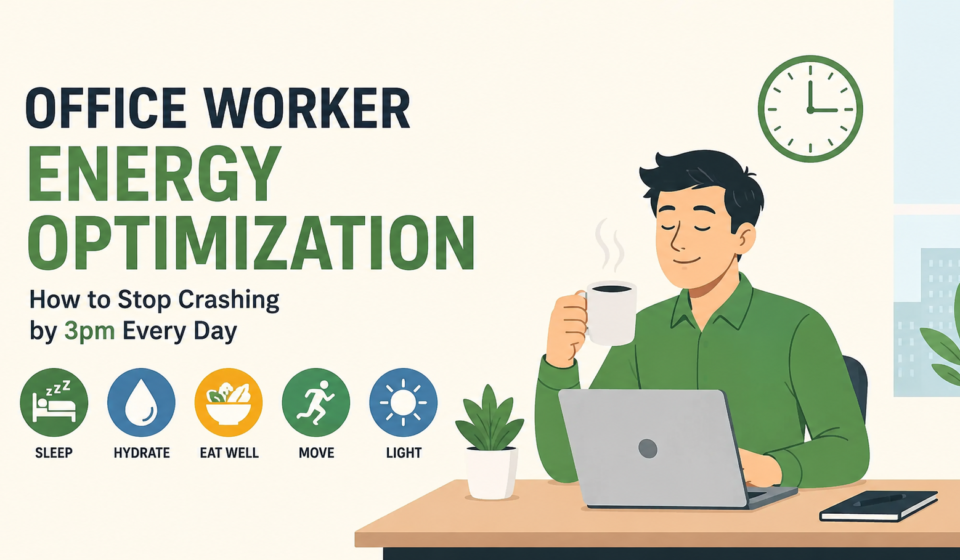
There was a stretch a few years back where I genuinely scheduled a nap into my calendar at 2:45 pm every single day, blocked it off as “focus time” so nobody would book over it, and then just sat there with my head on the desk for twenty minutes because I physically couldn’t keep my eyes open otherwise. No one ever asked what “focus time” actually meant, which says something too. That crash, hitting at almost the same time every day like clockwork, isn’t some personal failing or a sign of laziness, even though it can feel that way when you’re the one fighting to stay awake through a 3 pm meeting. It’s usually a predictable result of how the whole workday gets structured, and it’s fixable with a handful of specific, boring changes rather than sheer willpower.
This is a breakdown of what actually drains office worker energy through the day, and the specific adjustments that make a real, measurable difference rather than another vague “get more sleep” tip that doesn’t actually help anyone at 2:45 in the afternoon.
Why the Afternoon Crash Happens to Almost Everyone
There’s a real, well-documented biological dip in alertness that happens for most people in the early-to-mid afternoon, tied to natural circadian rhythm rather than purely to how much sleep you got the night before. However, sleep obviously plays a role too. This dip is normal and happens to almost everyone to some degree.
What makes it worse, and what turns a mild dip into a full head-on-the-desk crash, is usually a stack of other factors piling on top of that natural low point. A heavy lunch. Zero natural light exposure all morning. Hours of sitting perfectly still. Dehydration nobody notices because coffee doesn’t actually count toward it the way people assume. Stack enough of these on top of the natural circadian dip and you get the kind of crash that no amount of caffeine seems to fully touch.
Light Exposure, More Important Than Most People Realize
Natural light exposure, especially in the morning, plays a bigger role in daytime energy than most people give it credit for, and a lot of office workers get almost none of it during a typical workday spent entirely under fluorescent lighting.
Getting outside, even for just ten minutes in the morning before or right after starting work, helps set circadian rhythm for the whole day in a way that indoor lighting genuinely can’t replicate no matter how bright the office happens to be. For anyone working in a windowless office or a space with poor natural light, a bright light lamp at the desk, positioned correctly, can help partially compensate, though it’s a real compromise compared to actual sunlight and shouldn’t be treated as a full equivalent.
The afternoon slump, specifically, often gets worse in spaces with dim, flat lighting that doesn’t change throughout the day at all. Some offices now use lighting that shifts color temperature to mimic natural daylight patterns, which sounds like a small thing but genuinely helps some people notice a real difference in how alert they feel by mid-afternoon.
Movement, Which Fixes More Than People Expect
Sitting for hours straight is one of the most reliable ways to tank energy levels, and it’s also one of the easiest problems to fix, at least in theory, because the solution doesn’t require anything more complicated than actually standing up periodically throughout the day.
Short movement breaks, a five-minute walk, even just standing and stretching at the desk for a minute, genuinely improve circulation and alertness noticeably more than another cup of coffee does for most people, even though coffee feels like the more obvious fix in the moment. Building in movement specifically before the predictable energy dip, rather than only after already crashing, tends to work better, since it’s a lot easier to prevent a crash than to claw your way back out of one already in progress.
Standing desks help some people meaningfully, though they’re not universally beneficial and definitely aren’t magic on their own. Alternating between sitting and standing throughout the day tends to matter more than which position you default to for the bulk of the time.
A short walk specifically during lunch, rather than eating at the desk while scrolling something on a screen, combines a few benefits at once, movement, a real break from screens, and often some natural light exposure too if it’s outdoors, all stacking together in a way that a desk lunch just can’t replicate no matter how the food itself compares nutritionally.
Nutrition Choices That Actually Prevent the Crash
Lunch choices affect afternoon energy more directly than most people connect in the moment while they’re actually choosing what to eat. Heavy meals loaded with refined carbs cause a real blood sugar spike followed by an equally real crash, which lines up almost exactly with the natural circadian dip and makes the whole afternoon slump noticeably worse than it would otherwise be on its own.
Meals with more protein and fiber, less reliance on refined carbohydrates alone, tend to provide steadier energy through the afternoon without the sharp spike-and-crash pattern. Doesn’t mean eliminating carbs entirely, that’s not really the point here, just balancing them with protein and fiber rather than eating a meal that’s essentially all bread or all pasta and nothing else.
Hydration deserves more attention than it usually gets in these conversations. Mild dehydration causes real fatigue and difficulty concentrating, and most people underestimate how much of their daily fluid intake actually comes from coffee specifically, which has a mild diuretic effect and doesn’t hydrate the same way water does despite being liquid.
Caffeine timing matters more than caffeine quantity for a lot of people, somewhat counterintuitively. A coffee right as the natural dip begins can help in the short term, but caffeine late in the afternoon frequently disrupts sleep that night, which then makes the next day’s energy dip worse, creating a genuinely frustrating cycle that’s hard to break out of once it gets going.
Designing the Workday Around Energy, Not Against It
Scheduling demanding, high-focus tasks during natural high-energy periods, and pushing lower-focus routine work into the natural dip periods instead, works with the body’s actual rhythm rather than fighting it head-on with sheer willpower every single day.
For a lot of people, mornings tend to have more natural focus capacity, making that the better window for genuinely demanding work, while the early afternoon dip suits routine tasks, email, or administrative work that doesn’t require peak mental sharpness to complete well. This obviously varies by individual chronotype, and paying attention to your own actual energy patterns over a couple of weeks, rather than just assuming you match some generic schedule everyone else supposedly follows, gives a much more accurate personal picture to actually plan around.
Meeting Scheduling and the Energy Cost Nobody Talks About
Back-to-back meetings with zero buffer time between them are a huge drain that rarely gets acknowledged directly, and the exhaustion from a day like that often gets misattributed entirely to workload when it’s really more about the format itself.
Building small buffers between meetings, even just five minutes, gives space to actually reset mentally, use the bathroom, get water, before diving into the next conversation cold. Scheduling meetings earlier in the day when possible, and protecting the afternoon energy dip specifically for lower-stakes work rather than important decisions, tends to produce noticeably better meeting quality overall, since nobody’s making important calls while running on fumes at 3pm.
Sleep, Which Underlies Basically Everything Else on This List
None of the daytime adjustments here fully compensate for genuinely poor sleep, and it’s worth being honest about that rather than pretending a good lunch alone can fix what a bad night’s sleep actually caused.
Consistent sleep and wake times, even on weekends, help regulate circadian rhythm considerably more than most people assume weekend sleep-ins actually do. A wildly inconsistent sleep schedule, very different bedtimes and wake times between weekdays and weekends specifically, creates something close to a mini jet lag every single Monday, which then makes the whole first half of the work week noticeably harder than it needs to be.
Building a Realistic Routine, Not a Perfect One
Trying to implement every single suggestion here simultaneously usually backfires and falls apart within a week or two out of sheer overwhelm. Picking one or two changes that address the most obvious personal gap, maybe it’s genuinely zero movement all day, maybe it’s a caffeine habit that’s clearly disrupting sleep, maybe it’s a lunch that’s basically all refined carbs, and building those in consistently first tends to work far better than trying to overhaul the whole day at once and burning out on the effort itself.
Final Thoughts
Office worker energy optimization isn’t really about pushing through fatigue with more willpower or more caffeine stacked on top of more caffeine. It’s about noticing where the actual energy drains are hiding in a typical day, light, movement, nutrition, sleep, the sheer structure of the schedule itself, and making a handful of specific, sustainable adjustments rather than fighting the same predictable 3pm crash with sheer stubbornness every single afternoon. The version of me blocking off fake “focus time” just to nap at his desk really could’ve used about four of these changes instead of one more coffee that, if I’m honest, never actually worked anyway.


[…] found a mat behind our dog’s ear the size of a golf ball once, genuinely startled by how it had gotten that bad without me noticing at all during the week, hidden right […]
[…] gets attention constantly. Portion sizes, ingredient quality, feeding schedules– all of it is discussed, researched, and worried over regularly by most pet […]