
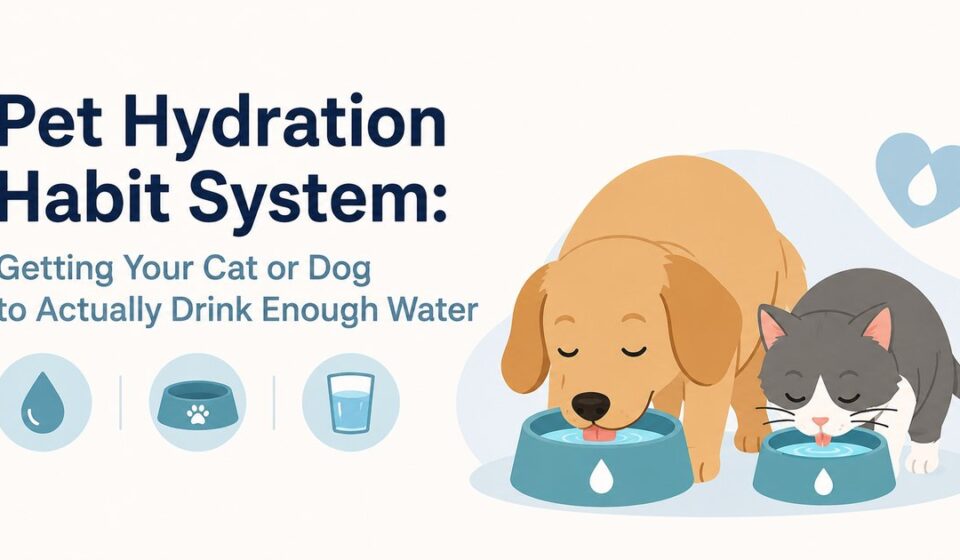

Our vet asked, during a totally routine checkup, how much water our cat actually drinks in a day, and I genuinely had no real answer beyond a vague shrug and “some, I guess, the bowl’s there.” Turns out I’d never once actually watched her drink, not properly, not with any real attention, in the two years we’d had her by that point. Cats especially are notoriously bad at drinking enough water on their own, a leftover trait from their desert-dwelling ancestors who got most of their moisture from prey rather than standing water, and a lot of owners, myself very much included until that appointment, just assume a full bowl sitting there means hydration’s fully handled and nothing more needs thinking about.
This is a real, practical system for actually improving pet hydration, covering both cats and dogs specifically since their needs and typical drinking habits genuinely differ quite a bit, along with the warning signs actually worth watching for if something’s genuinely off.
Why Hydration Gets Overlooked So Often
Food gets attention constantly. Portion sizes, ingredient quality, feeding schedules– all of it is discussed, researched, and worried over regularly by most pet owners.
This gap matters more than most owners realize going in. Chronic mild dehydration contributes to a real range of health issues over time, kidney problems especially in cats, urinary tract issues in both cats and dogs, and general reduced energy and overall wellbeing that’s genuinely easy to miss since it develops so gradually, day by day, that no single day ever looks obviously different from the one before it.
Cats and Water, a Genuinely Different Challenge
Cats evolved from desert-dwelling ancestors, and their bodies’ natural mechanism for actually recognizing thirst is genuinely weaker than a dog’s or a human’s. Wild cats historically got most of their water directly from prey rather than from drinking standing water separately, and this evolutionary history shows up clearly in a lot of modern house cats simply not drinking enough on their own initiative, even when water’s sitting right there, easily accessible.
This makes wet food a genuinely valuable hydration tool for cats specifically, not just a food preference choice made purely for taste or texture reasons. Wet food contains significantly more moisture than dry kibble, often around seventy-five to eighty percent water content compared to maybe ten percent in most dry food, and incorporating even some wet food into a cat’s regular diet meaningfully boosts overall daily water intake without requiring the cat to actually drink more from a bowl at all.
Dogs and Water, Generally Easier but Not Automatic
Dogs generally have a more reliable, straightforward thirst response than cats do, though individual dogs still vary quite a bit, and some genuinely need real encouragement, particularly older dogs, dogs on certain medications, or dogs recovering from illness or a recent procedure of some kind.
Activity level affects water needs considerably, and owners of genuinely active dogs specifically need to watch intake more carefully during and immediately after exercise, especially in hot weather when fluid loss through panting increases substantially and can add up fast if not properly offset with real water intake.
Bowl Placement, Which Matters More Than People Assume
Where a water bowl sits in the house genuinely affects how much a pet actually drinks from it day to day. A bowl placed right next to food, or right next to a litter box for cats specifically, gets avoided more than owners typically expect, since some cats genuinely dislike the association between food and water sitting close together, and most cats actively avoid drinking near a litter box for fairly obvious hygiene reasons of their own.
Bowl material matters too, somewhat surprisingly. Some cats show a genuine preference against plastic bowls specifically, possibly due to a lingering plastic smell or taste that’s imperceptible to people but genuinely noticeable to a cat’s far more sensitive nose.
Water Fountains, Genuinely Worth Considering for Cats
Running water appeals to a lot of cats, specifically far more than still water sitting in a bowl does, again likely tied back to that same instinctive preference from their wild ancestors, since running water in nature signals freshness in a way that still, standing water simply doesn’t carry the same signal for.
A pet water fountain, providing a constant, gentle flow, can meaningfully increase water intake for cats that are genuinely reluctant to drink from a standard still bowl.
Not every cat takes to a fountain immediately though, and introducing one alongside a regular bowl initially, rather than eliminating the familiar bowl entirely and immediately, gives a cat real time to actually discover and get comfortable with the new option at their own pace.
Wet Food and Broth Additions
Beyond simply choosing wet over dry food generally, adding a small amount of unsalted, pet safe broth to a bowl of food, or even to a bowl of water itself as flavored water, can genuinely boost hydration for pets that are otherwise particularly resistant to drinking enough on their own initiative.
This works especially well for cats specifically, and for senior pets of either species that might have reduced overall interest in drinking as they age, similar to the pattern often seen with reduced appetite in older pets generally. Worth checking ingredients carefully though, since some broths contain onion or garlic, both genuinely toxic to pets, hiding in ingredient lists that aren’t always obvious or clearly labeled at first glance.
Ice Cubes and Other Simple Tricks
Ice cubes added to water can encourage some pets to drink more, partly through genuine novelty and partly because some pets specifically enjoy playing with the ice itself before it fully melts, which incidentally leads to more actual water consumption along the way as a side effect of the play itself.
For dogs specifically, a frozen treat made mostly of pet safe broth or a small amount of actual fruit puree can serve as both genuine enrichment and a real hydration boost, especially useful during hot summer months when overall fluid needs increase considerably beyond the usual baseline.
Monitoring Actual Intake Without Becoming Obsessive
Getting a rough sense of how much a pet normally drinks, without needing to measure obsessively down to the exact milliliter every single day, helps establish a genuine baseline that makes any real, meaningful change easier to notice going forward.
For cats specifically, given how naturally low their thirst drive already tends to be, even a rough general awareness matters.
Warning Signs of Dehydration Worth Actually Knowing
Lethargy, visibly sunken eyes, dry or noticeably sticky gums, and reduced skin elasticity, tested gently by lifting a small fold of skin at the back of the neck and watching how quickly it actually settles back down into place, are all classic, well established signs of dehydration worth genuinely knowing and recognizing.
Any of these signs combined with additional obvious symptoms, vomiting, diarrhea, or a noticeable general lack of energy, warrant a real vet visit rather than attempting to just manage the situation entirely at home without any professional input at all.
Building This Into an Actual Daily System
A genuine hydration habit doesn’t require elaborate daily effort once it’s actually set up properly and established as routine. Fresh water daily, multiple accessible locations throughout the house, some wet food incorporated into a cat’s diet, specifically if they’re currently eating purely dry food, and occasional real attention to actual intake patterns cover most of what genuinely matters here without requiring constant, ongoing daily vigilance or obsessive tracking of every single detail.
The real system is less about any single dramatic change and much more about removing the small, quiet barriers that keep a pet from drinking as much as they naturally would if given genuinely appealing, accessible options in the first place.
Final Thoughts
A pet hydration habit system isn’t about anxiously measuring every milliliter of water a pet consumes each day. It’s about noticing the small, easy to overlook factors, bowl placement, water freshness, food moisture content, that quietly affect how much a cat or dog actually drinks without most owners, myself included for two full years, ever really thinking carefully about it at all. Our cat drinks noticeably more now, with a proper fountain and more wet food regularly worked into her diet, and it took embarrassingly little real effort once we actually understood what specifically wasn’t working about the setup we’d had before.




[…] brought our puppy home on a Friday, and by Sunday morning she’d had diarrhea three separate times, and I genuinely panicked, called the emergency vet line convinced something […]
[…] litter box is probably the single biggest air quality factor most owners never really think through carefully. Ammonia from urine builds up fast in an enclosed space, and a […]
[…] everyone’s starting from a blank lot. Older barns, especially ones converted from other farm uses, often weren’t built with horses’ airflow needs in mind at all. A few changes tend to […]