
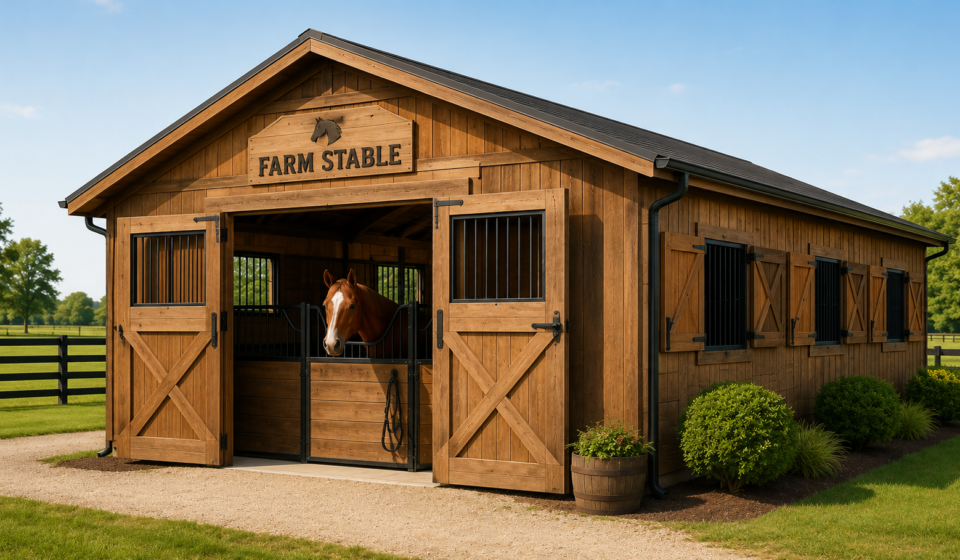
Walked into a barn once, years ago, and the smell hit before anything else did. Ammonia, thick, the kind that stings your eyes a little. Nice horses in there too, well fed, well groomed. Just badly ventilated. That barn taught me more about stable design than any article ever did, honestly, because you could just feel how wrong the air was.
A stable’s not just four walls and a roof, whatever it might look like from the driveway. Layout, airflow, daily upkeep, all of it directly affects horse health. Respiratory issues, injury risk, even how calm or anxious horses seem day to day, it traces back to this stuff more than people expect.
Why the Design Matters More Than It Looks Like It Should
Easy to think of a stable as simple. Somewhere horses sleep, eat, and wait between turnout and rides. But horses actually spend a lot of time in there, especially in bad weather or when recovering from something, which means the air quality, the space to move, the footing, all of it compounds over time in ways that aren’t obvious day to day.
And here’s the finding that keeps showing up in equine facility research, over and over: inadequate ventilation is the single most common mistake in how modern horse facilities get built and managed. Not a minor detail. Poor air quality contributes directly to chronic respiratory problems that build up slowly, quietly, until suddenly they’re not quiet anymore.
Ventilation Comes First, Basically Always
How It Gets Overlooked So Often
A lot of barns end up under-ventilated because they were built using residential habits, not equine-specific ones. Owners want it cozy for themselves during winter chores, understandably, and end up sealing things that really need consistent airflow. Result: that ammonia smell instead of clean hay and horse. That smell’s basically a warning sign the air isn’t moving right.
What Actually Works
Not about propping doors open; that alone barely moves air through a building. Real ventilation is a combination of things working together. Eave and ridge openings letting warm, moist air escape upward while drawing fresh air in lower down. High ceilings, ten feet minimum in enclosed barns ideally, giving that warm ammonia-heavy air room to rise well away from where a horse is actually breathing. Breathable wall materials, or at least gaps, allowing air to move around the perimeter instead of sealing it shut. Windows, grilled stall fronts instead of solid walls, encouraging cross-ventilation between stalls and the aisle.
And this part surprises people, dust and ammonia concentrate worst in the lower few feet of a stall, right where a horse’s face ends up when it lies down. So floor level airflow matters just as much as anything happening up near the ceiling, arguably more.
Fixing an Existing Barn Without Rebuilding It
Not everyone’s starting from a blank lot. Older barns, especially ones converted from other farm uses, often weren’t built with horses’ airflow needs in mind at all. A few changes tend to help without a full teardown. Swap solid stall fronts for grilled or barred doors. Install Dutch doors on any stall backing onto an exterior wall, top half open even when the bottom needs closing. Add roof vents, ridge ventilators, cupolas, anything giving warm air an escape route up and out. Stall fans for still days, especially in summer. And resist the urge to seal everything up tight in winter; trapping body heat also traps moisture and ammonia, and that combination usually causes more respiratory trouble than the cold ever would.
Getting Stall Sizes Right
Bigger horses need bigger stalls, obviously, but the actual numbers matter. Horses over roughly sixteen hands generally need something in the fourteen-by-fourteen-foot range or larger. Foaling mares need considerably more, sixteen by twenty feet or so, giving both mare and foal room to move without feeling cramped or trapped.
Partition walls between stalls, usually built around seven feet tall. Tall enough that horses can’t reach over and bite or fight with a neighbor, short enough that they can still see each other, which matters, a herd animal isolated completely tends to get anxious. Front panels often mix a solid lower section with a grilled top, and the grill spacing needs to stay under about four inches, otherwise a hoof can get caught if a horse kicks out. Small detail, big consequences if it’s missed.
The Boring Stuff That Actually Matters Most
Good design only goes so far without daily upkeep behind it.
Muck stalls every day. Not just adding fresh bedding on top of wet stuff, but actually removing manure and soaked bedding. This one habit alone controls ammonia buildup more than almost any structural feature you could add.
Clean water buckets and troughs regularly, don’t just top them off. Algae and residue build up faster than people expect, and it affects how much a horse actually wants to drink.
Check for hazards routinely, loose nails, splintered wood, sharp edges, anything a horse could catch itself on while rubbing or moving around.
Keep hay and bedding storage clear of airflow paths. Overhead storage blocks ventilation and adds fire risk that’s easy to forget about until it’s suddenly not theoretical anymore.
Keep grooming gear horse-specific where you can, especially during any illness in the barn. Shared brushes and buckets are a classic way infections spread from one horse to the next.
Safety Details Worth the Extra Cost
A handful of structural choices reduce injury risk in a real way. Sturdy, well galvanized steel or hardwood that resists bending or splintering under a leaning or kicking horse. Corrosion resistant hardware, brass or stainless, since ammonia heavy barns eat through regular metal fast. Rounded or padded corners in busy traffic areas. And good lighting throughout, for the horses’ comfort sure, but also for whoever’s doing chores at five in the morning or nine at night.
New Arrivals Need Their Own Space
Any well run farm stable needs a plan for horses coming from outside. New boarder, horse back from a show, fresh purchase, whatever the situation. Setting aside a separate area, ideally with its own airflow away from the main barn, for a couple weeks before that horse joins the general population, is genuinely one of the most effective things an owner can do to limit how far something contagious spreads if that new horse happens to be carrying it.
What a Good Stable Actually Comes Down To
Not fancy architecture. Not expensive finishes. Airflow, space, cleanliness, safety, working together consistently, day after day, not just when someone remembers. New builds get the advantage of designing ventilation and stall sizing correctly from the start, since fixing it later costs a lot more and disrupts everything in the process. Existing barns can still improve meaningfully, though: better doors, added roof ventilation, consistent daily habits. Either way, the payoff’s the same. Fewer respiratory issues, fewer injuries, horses that are just more comfortable in the place they spend most of their lives.


[…] on people, way more dramatic than actually dangerous. Took the vet about four minutes to say “he’ll be fine.” That gap, between how bad something looks and how bad it actually is, that’s […]
[…] mats are rubber flooring products designed to cover the floors of stalls, trailers, wash bays, and other areas where horses stand or […]