
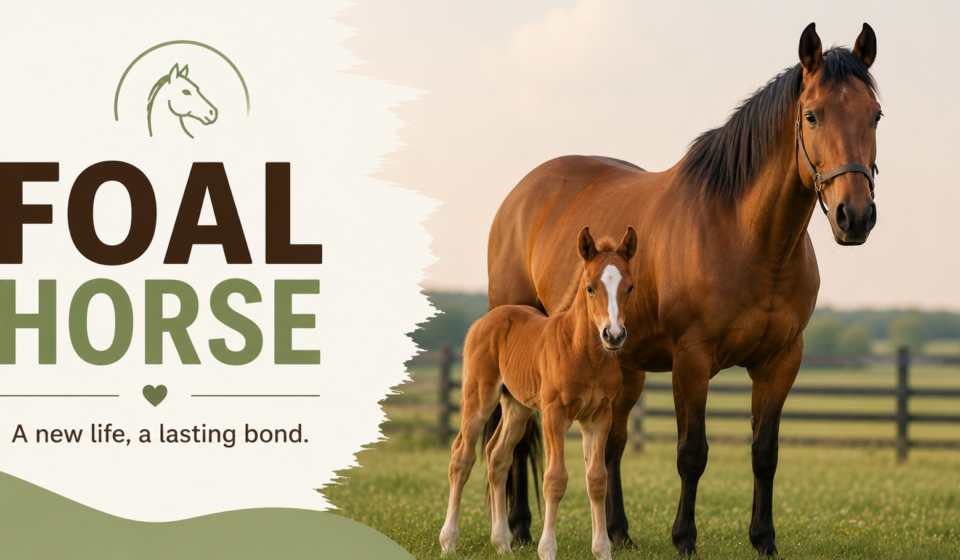

Somebody once told me raising a foal is like watching a time-lapse video except it’s real life and you can’t fast forward or pause it. That stuck with me, honestly, because it’s true. Twelve months, that’s it, and a foal goes from a wobbly, hundred-pound baby to something that looks unmistakably like a horse. Get the basics right in that window, nutrition especially, and you’re setting up soundness for years. Get it wrong, and you’re dealing with the consequences a lot longer than a year.
Birth and Those First Chaotic Days
Foals show up after about eleven months of gestation, give or take. Standing within an hour or two if things go normally, nursing not long after. Birth weight runs somewhere around eight to twelve percent of the mare’s adult weight, so for a typical light riding horse that’s maybe ninety to a hundred fifty pounds, roughly.
Colostrum, that first milk, is non-negotiable in importance. Antibodies, basically the foal’s whole starter immune system, since almost none of that transfers during pregnancy itself. Needs to happen within the first twelve hours to actually get absorbed properly. A lot of owners will have a vet check bloodwork twelve to eighteen hours in, just confirming the antibody transfer actually took.
The Growth Speed Nobody Quite Believes Until They See It
Two to three pounds a day. That’s a healthy foal’s early growth rate, and it’s kind of absurd when you actually watch it happen week to week. Slows eventually, down to around a pound a day by the time the foal’s approaching its first birthday.
By six months, most foals have already hit roughly fifty percent of their eventual adult weight. Height’s even more dramatic, around eighty percent of mature height by that same six month mark. Meaning most of the vertical growing happens shockingly early, even though the horse keeps filling out, muscling up, maturing for several more years after that. Full mature height usually isn’t reached until four or five years old, but the frame, the skeleton itself, that’s mostly built in year one.
This is exactly why nutrition mistakes hit so hard during this window. More on that in a second.
Teeth, Growth Plates, the Physical Markers
Third deciduous incisors come in somewhere between six and nine months. First molars, nine to twelve months typically. Growth plates close at different speeds depending on where they are, hocks and knees stay comparatively fragile and slow to fully close up, which is part of why nobody’s starting a yearling under saddle or pushing it through intense repetitive work.
Feeding a Foal Right
This is probably the single area where owners have the most actual control, and where getting it wrong, either direction, causes real problems.
Early Feeding, Before Weaning
For the first couple of months, milk basically covers everything nutritionally. Foals will often start nibbling solid feed within weeks, though, mostly out of curiosity more than need, and by two to three months many are eating a meaningful amount of formulated feed, especially once the mare’s milk production starts tapering off after that third-month mark.
Creep feeders come into play on a lot of farms, feed stations built so the foal fits but the mare can’t. Keeps nutrition consistent even pre-weaning, particularly useful if a farm weans later than four months.
Rough guideline some feed companies use, about a pound of properly formulated foal feed per month of age, per day. So a three month old, roughly three pounds daily, on top of milk and free choice hay or pasture. That number’s a starting point though, not gospel, breed, growth rate, forage quality all shift it around. Working with a vet or nutritionist to actually dial it in beats guessing from a chart every time.
Weaning, and the Diet Shift After
Most domestic foals get weaned somewhere between four and six months. Interesting contrast, wild horses often don’t wean until nine or eleven months, which says something about how much of that earlier timeline is convenience for owners versus actual biological necessity.
Stressful transition regardless of timing though. Keeping the diet consistent leading into and out of weaning helps. So does weaning in groups where you can manage it, keeping turnout going, allowing some continued contact with the dam during separation if possible. All of it tends to smooth out the disruption to appetite and behavior that weaning otherwise causes. Growth rate slows noticeably after, from that two to two and a half pounds a day down toward roughly a pound a day heading into the twelve month mark.
The Overfeeding Trap
Because growth happens so fast, the skeleton is genuinely sensitive to nutritional swings. Push too much energy-dense feed trying to speed growth along, and you’re flirting with developmental orthopedic issues, physitis, angular limb deformities, that kind of thing. Underfeed, and the foal’s missing the protein, calcium, phosphorus it actually needs to build sound bone and muscle. Steady, balanced growth wins over either extreme, basically always, ideally with regular vet check-ins and an actual forage analysis rather than eyeballing the hay and hoping.
Watching for Trouble
A few things worth checking regularly. Growth rate and body condition: sudden shifts either way usually mean something’s off nutritionally or health-wise. Limb conformation: catching early signs of angular deformities makes them far easier to manage than catching them late. Appetite and energy: a foal going off feed or acting unusually dull needs attention fast. Vaccination and deworming schedule: generally starting around the third week and continuing through the first year on a vet’s recommendation. And general attitude: a foal pulling away from the herd or seeming unusually anxious is worth a closer look, not just a shrug.
Honestly, any noticeable change in a young, fast-growing horse is worth a call rather than a wait-and-see. Problems caught early in a foal are almost always easier to fix than problems caught late.
Socialization Alongside the Physical Stuff
Growth isn’t the whole story. Foals raised with limited contact with other young horses often struggle later with basic herd manners, reading body language, knowing when to back off during play, stuff that seems small until it isn’t. Supervised turnout with other foals, or gentle older horses, helps build that naturally, the way it would happen in a wild herd anyway.
Worth separating colts and fillies too, once they’re heading toward yearling age, just to avoid surprises nobody wants dealing with.
Setting Up a Sound Future
Raising a foal well through year one really comes down to a handful of consistent things. Steady, balanced nutrition instead of chasing rapid growth. Regular monitoring for early trouble signs. A thoughtful, gradual approach to weaning rather than an abrupt one. Enough social time to build a well adjusted young horse. None of it’s complicated in theory. It just takes consistency across twelve months, because so much of a horse’s long term soundness traces straight back to how that first year got handled.



[…] into a barn once, years ago, and the smell hit before anything else did. Ammonia, thick, the kind that stings your eyes a little. Nice horses in […]
[…] treating anything, safety first, for the horse and for you. A horse in pain reacts unpredictably. Even the calm ones. Approach slowly, talk low and steady, and skip the sudden […]
[…] Picking the right mat comes down to a few practical factors: […]