
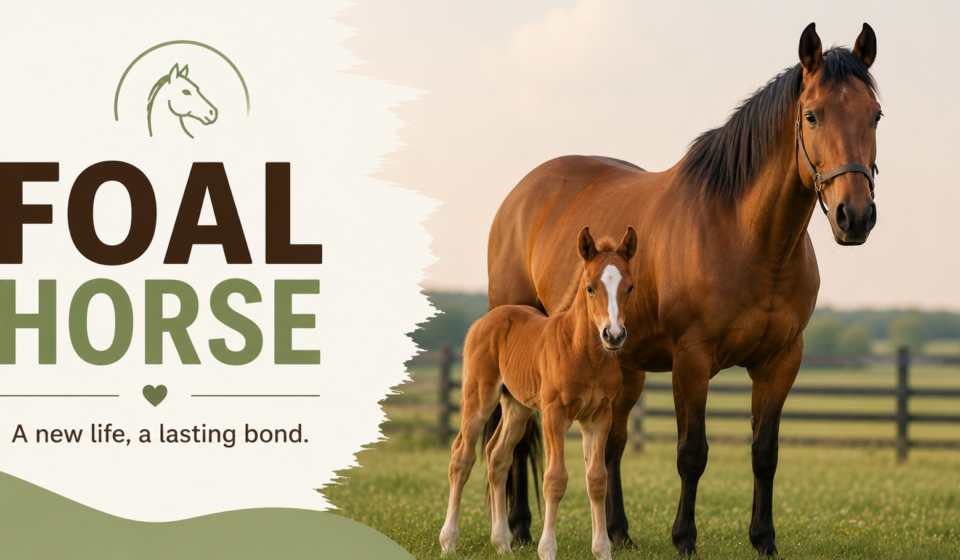
I remember standing at a stall door once, maybe eleven at night, watching a mare lick a foal clean who couldn’t even hold his own head up yet. An hour later, he was standing. Wobbly, legs going every direction, but standing. There’s genuinely nothing else in the horse world quite like watching that first bond form in real time.
Horses are precocial, meaning the babies are born already fairly capable, not like a puppy that needs weeks before its eyes even open. Most healthy foals stand within an hour or two of birth. Nursing follows pretty quickly after that. And the legs, weirdly, are already close to ninety percent of adult length at birth, which is exactly why a newborn foal looks so gangly and stretched out, like someone attached stilts to a small dog.
The First Hours Matter More Than People Realize
That first milk, colostrum, isn’t just food. It’s basically the foal’s starter kit for its immune system, loaded with antibodies, because almost none of that immunity crosses over during pregnancy. Miss that window, roughly the first twelve hours, and the foal’s absorption of those antibodies drops off fast. A lot of breeders will run bloodwork twelve to eighteen hours after birth just to double-check the transfer actually happened. Cheap insurance, basically.
And the mare, during those hours, she’s not messing around. Protective doesn’t even cover it sometimes. She’ll physically put herself between the foal and anything unfamiliar, humans included. Best move as a bystander, honestly, is usually just to give them room. Let it happen. Rushing in to handle the foal too fast tends to backfire more than it helps.
What the Bond Actually Teaches a Foal
It’s not only physical care. Warmth, feeding, protection, sure, but there’s a whole education happening too, mostly through watching. Foals mimic their dams constantly. How she reacts to a loud noise, a strange dog, a new pasture, the foal absorbs all of it. A calm mare tends to raise a settled foal. An anxious, reactive mare, well, some of that tension has a way of rubbing off too, not always, but often enough that experienced breeders pay real attention to temperament, not just physical soundness, when picking broodmares.
About Imprint Training
People bring this up constantly. The idea, popularized decades back, was to handle a foal intensively right after birth- the first hour, first day- to build trust and desensitize it to future stuff like clippers and saddles. Borrowed loosely from imprinting behavior seen in some other species.
Except the research since then has gotten a lot messier than the original pitch suggested. There’s no confirmed, clearly defined imprinting window in horses the way there is in, say, certain birds. And a growing body of behavioral research suggests that repeated, low-key interactions over weeks matter more for long-term temperament than a single intense session at birth. Some specialists have gone further, arguing that overly invasive handling immediately after birth can interfere with mare-foal bonding and add stress for both animals, especially if the timing or intensity is off.
What seems to hold up better in practice, and this isn’t complicated, is letting the bonding happen first, then layering in short, calm, positive handling over the days and weeks that follow. Building comfort gradually. Foals tire fast, so brief sessions beat marathon ones nearly every time.
The Bond Shifts as the Foal Grows
Early on, a foal barely leaves the mare’s side. A few feet, tops, nursing constantly, sticking close for security. By two or three months, that starts changing; the foal wanders farther, nibbles grass, and starts actually interacting with other horses if there’s a herd around.
Then weaning hits, usually somewhere between four and six months in domestic settings, though wild herds often wait until nine or eleven months, which tells you something about how much of the “right” timing is really just human convenience versus biological necessity. Either way, it’s stressful. Genuinely stressful, for both animals. Foals weaned in groups, kept near familiar herdmates, and allowed some continued contact with the dam during the process tend to handle the transition with less disruption to eating and behavior than foals weaned cold turkey and alone.
Why This Early Period Sticks With a Horse for Years
The confidence, or lack of it, a foal builds in those early months carries forward. Not perfectly, genetics matter, later experiences matter, but horses that had calm, secure starts often, not always, handle new situations better as adults. New trailer, new arena, new rider, whatever it is. That foundation doesn’t just evaporate once the horse grows up.
What This Looks Like in Practice
For anyone actually around a mare and new foal, a handful of things consistently seem to matter.
Give the pair uninterrupted time together first; don’t rush the handling. Keep early sessions short and calm; watch both animals’ body language closely; they’ll tell you plenty. Introduce new stuff gradually rather than all at once. Avoid separating mare and foal without real reason in those early weeks; even short separations can rattle both of them more than expected. Plan weaning as a gradual process wherever you can manage it. And pay attention to how the mare herself behaves, because the foal is watching, always, even when it doesn’t look like it.
Worth Respecting, Not Just Admiring
It’s easy to get sentimental about the mare-foal bond, and honestly it deserves some of that, it’s genuinely one of the more moving things to watch in the horse world. But it’s also just functional. Practical. It teaches the foal how to eat properly, move safely in a herd, respond to danger, trust something bigger than itself. Respecting that process instead of rushing past it tends to produce calmer, steadier horses down the road. Anyone raising foals should treat this less like a nice-to-know footnote and more like the actual foundation it is.



[…] once told me raising a foal is like watching a time-lapse video except it’s real life and you can’t fast forward or pause it. That stuck with me, honestly, […]
[…] one’s underrated. Learn your own horse’s baseline, resting heart rate, respiration, temperature, gut sounds, capillary refill time. Varies horse to horse, and knowing […]
[…] Homemade hoof packing — a common base ingredient when owners mix their own remedies […]