
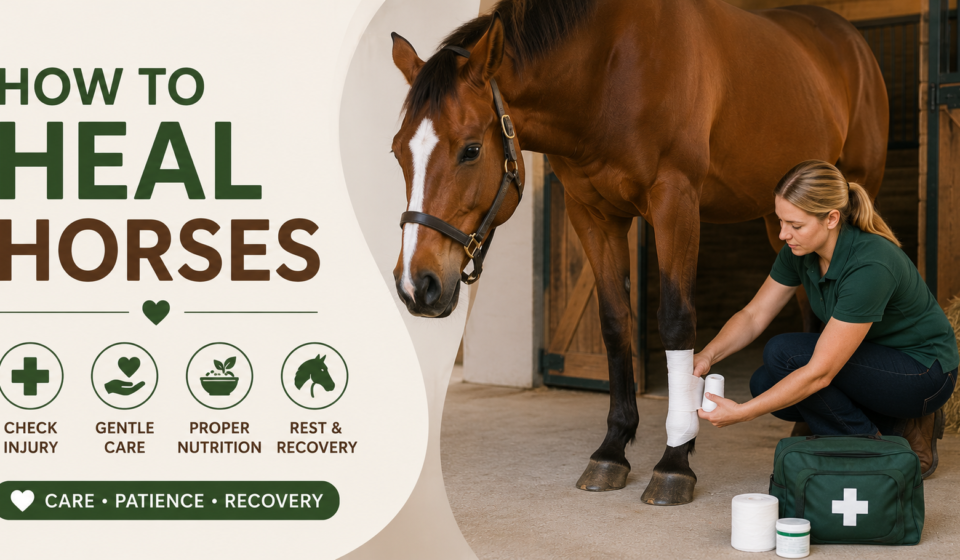

Had a horse come in from pasture once, dragging a leg, blood everywhere, looked absolutely terrifying. Turned out to be a fairly shallow cut that just bled a lot, the way scalp wounds do on people, way more dramatic than actually dangerous. Took the vet about four minutes to say “he’ll be fine.” That gap, between how bad something looks and how bad it actually is, that’s basically the whole game when it comes to healing horses. Knowing the difference, and knowing when it’s not that gap at all and you genuinely need help fast.
Safety and a Real Look Before Anything Else
Before treating anything, safety first, for the horse and for you. A horse in pain reacts unpredictably. Even the calm ones. Approach slowly, talk low and steady, and skip the sudden movements.
Once it’s safe to actually get close, check the whole horse. Not just the obvious wound. Easy to fixate on a bloody leg and completely miss something else going on, so a head to tail check, hooves included, gives a much better picture before deciding what happens next.
Know Your Horse’s Normal
This one’s underrated. Learn your own horse’s baseline, resting heart rate, respiration, temperature, gut sounds, capillary refill time. Varies horse to horse, and knowing what’s normal for yours makes it way easier to spot when something’s actually wrong instead of just guessing based on vibes. Also exactly what your vet’s going to ask over the phone, so having it ready saves time when time actually matters.
Wounds: Cleaning, Bandaging, Knowing When to Panic
Cuts and scrapes are probably the most common thing owners deal with: fencing, pasture hazards, plain clumsiness. And how it’s handled in that first hour or two genuinely changes how well it heals later.
The Basics
Clean thoroughly with antiseptic. Apply whatever dressing or ointment your vet actually recommends; worth noting that some over-the-counter products can slow healing or irritate healthy tissue more than help it. Bandage on a schedule that lets you actually check on it, not wrapped and forgotten for days. Watch for infection, swelling, heat, discharge, that unmistakable bad smell.
Anything large or metal stuck in a wound, leave it. Don’t pull it out. Removing it can cause more bleeding or damage than leaving it for the vet to handle properly.
When It’s Not a First Aid Situation Anymore
Some wounds are emergencies, full stop. Anything near or over a joint, since joint infections can cause permanent lameness if treatment’s delayed. Deep punctures- they look minor on the surface, but can hide real damage underneath, plus a real tetanus risk. Lower limb wounds involving tendons or the suspensory ligament sometimes need surgery to fix properly. Heavy bleeding, severe lameness, a horse clearly in serious distress. And anything touching the chest or abdomen- that’s a whole different level of risk.
Location matters a lot for healing too. Head and upper body wounds tend to heal well, good blood supply, more muscle and skin around to help. Lower limb wounds, less soft tissue, constant movement working against recovery, those are slower and trickier, sometimes needing surgery just to get a decent outcome.
Illness Doesn’t Always Come With a Visible Wound
Sometimes there’s nothing to bandage. Respiratory infection, colic, something vaguer that’s just not right. Different kind of healing, different approach needed.
What Actually Helps, Regardless of the Specific Illness
Rest, but the right kind. Some conditions genuinely need strict stall rest: serious tendon damage, fractures, where movement risks making things worse. Others actually do better with some carefully chosen movement rather than total shutdown. The trick is matching the activity to the actual injury, which honestly is exactly the kind of call worth getting from a vet instead of guessing off a forum post.
Hydration and food. A horse that’s off water or feed during illness needs quick attention, dehydration and nutritional gaps complicate recovery from basically anything. Soaked feed, appealing forage, easy water access, all help when appetite’s down.
Watch closely, consistently. Temperature, appetite, general attitude, checked regularly catches setbacks before they snowball into something harder to manage. Especially important right after a diagnosis when things can shift fast either direction.
Cut the stress. A calm, familiar setting supports the immune system more than people give it credit for. Less unnecessary handling, less noise and disruption, less exposure to strange horses during recovery- all of it frees up the body to actually focus on healing.
Rehab After the Serious Stuff
Tendon damage, ligament strain, post-surgery recovery healing goes way past the initial treatment into a longer rehab stretch.
Modern equine rehab borrows a lot from human sports medicine these days, electrotherapy included, small electrical currents supporting tissue repair and pain management. Usually paired with, not replacing, the older standbys, controlled hand walking, carefully progressed turnout, targeted exercises rebuilding strength without risking a setback.
Good rehab plans aren’t fixed in stone either. They shift based on how the horse is actually responding week to week, which is exactly why staying in touch with a vet throughout recovery, not just at diagnosis, tends to produce better outcomes than following some rigid, one size fits all timeline off a printout.
A Kit Worth Actually Having
Every owner benefits from a real first aid kit, not scrambling to find stuff mid-emergency. Antiseptic solution. Sterile gauze, non-stick pads, bandaging material. A digital thermometer. Vet wrap or self-adhesive bandaging. Clean towels. And your vet’s number, plus a backup contact, somewhere you can actually find it fast under pressure, not buried in a phone you can’t unlock with shaking hands.
Restock it regularly too. Assuming everything’s still there is how you end up mid-emergency reaching for gauze that isn’t there anymore.
When Unsure, Just Call
If there’s one piece of advice that holds up across basically every injury and illness, it’s this, when in doubt, call the vet, don’t wait it out hoping. Horses are prey animals by nature, they mask pain and illness fairly well, which means visible symptoms sometimes point to something more serious than they first appear. Calling early rarely makes things worse. Waiting too long sometimes turns something manageable into something much harder to fix.
Healing Is Mostly Attention and Timing
Knowing how to heal horses isn’t really one dramatic skill you master once. It’s consistent, attentive daily care combined with recognizing fast when something’s past home management. Clean wounds right, track vital signs, support the body through rest and food matched to whatever’s actually going on, and bring in professional help early instead of late. That combination, more than any single trick or remedy, is genuinely what gets horses through injury and illness and back to being themselves again.



[…] are one of the classic horse treats, and for good reason. Most horses enjoy the crunch and sweetness; they are easy to find, and they […]