
I once showed up to what was supposed to be a nice afternoon picnic with a blanket, a bag of sandwiches, a bottle of wine, and — this is the part that still bugs me — no way to open the bottle. Whole picnic, derailed by one missing item that costs about four dollars. That’s basically the entire argument for having a real picnic gear checklist instead of just winging it every time. A picnic sounds simple. Blanket, grass, food, done. But the gap between “that was effortless” and “we spent twenty minutes solving problems we could’ve avoided” almost always comes down to what you packed, or more specifically, what you forgot.
Why the Right Picnic Gear Actually Matters
Sounds like an obvious thing to say, but people genuinely underestimate this. You sit on damp grass because the blanket wasn’t waterproof. Napkins blow across the field because nobody weighted them down. Nobody can open the wine — see above. None of these are big problems on their own, but stack three or four of them together and a relaxing afternoon starts feeling like a series of small emergencies. Good picnic gear isn’t about packing everything you own into a bag. It’s about knowing which small, predictable problems are going to show up, and just… having already solved them before they do.
The Foundation: Blankets and Seating
Start here, because everything else builds on top of it.
A real picnic blanket — one actually made for outdoor use — usually has a waterproof or water-resistant backing on the underside, and that alone solves most of the “why is my blanket soaked through” problem you get with a regular bedsheet from home. Foldability matters more than people think too. If it’s a hassle to pack, it stays in the closet.
Portable seating is worth thinking about, especially for anyone who’s not thrilled about sitting directly on the ground for two hours, or for picnics that are going to run long. Folding stools, low camp chairs, even just a solid foldable cushion — small additions, big comfort difference.
And honestly, stakes or corner weights solve one of the single most annoying picnic problems there is: a blanket that just will not stay flat in even a light breeze. Cheap fix. Nobody thinks about it until they’re chasing a blanket corner across a field.
Food Storage and Transport
Probably the category that matters most, since this is the one tied directly to food safety, not just comfort.
A decent cooler or insulated bag is close to mandatory for anything perishable. Soft-sided coolers are easier to carry for most picnic distances, hard coolers hold temperature longer if you’re out for a full day — depends what you’re doing. Either way, reusable ice packs beat loose ice, since loose ice eventually means a pool of cold water soaking through everything else in the bag.
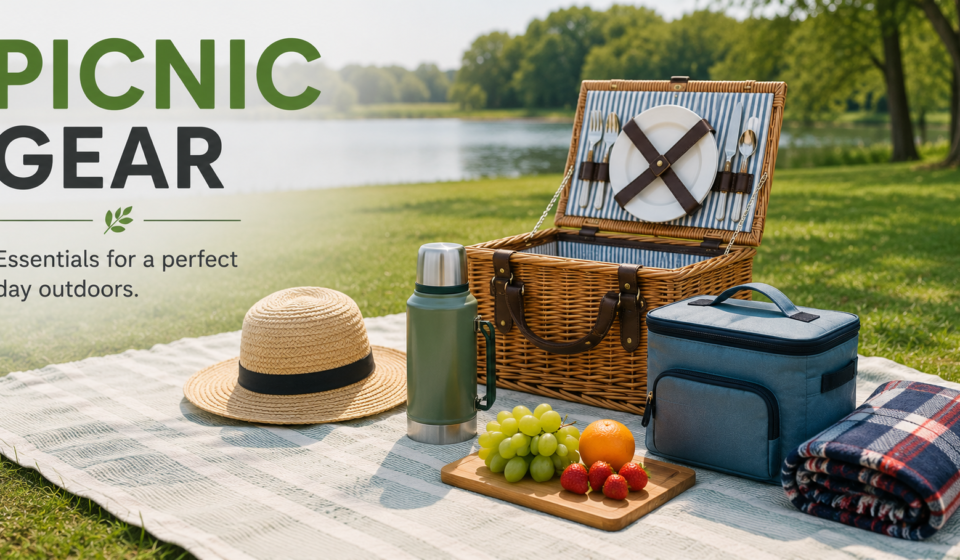
The classic picnic basket still earns its place, particularly for shorter trips where you don’t need serious refrigeration. Baskets with built-in compartments keep plates and cutlery from clattering around, which matters more than it sounds like until you’re the one listening to it rattle the whole walk over.
Insulated food containers open up a lot of menu options you’d otherwise skip — soups, pasta, anything that’s actually meant to be warm. A good one holds temperature for hours, which is honestly more than most people expect.
Eating and Serving Essentials
Once the food’s actually there, a handful of small items make eating it a lot less annoying:
- Plates and bowls, reusable or the sturdier kind of disposable
- Utensils that won’t snap the second they touch real food — cheap disposable forks are a constant complaint for a reason
- Napkins, cloth or the heavier paper kind, since thin ones just blow away
- A small cutting board, if anyone’s slicing cheese or bread on-site
- A corkscrew or bottle opener — and I’m speaking from experience here, this is the one thing people forget most
- Reusable cups, ideally with lids, because spills happen
- A trash bag, since plenty of picnic spots don’t actually have a bin anywhere nearby
Comfort and Convenience Extras
Beyond the core stuff, a few smaller additions change how the whole afternoon feels.
Sun protection is worth real thought if you’re headed somewhere without natural shade. A portable umbrella, a small pop-up canopy, even just a basic sunshade — any of these buy you more hours before the heat forces everyone to pack up early.
Bug protection, too — standard repellent works, or a portable citronella setup near the food area if bugs are a known issue at your usual spot.
Something to do — a frisbee, cards, a small speaker — matters more for group picnics or family outings, where the food’s really only half the point anyway.
And a basic first aid kit is easy to skip and genuinely useful, especially with kids around or in a spot that’s a bit more remote, where a small scrape shouldn’t have to end the day.
Building a Picnic Gear Checklist
Easiest way to actually remember everything is to think in categories instead of trying to hold the whole list in your head at once:
- Seating and shelter — blanket, chairs or cushions, stakes, shade
- Food storage — cooler, ice packs, insulated containers, basket
- Eating essentials — plates, utensils, napkins, board, opener
- Drinks — cups, something to keep them cold, the opener again (seriously, don’t forget it)
- Comfort — sun and bug protection, first aid basics
- Cleanup — trash bags, wipes, a small towel
Packing by category beats packing from memory. It’s a small shift but it’s the difference between “we’ve got everything” and standing in the kitchen wondering what you’re forgetting.
Packing Tips That Make a Real Difference
A few habits genuinely help. Heavier stuff — the cooler, the blanket — goes at the bottom of the bag or basket, so it’s not crushing anything fragile on top of it. Grouping items into smaller bags inside the bigger one also speeds up unpacking once you’re there, since everything already has a spot instead of being one big loose pile you’re digging through in front of everyone.
And do the thirty-second walkthrough before you leave. Food packed. Drinks cold. Blanket in the bag. Utensils and opener actually in there, not just assumed to be. Trash bags somewhere accessible. That one habit alone kills most of the “wait, did we bring—” moments before they happen.
Choosing Picnic Gear for Different Occasions
Not every picnic needs the same setup. A quick lunch at a nearby park? Blanket, small cooler, basic utensils, that’s it. A half-day family thing benefits a lot more from seating, sun protection, something to keep kids occupied. A quieter evening picnic for two might lean more into a nicer basket and real glassware than into ground stakes and bug spray. Worth thinking through the actual occasion before you pack, so you’re not hauling gear you never touch or, worse, missing the one thing you actually needed.
Final Thoughts
None of this is really about owning the fanciest basket or the most elaborate setup. It’s about having exactly what the day calls for, so the actual point of the picnic — good food, good company, not staring at your phone — doesn’t get lost in logistics. A solid blanket, reliable food storage, the basic eating essentials, and a few comfort extras cover almost every version of this, from a quick solo lunch to a full day out with everyone. Build the checklist once, and every picnic after that starts from “we’re ready” instead of that scramble by the front door five minutes before you’re supposed to leave.