
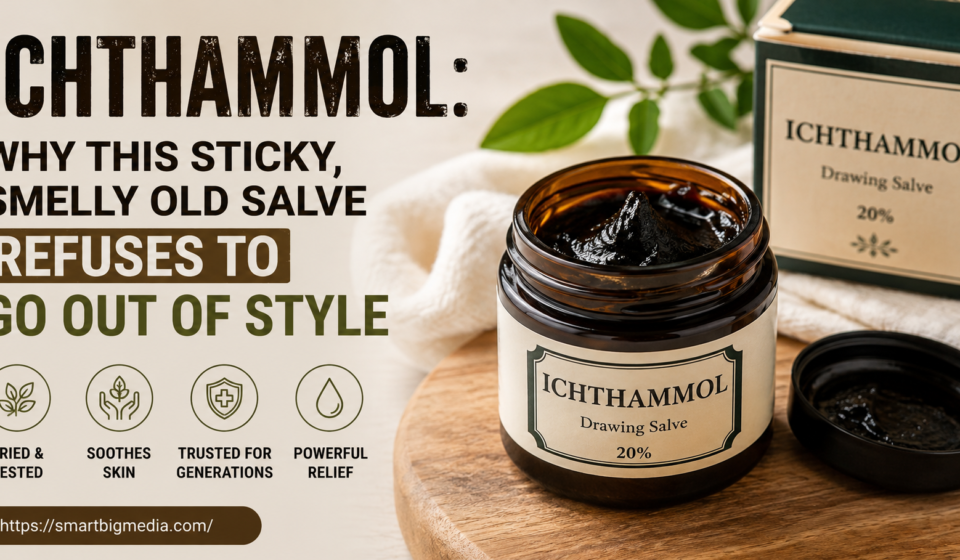
Open almost any barn’s first-aid box, and there’s a decent chance you’ll find a dark, tarry jar tucked in among the vet wrap and antiseptic spray. That’s ichthammol, and if you’ve ever worked around horses for more than a season, you already know the smell. It’s not pleasant. But it works, and that’s why nobody’s throwing it out.
What Is This Stuff, Anyway?
Ichthammol — sometimes called black ointment, sometimes drawing salve — comes from sulfur-rich oil shale. The active ingredient, ammonium bituminosulfonate, is what gives it that dark color and unmistakable odor. Most tubs you’ll buy blend it into a petroleum jelly base, which gives it that thick, sticky texture that clings to a hoof or a wound instead of just running off.
How It Actually Works
The whole point of ichthammol is right there in its nickname: it draws. Applied to skin or a hoof, it helps soften tissue and pull whatever’s trapped underneath — infection, debris, pus — up and out. Along the way it also calms inflammation and keeps the area moist rather than letting it dry and crack.
It’s Also Been Around Long Enough to Trust
One reason ichthammol has survived so many decades of changing veterinary trends is its safety record. Toxicity studies have found it carries minimal risk, which matters a lot when you’re comparing it to some older wound treatments that eventually got pulled from shelves over safety concerns. Ichthammol never had that problem. It’s low-risk for the horse and low-risk for whoever’s applying it, gloves or no gloves.
What People Actually Use It For
Ask five different horse owners what they use ichthammol for, and you’ll probably get five different answers, because it does a lot:
- Drawing hoof abscesses toward the coronary band or sole so they can finally drain
- Minor cuts, scrapes, and rope burns
- Chronic skin issues like eczema or recurring boils
- Fly bites and other insect irritation
- Softening the crusty scabs that come with rain rot, so a bath actually cleans them off instead of just scrubbing raw skin
Applying It Without Wasting a Jar
Most labels say once or twice a day, and that’s really all you need. A loose bandage helps hold it in place, though plenty of people skip that step for surface use. The one mistake I’d flag: stopping too early. It’s tempting to quit once things look better, but if the infection isn’t fully drawn out, it can come right back a few weeks later in the same spot. Stick with it until the area is genuinely healed, not just improved.
A Couple of Ways to Make It Work Harder
Add Epsom salt for hoof issues. Mixing the two boosts the drawing effect, which is especially useful for a stubborn abscess buried deep in the sole.
Cover with plastic wrap for crusty skin. Holding in a bit of warmth seems to speed up how fast scabby patches soften, based on what a lot of experienced barn owners report.
Keep it out of extreme temperatures. Store it somewhere cool and dry, away from direct sun, and don’t let it freeze — the texture suffers if it does.
Where Ichthammol Isn’t the Right Call
It’s not a miracle product, and it’s not meant for everything. A deep puncture wound, something accompanied by fever, or a horse that’s suddenly lame — those need a vet, not a jar of drawing salve. Ichthammol is a first-aid tool for minor to moderate issues, and it works best as a supplement to proper veterinary care, not a substitute for it. Also worth noting: it’s meant to sit on the surface, not get rubbed in deep.
Why It’s Still Around
For all the newer, flashier products on tack shop shelves, ichthammol keeps its spot for one simple reason — it’s cheap, it’s everywhere, and it genuinely handles a wide range of everyday problems. Not many products can go from treating a hoof abscess in the morning to calming an itchy bug bite that afternoon, all from the same jar.
Bottom Line
Ichthammol will never win a popularity contest for smell, but ask any horse owner who’s had a jar in the barn for twenty years and they’ll tell you it earns its keep. It’s affordable, it’s reliable, and it’s stuck around for a reason that has nothing to do with marketing. Just remember: if something looks more serious than a scrape or a routine abscess, don’t lean on home remedies alone. Call your vet.



[…] therapy without insurance can easily run over a hundred dollars a session. BetterHelp’s subscription bundles a weekly live session with unlimited messaging in between, and a lot of reviewers point out […]