
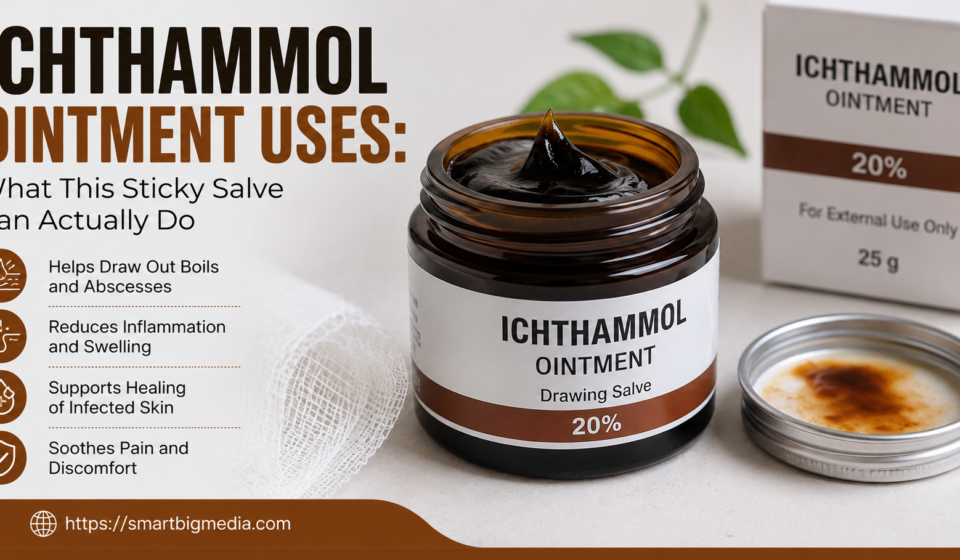
If you’ve ever wondered why that dark, gooey jar of ichthammol never seems to disappear from anyone’s barn cabinet, here’s your answer: it does a lot. More than most people realize when they first buy it. Let’s go through the real, practical uses so you’re not letting a perfectly good tool sit unused.
Quick Refresher: What Makes Ichthammol Work
It comes down to one property — drawing. Made from a sulfur-rich compound blended into petroleum jelly, ichthammol pulls infection, fluid, or debris up and out of an affected area instead of just sitting on top of it. Every use below traces back to that one trick.
The Main Ichthammol Ointment Uses
1. Pulling Hoof Abscesses to a Head
This is probably the number one reason people buy ichthammol in the first place. When infection gets trapped inside a hoof, it hurts — a lot, and often out of proportion to how minor the original cause was. Applying ichthammol to the sole softens tissue and encourages the abscess to travel toward the surface, usually the coronary band, where it can finally drain.
2. Treating Stone Bruises and “Gravels”
Same idea, different cause. When a small stone or piece of debris works its way into the hoof, ichthammol’s drawing action helps coax it toward the surface so it can be removed without a lot of drama.
3. Softening Scabs from Scratches or Rain Rot
Anyone who’s dealt with pasture dermatitis (aka scratches) or rain rot knows the scabs are the worst part — thick, crusty, and painful to peel off. A layer of ichthammol softens them up so a bath a few days later actually gets them off cleanly instead of ripping at sensitive skin.
4. Calming Bug Bites and Tick Irritation
The mane, tail, and ear tips take the brunt of fly and tick season. Ichthammol’s soothing, anti-inflammatory effect makes a real difference here, and it seems to discourage repeat visitors too.
5. Helping Minor Cuts and Rope Burns Heal
For everyday nicks and scrapes, ichthammol keeps the area moist and calms inflammation without the harsh sting some other antiseptics bring with them.
6. Managing Recurring Boils
Boils that keep coming back usually mean the infection wasn’t fully drawn out the first time. Sticking with ichthammol over several consecutive days, rather than stopping the moment it looks better, tends to solve that for good.
Getting the Application Right
- Thin layer, once or twice a day. More product doesn’t speed anything up.
- Don’t rub it in hard. It’s meant to sit on the surface, not get worked deep into tissue.
- A loose bandage helps but isn’t mandatory for surface applications.
- Finish the job. The most common mistake is stopping treatment as soon as things look better, only for the problem to resurface a few weeks later.
For Extra-Stubborn Hoof Issues
A lot of horse owners mix ichthammol with Epsom salt when they’re dealing with a deep, stubborn abscess. It amplifies the drawing effect and can shave real time off the process.
Safety Basics
Ichthammol has a strong track record for both horses and the people applying it. Still, keep a few things in mind: avoid the eyes and mucous membranes, and if irritation shows up or sticks around past ten days, stop and call your vet. It’s also not the right tool for deep puncture wounds or anything involving fever or serious infection — those need professional attention, not a home remedy alone.
Rounding Out Your Barn Kit
Ichthammol pairs naturally with a few other essentials — clean bandaging, Epsom salt for hoof issues, and a solid antiseptic like iodine tincture for cleaning wounds before you treat them. Between those basics, you’ve got most everyday barn first-aid situations covered.
Bottom Line
From drawing out a stubborn abscess to softening painful scabs to calming an itchy bug bite, ichthammol ointment uses cover a surprising amount of ground for one unassuming jar. It’s cheap, it’s proven, and it’s worth having on hand. Just keep an eye out for anything that looks more serious than routine — that’s when it’s time to bring in your vet rather than lean on the salve alone.

[…] barn cabinet has its heavy hitters, and iodine tincture 7% is one of them. Also sold as “strong tincture […]