
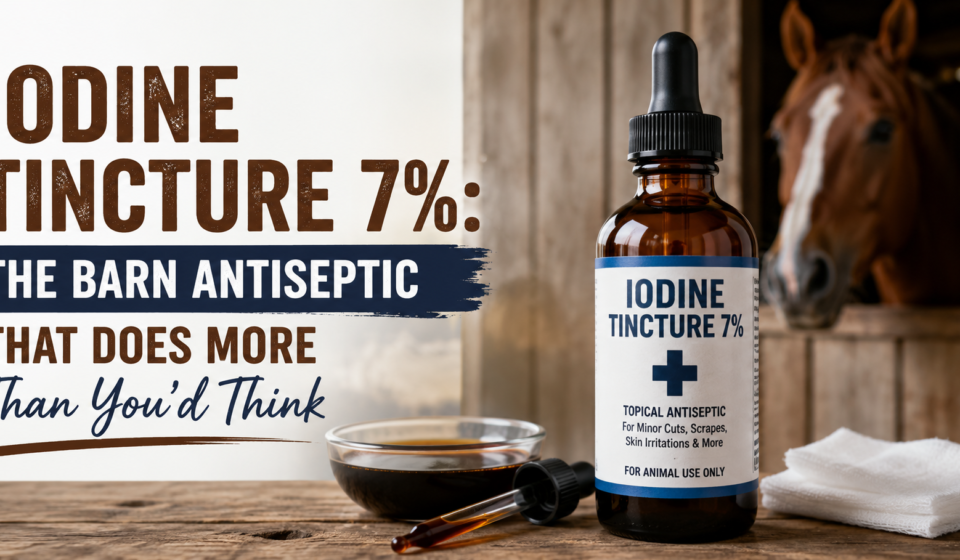
Every barn cabinet has its heavy hitters, and iodine tincture 7% is one of them. Also sold as “strong tincture of iodine,” this stuff has been part of horse care for decades, and it’s still one of the first things reached for when a wound needs disinfecting or a new foal needs its navel treated. Here’s what it’s actually used for and how to handle it safely.
What Exactly Is It?
Iodine tincture 7% is a concentrated antiseptic — iodine dissolved into an alcohol base. That “7%” isn’t just a number on the label; it tells you the concentration of active iodine, which is stronger than the lighter formulas used for less urgent jobs. That extra strength is exactly why it’s so effective at killing bacteria and fungi fast, which matters most in situations where infection risk is high.
The Big Uses
Foal Navel Care
This is the use most people know it for. Shortly after a foal is born, the umbilical stump is basically an open door for bacteria to get in. Dipping it in 7% iodine kills off pathogens quickly and meaningfully cuts the risk of navel ill and related infections. It’s about as routine as foal care gets — most breeders wouldn’t skip this step.
Disinfecting and Hardening Hooves
Painted onto the sole, iodine tincture helps prevent and treat both fungal and bacterial infections, with a nice side benefit of hardening the hoof a bit over time. A lot of home hoof remedies use it as a base ingredient for exactly this reason.
General Wound and Skin Treatment
Cuts, scrapes, ringworm, rain rot — iodine tincture handles a lot of it thanks to its strong antibacterial punch. Diluted versions also work well as a post-bath rinse for horses prone to recurring skin issues.
Everyday Skin Cleansing
Some owners use a diluted version now and then just as a general cleansing rinse, particularly for horses who tend toward fungal or bacterial skin flare-ups.
Using It the Right Way
- Clip and clean first. For wounds or skin issues, clipping the hair and washing with soap and water beforehand makes a real difference.
- Apply lightly. A cotton swab, sterile gauze, or spray bottle gives you good control.
- Skip the deep wounds. This is a surface-level product — puncture wounds and deep injuries need a vet, not a swab of iodine.
- Watch for irritation. If redness or swelling gets worse rather than better, stop and call your vet.
A Note on Sensitivity
Because it’s alcohol-based, iodine tincture stings on open wounds — no way around that. Some owners dilute it slightly for sensitive skin or horses who really don’t like the sting. And while 7% iodine remains the go-to standard, some newer alternative navel dips have shown up on the market, marketed as gentler and less corrosive. Iodine still works well when used correctly, but it’s a reasonable option to ask your vet about, especially for delicate foals.
Storing It Properly
Keep it cool and away from open flame — the alcohol base makes it flammable. Close the container tightly between uses so it doesn’t lose potency, and store it well out of reach of kids and pets. Standard label-reading rules apply here as much as anywhere.
How It Compares to Other Antiseptics
Compared to lower-strength iodine or products like Betadine (povidone-iodine), the 7% tincture works faster and stronger, which is exactly why it’s the go-to for navel care where speed genuinely matters. That said, some vets now prefer gentler alternatives like chlorhexidine for very young or particularly sensitive foals, over concerns about how much iodine a newborn’s delicate skin might absorb. Worth a quick conversation with your vet, especially for a high-value or fragile foal.
When to Skip the Home Remedy
Iodine tincture 7% is great for routine disinfection and minor wound care — it’s not a substitute for professional treatment when things get more serious. Deep wounds, signs of spreading infection, or a foal that seems lethargic or feverish all mean it’s time to call the vet, not reach for another swab.
Bottom Line
Iodine tincture 7% has earned its reputation the hard way — through decades of protecting foals in their first vulnerable hours and disinfecting everyday cuts and hoof issues in between. Used correctly, with a little extra care around sensitive skin, it’s an affordable, effective staple that belongs in just about every barn’s first-aid kit.


[…] launched back in 2013 and has grown into the biggest online therapy platform out there, with tens of thousands of licensed […]