
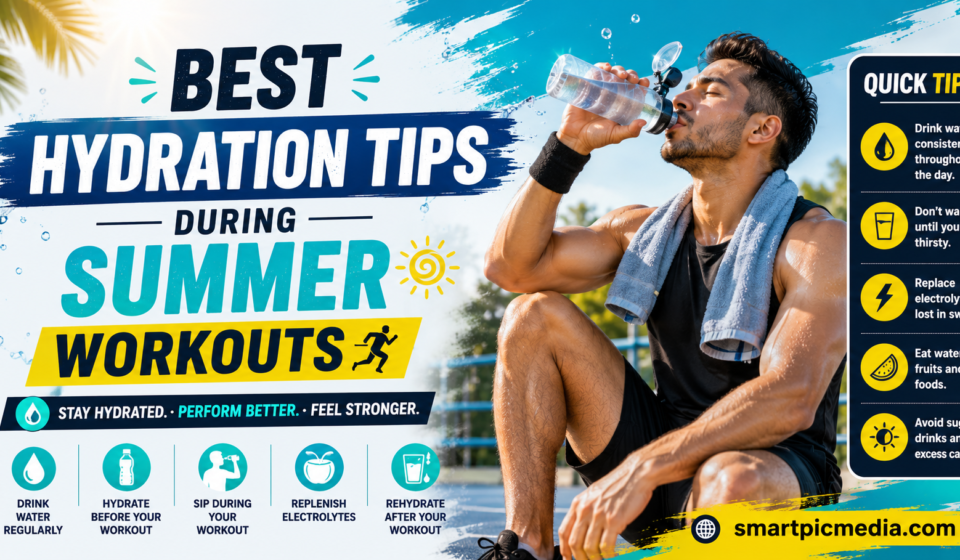

Twenty minutes into a July run once, head pounding, legs suddenly heavy for no obvious reason, and it hit me — I hadn’t had a drop of water all morning. Not one glass. I wasn’t thirsty when I left the house so it just didn’t occur to me. That’s a mistake I’ve made more than once, honestly, and I think a lot of people make it because thirst feels like a reliable signal until you actually understand how far behind it lags.
So here’s what genuinely works, the best hydration tips during summer workouts, based on what actually happens to your body once the temperature climbs and not just generic advice repeated everywhere.
Why Summer Changes Everything
Sweat is your cooling system, full stop. The hotter it gets, the harder that system runs, and the faster you lose both fluid and electrolytes doing the exact same workout you’d do in cooler weather without thinking twice about it.
Losing fluid equal to just two percent of your bodyweight is enough to notice — slower reactions, less endurance, harder time focusing. Go beyond that and you’re looking at cramping, headaches, nausea, sometimes worse depending on how far it goes.
Thirst shows up late. Annoyingly late. By the time you actually feel thirsty you’re often already somewhat dehydrated, which is the entire reason proactive hydration matters more than reactive hydration. Drink on a schedule. Don’t wait for your body to demand it.
How Much Water Do You Actually Need
This honestly varies a ton, body size, how much you personally sweat, workout intensity, actual heat and humidity that day. But here’s a reasonable place to start.
Before training, something like sixteen to twenty ounces two to three hours out, then another eight ounces twenty or thirty minutes before you actually begin. During the workout, roughly seven to ten ounces every ten to twenty minutes, adjusted for intensity and heat. Past an hour, especially in real heat, plain water alone starts falling short — that’s where electrolytes matter. Afterward, replace about sixteen to twenty-four ounces for every pound of bodyweight you lost sweating. Weighing yourself before and after one hard summer session actually tells you a lot about your own sweat rate, worth doing at least once just to know your numbers.
Starting points, not laws. Bigger athletes, heavy sweaters, anyone training in genuinely brutal heat needs more than this.
Water Alone or Electrolytes Too
Under an hour, reasonable heat, plain water usually does the job fine, no need to overthink it. But longer and hotter sessions mean you’re losing more than just water, you’re losing sodium and potassium too, the stuff that keeps your whole fluid balance functioning properly.
Here’s the part that surprises people. Drinking only water during a long sweaty session can actually dilute your blood sodium to a dangerous level. It’s called hyponatremia and it’s a real risk for endurance athletes who chug water constantly and skip electrolytes entirely, thinking more water always means better hydration. It doesn’t, not past a certain point.
Signs you probably need more than water: sessions running past 60 to 90 minutes, visible white salt marks on your skin or shirt after sweating heavily, cramping during or after exercise, multiple consecutive days training in serious heat.
You don’t need the neon sugary sports drinks either, for what it’s worth. Electrolyte tablets, powders, or honestly just water with a small pinch of salt and a splash of juice works fine for most people.
Before You Even Start
Getting ahead of this matters more than most people realize until they’ve felt what happens when they don’t.
Check your urine color, pale yellow is generally good, dark yellow means drink more before heading out. Sip steadily through the day rather than chugging a big glass right before your workout, since consistent intake beats a last-minute rush every time. Eat water-heavy foods in the hours before, watermelon, cucumber, oranges, they hydrate and give you useful nutrients simultaneously. And go easy on caffeine and alcohol before intense summer sessions since both work mildly against you here.
During the Workout Itself
Time it smart. Early morning or evening beats the middle of the day, when heat and UV both peak, usually somewhere between eleven and three.
Bring water with you, don’t assume you’ll find some along the way. Carry a bottle or a pack, especially somewhere unfamiliar or remote.
Sip on a schedule rather than waiting until you feel it. Build small breaks into longer sessions, every fifteen or twenty minutes roughly. Steady beats reactive every single time.
Wear breathable fabric. Not directly about drinking water, sure, but trapped heat means more unnecessary sweat loss. Lightweight, moisture-wicking gear lets your body’s actual cooling system do its job properly.
After You’re Done
What you do afterward matters just as much as what you did beforehand, maybe more, since this is where recovery actually happens.
Sip steadily over the following hour instead of downing everything at once. Add electrolytes back if the session ran long or you sweated heavily. Water-rich foods afterward — fruit, yogurt, a smoothie — help both hydration and recovery at the same time. Keep watching urine color for the rest of the day just to confirm you’ve actually caught back up.
Know the Warning Signs
Mild dehydration looks like thirst, dry mouth, general tiredness, dark urine, maybe a mild headache. Not alarming on its own but worth addressing quickly.
Heat exhaustion goes further, heavy sweating, dizziness, nausea, cramping, a fast heartbeat, skin that feels cool and clammy despite the heat around you.
Heat stroke is genuinely an emergency. Confusion, very high body temperature, skin either hot and dry or completely drenched, rapid pulse, possibly losing consciousness. If you or anyone training with you shows these signs, stop right away, get to shade or somewhere cool immediately, start cooling the body with water or ice, and get medical help fast, especially if there’s any confusion involved at all.
Easy Mistakes to Make
Waiting until you’re thirsty, the big one, by then you’re already behind the curve. Grabbing sugary sports drinks for short easy workouts that don’t really need them. Ignoring that your sweat rate could be completely different from your training partner’s even on the identical workout. Drinking huge amounts of plain water on very long sessions with zero electrolytes, which is exactly how hyponatremia happens. Underestimating humidity too, when sweat can’t evaporate well your body works overtime to cool down even if you don’t feel like you’re sweating that much.
Figure Out Your Own Numbers
Because this varies so much between people, it’s worth actually testing your own patterns instead of just following generic numbers forever. Weigh yourself before and after a few different summer sessions to get a real sense of your fluid loss. Pay attention to how you feel on days you hydrate well versus days you didn’t bother. Adjust from there over time. Eventually it stops being something you consciously think about and just becomes part of how you train without much effort.
Common Questions
Can you drink too much water in summer training? Yes, too much plain water without any electrolytes on long or intense sessions can dilute blood sodium to a genuinely dangerous point.
Do I need sports drinks for every summer workout? No, honestly. Under an hour in reasonable conditions, water’s usually enough on its own. Electrolytes matter more as sessions get longer, hotter, or more intense than usual.
What’s the fastest way to rehydrate after a hot session? Steady sipping over the next hour, combined with electrolytes and water-rich food, works better than chugging a huge amount all at once and calling it done.
Bottom Line
Staying hydrated through summer training isn’t complicated once you actually think ahead instead of reacting after the fact. Know your own sweat rate, drink consistently before and during, replace electrolytes on the long hot days, and pay real attention when your body starts sending warning signs. Do that consistently and the heat stops being the thing that quietly wrecks your training.




[…] slowly. Pause on the tender spots, twenty or thirty seconds. Loosens stuff static stretching alone sometimes just doesn’t […]
[…] o’clock. Every day, like clockwork, for months. Vending machine down the hall, didn’t matter what I’d had for lunch, […]
[…] One piece away. Just needs a quarterback, just needs a d-line coordinator who actually blitzes, needs to stop losing the turnover battle in the fourth quarter of one-score […]