
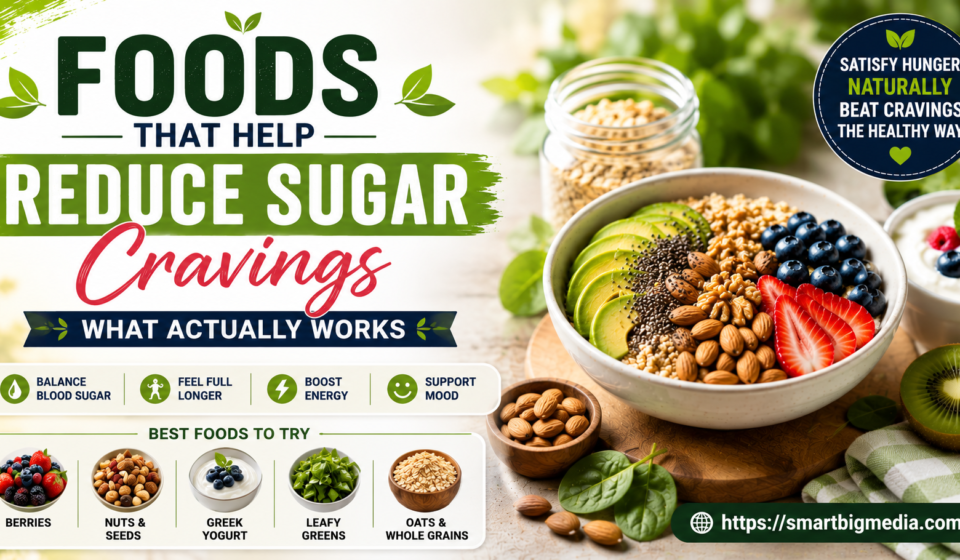
Three o’clock. Every day, like clockwork, for months. Vending machine down the hall, didn’t matter what I’d had for lunch, didn’t matter if I wasn’t even hungry. Something about that specific hour and suddenly all I could think about was chocolate. Or sugar in my coffee, whatever was closest honestly.
Took embarrassingly long to connect the dots. Wasn’t random at all — it was blood sugar crashing from whatever carb-heavy lunch I’d had two hours before, and my body basically demanding another spike to patch a hole I’d dug that morning without realizing it. Once that clicked, fixing it stopped being some willpower battle and just became about what I was actually eating beforehand. So here’s what genuinely works, foods that help reduce sugar cravings, based on what’s actually happening in your body when that craving hits.
Cravings Aren’t a Character Flaw
Whatever diet culture tells you, cravings usually mean something real is happening physically. Blood sugar spikes and crashes are the big one. Eat something high in refined carbs, blood sugar shoots, insulin follows to bring it back down, often overshoots — and now you’re lower than where you started, craving something sweet to fix the exact problem you just caused.
Bad sleep plays into this too, more than people realize honestly. Sleep deprivation messes with ghrelin and leptin, the hunger and fullness hormones, and suddenly sugary stuff looks way more appealing than it normally would. Stress does something similar — cortisol messes with appetite, specifically pushing toward sweet, energy-dense food, some leftover survival wiring from way before vending machines existed.
And sometimes, sure, it’s just habit. Sweet thing after dinner every night for years, and now dinner feels unfinished without it whether your body actually needs it or not.
Protein Is the Underrated Fix
Probably the single best tool against cravings and it’s not particularly close. Slows digestion, keeps blood sugar steadier, triggers satiety hormones carbs alone just don’t really trigger.
Eggs. Greek yogurt. Chicken, fish, tofu, lentils. Add real protein to breakfast specifically and afternoon cravings tend to drop more than people expect. If mornings currently look like cereal or a plain pastry — that’s very possibly why three o’clock hits so hard.
Fiber Keeps You Full Longer
Similar mechanism to protein, slows digestion, plus it feeds gut bacteria, which increasingly seems tied to cravings generally, sugar included apparently.
Vegetables. Whole fruit, not juice — juice basically skips the fiber part entirely. Legumes, oats, chia seeds. These digest slow enough blood sugar stays steadier through the day instead of spiking and crashing every couple hours like a rollercoaster. Chia seeds specifically are worth a mention, they absorb liquid and form this gel that slows digestion even further, and you can just toss a spoonful into yogurt without thinking much about it.
Healthy Fat Blunts the Spike
Fat slows absorption of whatever you eat alongside it, which helps avoid the sharp spike that often triggers a craving an hour or two later.
Avocado. Nuts. Olive oil. Fatty fish, salmon especially. Add a real fat source to meals, particularly ones with carbs in them, and digestion smooths out — that mid-afternoon crash a lot of people deal with tends to shrink.
Cinnamon — Sounds Too Simple, Isn’t
There’s actual research here, which surprised me honestly. Cinnamon might improve insulin sensitivity a bit, helping stabilize blood sugar and, downstream, reducing the cravings those swings cause in the first place.
Sprinkle it in oatmeal, coffee, yogurt. Not a fix on its own — nothing here is, to be clear — but combined with everything else, it’s a free, easy way to add sweetness without any actual sugar involved.
Dark Chocolate. Yes. Genuinely.
Not permission for a candy bar, calm down. Dark chocolate, 70 percent cacao or up, has way less sugar than milk chocolate does, and comes with compounds that may actually help curb cravings instead of fueling them further.
One small square, genuinely small, after a meal often fully satisfies a sweet craving without the same blood sugar rollercoaster a candy bar sets off.
Berries When You Want Real Sweetness
Sometimes a craving isn’t really about fixing blood sugar, it’s just wanting something that tastes sweet. Fair enough. Berries are one of the best options for that specifically. Strawberries, blueberries, raspberries — natural sugar sure, but wrapped in fiber that slows absorption, plus actual nutritional value a cookie never offers.
Frozen works fine too, arguably better for smoothies, usually cheaper depending on season where you live.
Water. More Than People Assume.
Thirst gets misread as hunger all the time, cravings included. Dehydration alone can trigger something that feels exactly like wanting something sweet when your body actually just needed water the whole time.
Next craving that hits out of nowhere — drink a full glass of water first, wait ten minutes before reaching for anything else. Sometimes that’s genuinely it. Craving just fades on its own.
Greek Yogurt as an Actual Dessert
Greek yogurt, a little honey, some berries mixed in — satisfies an actual sweet craving while also delivering real protein at the same time. Become something of a go-to for a lot of people trying to cut sugar without feeling like they’re constantly missing out on something.
Nuts and Seeds for Fast Snacking
Almonds. Walnuts. Pumpkin seeds. Protein, fat, fiber, all in one small handful, genuinely effective at heading off a craving before it fully builds. Keep some at your desk, in your bag, whatever. Having something reasonable within reach matters more than people give it credit for.
What Not to Lean on Too Hard
Artificial sweeteners are a mixed bag honestly. Some research suggests they keep cravings alive by maintaining a taste for intense sweetness generally, even without calories attached. Not necessarily harmful, but not the fix people assume either.
Skipping meals is another common mistake. Go too long without eating, blood sugar tanks, and you basically guarantee a stronger craving later — usually stronger than if you’d just eaten something reasonable on schedule to begin with.
Building Meals That Prevent This Before It Starts
Most effective long term approach isn’t fighting cravings once they hit, it’s building meals that stop the blood sugar swings causing them in the first place. Generally means protein, fiber, healthy fat at basically every meal instead of meals built mostly around refined carbs alone.
Breakfast deserves real attention here — a poor breakfast tends to set the tone for cravings the rest of the entire day, more than any other single meal seems to.
Sleep and Stress, the Parts Everyone Forgets
You can eat perfectly and still deal with strong cravings if you’re chronically under-slept or genuinely stressed out. Seven to nine hours of sleep, some way to manage stress that actually works for you — walking, meditation, whatever — addresses the hormonal side food alone just can’t fix by itself, no matter how well you eat.
Questions People Actually Ask
How long till cravings actually calm down? Most people notice a real drop within one or two weeks of eating more protein, fiber, fat consistently. Full adjustment, closer to a month for some.
Can I still eat sugar sometimes? Yes, completely fine. Goal’s reducing intensity and frequency, not banning it forever. Total restriction usually backfires anyway, makes cravings worse over time in most people’s experience.
Could cravings mean an actual deficiency? Sometimes, though less often than social media suggests. Low magnesium gets mentioned a lot here specifically. If cravings are persistent and severe despite decent habits, worth actually talking to a doctor rather than guessing at supplements.
Bottom Line
Reducing sugar cravings naturally comes down to stabilizing blood sugar with protein, fiber, and healthy fat, staying hydrated, sleeping enough that your hormones aren’t working against you. Less about willpower than most people think. More about giving your body what it actually needs so it stops sending these urgent signals in the first place.



[…] shoulders used to feel like they belonged to somebody twenty years older. Reaching for a high shelf turned into this whole wincing production, and for way too long I just […]
[…] assume short means weak. Mostly wrong assumption. Fifteen focused minutes hits your major muscle groups, opens hips and shoulders, gets your heart […]
[…] red flags worth knowing: vague phrasing like “supports balance” without ever saying balance of what. Testimonials doing the heavy lifting instead of actual […]