
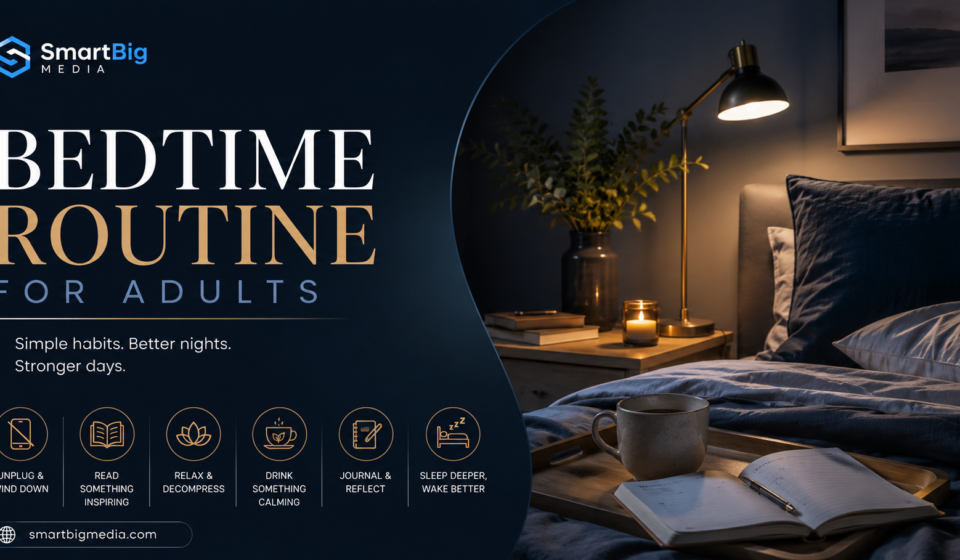
Okay so real talk. Two years ago I would’ve told you bedtime routines are for children and people who read too many wellness blogs. I was firmly in the “I’ll sleep when I’m dead” camp, going to bed at random hours, phone six inches from my face, wondering every single morning why I felt like garbage. Then I had a stretch where I genuinely could not fall asleep before 2am for almost a month straight, and I finally got desperate enough to actually try fixing it instead of just complaining about it. This is what I landed on.
I’m not a doctor. I’m not a sleep coach with a certificate on my wall. I’m just someone who was tired of being tired and figured some stuff out through trial and a lot of error.
Why Bother With a Routine At All
Here’s what nobody explained to me properly until I looked it up myself. Your brain needs a runway, not a cliff edge. You can’t be on your phone answering work Slack messages at 10:45 and expect to be peacefully asleep by 11. That’s not how any of this works. There has to be a gap, some kind of buffer zone, where your body gets the message that things are slowing down.
Kids get bath, story, lights out. We just… stopped doing that for ourselves once we became adults, like we outgrew the need for a wind-down. We didn’t. We just started ignoring it.
Pick a Time and Mostly Stick to It
I resisted this one hardest, honestly, because “set bedtime” sounded like something my parents enforced on me at age nine. But it turned out to be the single biggest thing that changed anything for me.
Your body runs on something called a circadian rhythm, basically an internal clock, and that clock loves predictability. When you go to sleep at 11 one night and 2am the next and then 10:30 the night after that, your body has no idea what to expect. It’s constantly recalibrating instead of settling into a groove.
Weekends are the tricky part. I used to think staying up late Friday and Saturday didn’t count somehow, like weekend sleep exists in a separate universe from weekday sleep. It doesn’t. Two nights of chaos and suddenly Monday feels like actual jet lag, minus the vacation.
Doesn’t have to be perfect. I’m off by half an hour plenty of nights. Just having a rough target beats having none at all.
Turn Down the Lights, Seriously
I almost skipped over this tip the first time I read it somewhere because it sounded too simple to matter. Just… dim the lights? That’s the big secret?
Kind of, yeah. Bright light, the harsh overhead kind especially, keeps your brain thinking it’s still daytime. Your body’s trying to ramp up melatonin in the evening hours and bright light basically interrupts that whole process, like someone yelling over a quiet conversation.
I switched to just using a lamp after around nine most nights. Warm bulb, not the cold blue-white kind. Cheap fix, genuinely noticeable difference, and my eyes feel less strained too by the time I actually get in bed.
About the Phone
I’m not going to pretend I’ve mastered this one. Some nights I still end up scrolling way longer than I meant to. But there’s a clear difference between the nights my phone is charging in the kitchen versus the nights it’s sitting right next to my pillow.
When it’s out of reach, I don’t even think about checking it. When it’s within arm’s length, “just one more thing” turns into forty minutes somehow, every time, without fail.
If moving it to another room feels impossible, at least drop the brightness and flip on whatever night mode your phone has. It’s not a full fix but it helps a little.
Find Two or Three Things You Actually Like Doing
This is where people go overboard, trying to copy some influencer’s fifteen-step evening ritual with candles and jade rollers and I don’t even know what else. You don’t need any of that. You need a couple things that feel calming specifically to you, repeated consistently.
Mine’s boring. Shower, then sitting with a cup of tea doing absolutely nothing for a few minutes, then reading an actual paper book, not a screen, for fifteen or twenty minutes. That’s it. That’s the entire ritual.
The shower part isn’t just about feeling clean, by the way. Your body temperature drops afterward, and that drop is similar to what happens naturally right before you fall asleep anyway, so you’re kind of nudging your body toward sleep mode a little early.
Find your version of this. Doesn’t need to look like mine.
Write Down the Noise in Your Head
If your brain likes to bring up random unfinished business the second you’re finally lying down, you already know exactly what I mean. Mine used to do this constantly. Dead tired, lights off, and suddenly remembering some email I forgot to send back in March.
Writing stuff down before bed helped more than I expected it to. Nothing fancy, just a notebook where I dump tomorrow’s to-do list or whatever’s bugging me. Once it’s written somewhere, my brain seems to stop trying to hold onto it. I genuinely don’t fully understand why that works, I just know it does, for me at least.
Slow Breathing When You’re Actually in Bed
Lights off, phone in the other room, this is where I do a breathing thing a friend told me about years ago and I finally started actually using. Four seconds in, hold for seven, out slowly for eight. Repeat it four or five times.
Felt ridiculous the first time. Counting in the dark like some kind of meditation app voice. But it does something, slows your heart down, pulls you out of whatever mental loop you’re stuck in. There was a genuinely rough couple weeks last year where this helped more than once when my brain wouldn’t stop spinning.
Keep the Bed for Sleep, Not for Work
At some point my bed had basically become my second office. Laptop on my knees, emails open, sometimes even a work call happening under the blanket like that was a normal thing to do. It’s not. Your brain starts connecting the bed with stress instead of rest, and once that link forms, it’s annoyingly hard to undo.
Cool room helps. Dark room helps more than people expect, I got blackout curtains a while back because a streetlight outside my window was doing its thing every night, and it made a real difference. If you’re a light sleeper in a noisy building, a fan or white noise app is worth trying too.
And if you’re waking up with a sore neck every morning, that’s not a “sleep routine” problem. That’s just a bad pillow. Fix the pillow.
Watch the Timing on Coffee and Alcohol
Caffeine sticks around way longer than people assume, six hours easily, sometimes more depending on your body. That 3pm coffee that felt totally harmless might still be quietly keeping you wired at 9.
Alcohol’s sneakier because it feels like it’s helping at first. You get drowsy, fall asleep fast, then wake up at 4am wide awake for no obvious reason. That’s the alcohol interfering with your deeper sleep stages later on, not actually doing you any favors.
Not saying cut either one out forever. Just pay attention to timing.
Naps Can Quietly Wreck Everything
A short nap, fifteen or twenty minutes, earlier in the day is genuinely fine. Don’t feel guilty about it. But a long nap in the late afternoon can absolutely mess with your ability to fall asleep that night, and it’s one of those things people forget to check when they’re troubleshooting bad sleep.
Get Moving During the Day
This isn’t really about nighttime specifically, more about setting yourself up hours earlier. People who move around during the day, even just a walk, tend to fall asleep faster at night. Makes sense honestly, your body needs to be physically tired too, not just mentally fried from staring at screens all day.
Just don’t do an intense workout right before bed. Raises your heart rate and body temperature right when you’re trying to wind those things down.
If Sleep Isn’t Coming, Get Up
Sounds backwards but it works. Lying there for thirty minutes getting more frustrated by the second doesn’t help anything. Get up, sit somewhere dim, read a few pages, go back once you actually feel sleepy.
Staying in bed stewing just teaches your brain that bed equals frustration and lying awake, which is the exact opposite of what you want it to learn.
What My Actual Nights Look Like
Not claiming this is perfect, just showing you the real version. Around 9:30 I stop eating and close the laptop for good. By 10, lights are dim, phone’s charging in the kitchen. Shower, tea, book for fifteen or twenty minutes. Lights off around 11, and if my head’s still going, a few rounds of that breathing thing usually settles it down.
Some nights I skip half of it because I’m lazy or just forget. This isn’t some sacred ritual I never break. But the nights I do stick to it, even loosely, I fall asleep noticeably faster and actually feel rested when I wake up instead of just conscious.
Final Thoughts
If you’ve read this far because you’re exhausted and tired of being exhausted, just pick one thing. Dim the lights earlier. Move your phone to another room. Whatever feels doable tonight. You don’t need to fix everything at once. You just need a few small, repeated signals that tell your body the day’s actually over.
I wish someone had explained this plainly to me a couple years ago instead of me figuring it out the hard way through a month of terrible sleep. So here it is. Keep it simple, stay consistent, give it a couple weeks before you decide whether it’s working. Future you, the one who actually slept, will appreciate it.


[…] any time scrolling through headlines lately, you’ve probably noticed something interesting: sports news isn’t just about who won last night’s game anymore. A huge chunk of the conversation […]
[…] Bleeding during brushing or flossing, even with a light touch, can point toward poor clotting. Gum disease is the more common explanation, though, so check with your dentist first. If your oral health checks out and the bleeding keeps happening, vitamin K is worth a second look. […]