
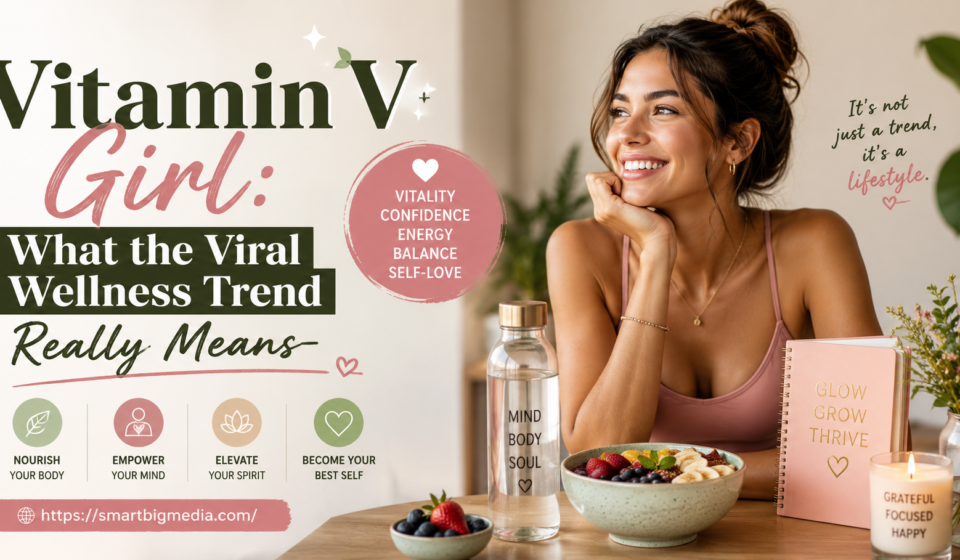
I first saw the phrase scrolling on TikTok at like eleven at night, half paying attention, and I almost skipped right past it. “Vitamin V girl era.” Whatever, another caption. But it kept showing up. Different creators, same phrase, same pastel bottles lined up on a bathroom counter. So I went digging, because that’s usually how these things go — a phrase looks like nothing until you notice it’s everywhere.
Turns out “Vitamin V girl” isn’t about a new nutrient nobody’s heard of. It’s about intimate and vaginal health supplements, and about the online culture that’s grown up around talking about them out loud, on camera, without flinching. Which, honestly, is kind of the interesting part.
Where the Label Comes From
The “___ Girl” Trend Cycle, Again
You know the drill by now. “That girl.” Then “clean girl,” slicked bun, green juice, 5 a.m. alarm. Then it splintered into a dozen weirder labels — tomato girl, strawberry girl, at one point I saw “onion girl” and just closed the app. Every one of these is the same trick: take a lifestyle habit, slap “girl” on the end, and suddenly it’s an identity you can opt into instead of just a thing you do.
“Vitamin V girl” is that same trick, except the product underneath isn’t a skincare serum. It’s a supplement aimed at vaginal health. Which is a strange thing to package as an aesthetic, if you think about it for more than five seconds, but here we are.
Vitamin V Isn’t New — the “Girl” Part Is
“Vitamin V” as a nickname has been floating around for years. Wellness brands have sold vaginal-health capsules under that kind of shorthand for a while — probiotics, yeast-balance formulas, the whole “femcare” category. What changed is the framing. It used to be something a woman took quietly, for a specific reason. Now it’s folded into a persona, filmed, captioned, stacked next to the skincare and the protein shake like it’s just one more item in the routine.
What’s Actually in These Things
Ingredients differ by brand obviously, but a handful keep showing up over and over:
Probiotics — usually specific lactobacillus strains, marketed for the vaginal microbiome. Garlic extract and grapefruit seed extract, both leaning on an antimicrobial reputation. Turmeric, for inflammation, or at least that’s the pitch. Coconut oil sometimes gets thrown in too, partly as a carrier, partly for its own antifungal claims. And then folic acid and a few standard vitamins, so the thing can double as a regular multivitamin if you squint.
Why It Took Off When It Did
Femcare branding did a lot of the groundwork here, honestly, before the trend even had a name. A few years back this whole category got rebuilt — pastel bottles, playful copy, the kind of tone that treats vaginal health the way skincare treats a breakout. Casual. Not clinical. Once that shift happened, talking about this stuff on camera stopped feeling like a big deal, and that’s really what let a trend like this exist at all.
And wellness content just performs well visually, that’s not exactly a secret. A shelf of neatly lined bottles. A pill organizer in soft colors. A “get ready with me” that includes popping a capsule between the serum and the sunscreen.
Okay But Does the Science Actually Hold Up
This is where I’d slow down if I were you.
There’s real research on the vaginal microbiome, and it has expanded quite a bit lately — genuinely interesting stuff about how lactobacillus-dominant bacterial communities relate to vaginal health, including some link to lower risk of certain infections. Some studies on probiotics, oral or vaginal, suggest they might help some people maintain a more favorable bacterial balance, especially around recurring bacterial vaginosis or right after a round of antibiotics. Might. That word is doing a lot of work in that sentence, and most researchers won’t go further than that — nobody’s calling this a proven fix.
Garlic, grapefruit seed extract, turmeric — sure, there’s lab data suggesting antimicrobial or anti-inflammatory activity. In a petri dish. Which is a very different thing from proving a daily capsule changes anything meaningful in an actual person’s body.
What People Actually Report Getting Out of It
Setting the marketing aside for a second, because some of this is worth taking seriously:
A sense of routine helps some people, genuinely. If you’ve dealt with recurring discomfort or odor, having something daily that feels proactive can matter even separate from whatever the capsule is physically doing. There’s also just less stigma now, which is its own kind of benefit — being able to talk about this without cringing is not nothing. And for some people, especially with the more-researched probiotic strains, there might be mild support, though results are wildly inconsistent person to person. I’ve seen people swear by it and I’ve seen people say it did absolutely nothing.
Where It Gets Risky
A few groups should be extra careful here. Pregnant or breastfeeding — a lot of these formulas haven’t been tested specifically for that. Anyone with an actual diagnosed or suspected infection — a supplement is not a treatment, full stop, don’t let a TikTok convince you otherwise. People on other medications, since garlic extract in particular can mess with blood thinners. And honestly, anyone with symptoms that keep coming back or feel severe — that’s a “see a doctor” situation, not a “try this capsule for three weeks” situation.
Marketing red flags worth knowing: vague phrasing like “supports balance” without ever saying balance of what. Testimonials doing the heavy lifting instead of actual data. Subscription bundles priced to make buying three products feel cheaper than buying one. And language that quietly implies the supplement can stand in for a doctor’s visit if something feels off — it can’t, and no brand will say that outright, but plenty imply it.
If You’re Curious but Don’t Want to Be an Idiot About It
Ask yourself what ingredient is actually doing the work and whether there’s real research behind it at that dose — not just a company blog post citing a study out of context. Ask whether you’re solving an actual symptom or just buying into a vibe. Check it against anything else you’re taking. And look for a brand that’s actually transparent about ingredients rather than one leaning entirely on reviews and before/after captions.
And if something’s persistent — odor, itching, discharge that’s different than usual, pain — that’s doctor territory. Not vitamin territory
The Bigger Thing Going On Here
Honestly, this trend is less about any one product and more about how women’s health topics move through the internet now. Stuff that used to live quietly in a doctor’s office — periods, hormones, vaginal health — is out in public feeds, joked about, marketed to, and discussed openly. That’s mostly good! Less shame, more conversation, more attention on a part of health that’s historically been under-researched and honestly kind of ignored.
So, Final Answer
“Vitamin V girl” is a snapshot of where wellness culture lives right now — identity, aesthetics, and health advice all mashed together, moving fast enough that a supplement can go from nobody ‘s-heard-of-it to everyone ‘s-doing-it in a couple of weeks. Nothing wrong with being curious about this stuff, and the openness around it is genuinely a good shift culturally. Just — read the ingredient list. Keep your expectations realistic. And if something feels off, trust a doctor over a caption, no matter how good the bottle looks lined up on the counter.


[…] also helps regulate homocysteine, an amino acid that’s been linked to cardiovascular issues when it runs high. There’s ongoing research into folate’s role in mood and […]
[…] off their mother’s milk, though the exact timing depends a lot on the individual horse, the breeding operation, and sometimes just what works logistically for whoever’s managing the herd. Weaning is […]
[…] body runs on two main modes when stress is involved — sympathetic, the fight-or-flight gear, and parasympathetic, the rest-and-digest gear. Breathing happens to be […]
[…] position briefly. Tension accumulates here from workouts involving a lot of core work or overhead movement, and it’s an area people forget almost […]