
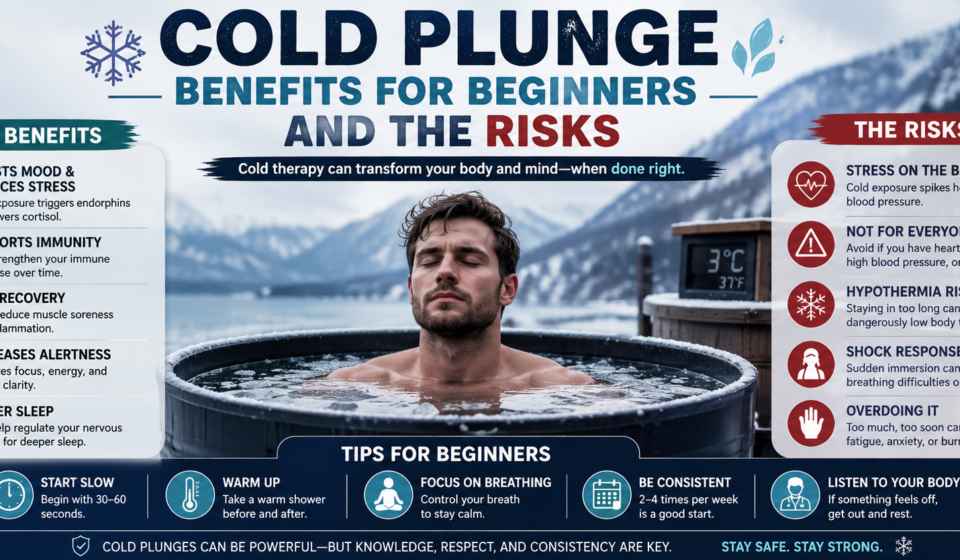
Cold Plunge Benefits for Beginners: What Helps, What’s Overhyped, and the Real Risks
Cold plunging has gone from a niche recovery technique used mainly by elite athletes to a mainstream wellness trend, complete with dedicated tubs, social media challenges, and no shortage of bold claims about what a few minutes in freezing water can supposedly do for your body and mind. Some of those claims hold up reasonably well under actual research. Others are considerably overstated. And for beginners specifically, there’s a real risk conversation that tends to get glossed over in favor of the exciting parts.
Here’s a more balanced look at what cold plunging can genuinely offer a beginner, where the evidence is thinner than the hype suggests, and what actually matters for doing it safely if you decide to try it.
What Cold Exposure Actually Does Physiologically
When you submerge your body in cold water, several things happen fairly quickly. Blood vessels near the skin constrict, redirecting blood flow toward your core to protect vital organs from the temperature drop. Your heart rate typically increases initially as part of the body’s stress response, and your body begins working to generate heat through processes like shivering. This is a genuine, measurable physiological stress response — not a passive experience — which is important context for understanding both the potential benefits and the real risks involved.
The Benefits With Reasonably Solid Evidence Behind Them
Reduced perceived muscle soreness after intense exercise is one of the more consistently supported benefits, particularly for reducing the subjective feeling of soreness in the day or two following strenuous activity. The mechanism appears related to reduced inflammation and swelling in the affected muscle tissue, though the effect on longer-term muscle adaptation and strength gains is more debated — some research suggests cold exposure immediately after strength training may actually blunt some of the adaptive benefits you’re training for, which is worth knowing if your primary goal is muscle growth rather than pure recovery.
A genuine mood and alertness boost immediately following cold exposure is well-documented and tends to be one of the more reliable, consistently reported benefits among regular practitioners. This appears linked to a measurable increase in circulating norepinephrine and dopamine following cold exposure, which can produce a real, noticeable improvement in mood and mental alertness in the immediate aftermath — though this effect is short-term and shouldn’t be mistaken for a long-term treatment for mood disorders.
Improved stress tolerance over time is a more interesting, if less flashy, benefit. Regularly and voluntarily exposing yourself to an acute physical stressor in a controlled way appears to build a degree of tolerance and comfort with discomfort more broadly, which some practitioners and a growing body of research connect to improved resilience in managing other forms of stress, though this is a harder effect to measure precisely than something like muscle soreness.
The Claims That Are More Overstated Than the Marketing Suggests
Significant fat loss is one of the most commonly claimed benefits and one of the weakest, evidence-wise, for beginners specifically. While cold exposure does activate brown fat, a type of fat tissue involved in generating heat, and can modestly increase calorie expenditure in the short term, the actual magnitude of this effect is small, and it’s nowhere close to a meaningful fat loss strategy on its own for most people. Treating cold plunging as a weight management tool sets unrealistic expectations that aren’t well supported by the actual research.
Dramatic immune system boosts are frequently claimed but have thinner supporting evidence than the popular narrative suggests. Some studies show modest changes in certain immune markers with regular cold exposure, but the leap from “some immune markers changed in a study” to “cold plunging prevents illness” is a considerably bigger claim than the research actually supports.
Detoxification claims — the idea that cold exposure “flushes toxins” from the body — don’t have meaningful scientific support and are more marketing language than physiological reality. The body’s detoxification processes are handled by the liver and kidneys regardless of water temperature, and cold exposure doesn’t meaningfully change this process.
The Real Risks Beginners Often Underestimate
This is the part that gets skipped most often in cold plunge content, and it’s genuinely important, especially for beginners without a gradual acclimation period.
Cold shock response is the most immediate risk and the one most likely to affect a true beginner. Sudden immersion in cold water can trigger an involuntary gasp reflex, a rapid increase in heart rate and blood pressure, and hyperventilation, all within the first minute of entering cold water. For someone with an undiagnosed heart condition, or simply someone entering water that’s colder than they’re prepared for, this response can be genuinely dangerous, not just uncomfortable.
Cardiovascular strain is a real consideration, particularly for anyone with existing heart conditions, high blood pressure, or other cardiovascular risk factors. The combination of rapid blood vessel constriction and increased heart rate places real, measurable strain on the cardiovascular system, which is why medical guidance around cold exposure consistently recommends caution and, in many cases, a conversation with a doctor first for anyone with relevant risk factors.
Never plunge alone, especially as a beginner. This is one of the most consistently repeated safety recommendations, and for good reason — if something does go wrong, whether that’s an unexpected physical reaction or simply losing the ability to safely exit the water due to sudden overwhelm, having someone else present is a critical safety measure that beginners in particular shouldn’t skip in the name of convenience.
How Beginners Should Actually Start
Rather than jumping straight into an ice bath at the coldest temperature you can find, a genuinely beginner-appropriate approach starts considerably more conservatively:
- Start with cooler-than-comfortable, rather than genuinely ice-cold, water, and shorter durations — even 30 to 60 seconds is a reasonable starting point rather than the multi-minute sessions often shown in social media content.
- Gradually decrease water temperature and increase duration over weeks, not days, allowing your body to actually acclimate rather than forcing a full-intensity experience immediately.
- Focus on controlled, slow breathing from the moment you enter the water, since managing the initial gasp reflex and subsequent hyperventilation is the most important immediate skill to develop.
- Always have someone else present, particularly in the first several sessions.
- If you have any cardiovascular risk factors, existing heart conditions, or are pregnant, talk to a doctor before starting, rather than assuming general wellness content applies equally to your specific health situation.
The Realistic Takeaway
Cold plunging offers some genuine, reasonably well-supported benefits — particularly around recovery, mood, and stress tolerance — but it’s not the near-miraculous intervention that some marketing and social media content suggests, and the risks, while manageable with a sensible approach, are real enough that beginners shouldn’t skip the gradual acclimation process in favor of jumping straight to the most intense version they’ve seen online. Approached carefully, it’s a reasonable addition to a wellness routine. Approached carelessly, it’s a genuine cardiovascular stressor that deserves more caution than it typically gets in beginner-facing content.



[…] there’s the less common but more intense option: cluster headaches. These tend to camp out behind one eye, hit hard, and come in waves — sometimes for weeks at a […]
[…] heavy legs point to something more medical. Peripheral artery disease narrows the arteries feeding your legs, causing heaviness or cramping during activity that eases with rest — doctors call this […]