
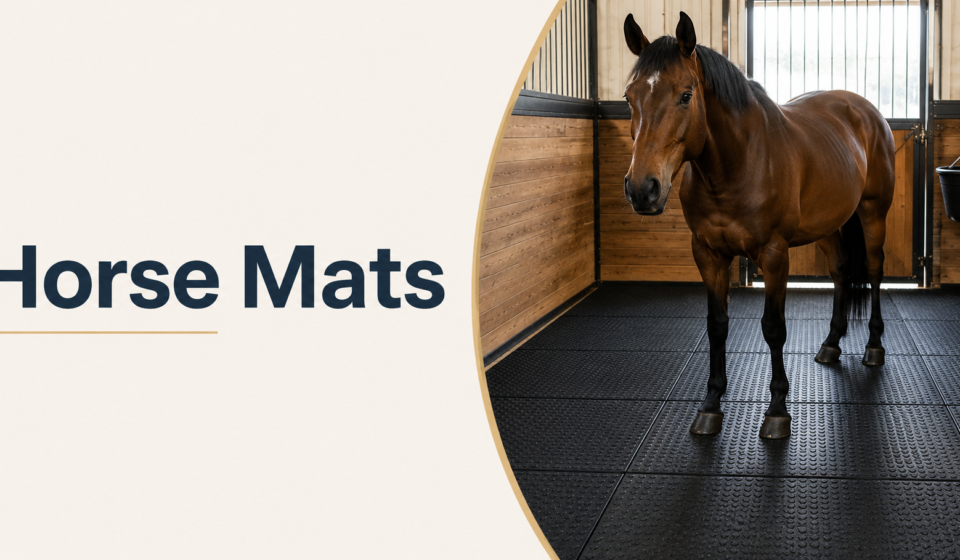
Horse mats are rubber flooring products designed to cover the floors of stalls, trailers, wash bays, and other areas where horses stand or walk. They provide cushioning, insulation, and a non-slip surface that protects horses’ joints, reduces bedding costs, and makes cleanup easier.
What Exactly Are Horse Mats?
Horse mats are thick, dense rubber sheets or interlocking tiles installed over concrete, wood, gravel, or dirt flooring in equine facilities.
Unlike a bare concrete floor, which is hard and unforgiving, horse mats create a cushioned barrier between the animal and the ground. This matters because horses spend long hours standing, and prolonged pressure on hard surfaces can contribute to joint strain, hoof problems, and general discomfort.
Why Horses Need Mats Instead of Bare Flooring
A horse’s legs and hooves are under constant stress just from standing still. Concrete and packed dirt offer no give, so every hour spent standing adds cumulative strain. Horse mats solve several problems at once:
- Cushioning – Reduces pressure on joints, tendons, and hooves during prolonged standing.
- Insulation – Rubber doesn’t conduct cold as well as concrete, keeping stalls warmer in winter.
- Traction – A textured or ribbed surface helps prevent slipping, especially when floors get wet.
- Bedding reduction – A well-fitted mat means less straw or shavings are needed, since the mat itself provides cushioning.
- Easier cleaning – Urine and moisture sit on top of the mat rather than soaking into the ground, so mucking out is faster.
- Floor protection – Mats shield concrete or wood from the erosive effects of urine and constant hoof traffic.
Types of Horse Mats
Not all horse mats are built the same way. The right type depends on where it’s being installed and how it will be used.
Interlocking Stall Mats
These mats connect edge-to-edge using puzzle-piece-style joints, creating a seamless surface across a stall. They’re popular because they stay in place without adhesive and can be lifted individually for cleaning or replacement.
Straight-Edge Mats
These are flat rectangular mats without interlocking edges, usually installed with mats butted tightly against each other. They tend to be easier to install in oddly shaped spaces but may shift slightly over time if not secured.
Trailer Mats
Designed specifically for horse trailers, these mats are often thinner and lighter than stall mats but still tough enough to handle the vibration, movement, and moisture exposure of transport. They also help dampen noise, reducing travel stress for horses.
Wash Rack and Grooming Mats
These mats are designed for wet areas and usually have raised patterns or perforations that allow water to drain through rather than pool on the surface. Good drainage matters here because standing water creates slip hazards.
Perforated or Drainage Mats
Used in areas prone to moisture buildup, these mats have small holes throughout that allow liquid to pass through to the ground or a drainage layer beneath.
How to Choose the Right Horse Mat
Picking the right mat comes down to a few practical factors:
- Thickness – Stall mats typically range from ¾ inch to 1 inch thick. Thicker mats offer more cushioning but cost more and are heavier to install.
- Size – Standard sizes often run 4×6 feet, though mats are available in various dimensions to fit stalls, trailers, and wash areas.
- Surface texture – A textured top surface improves grip, which is especially important in areas that get wet.
- Material density – Denser rubber lasts longer and resists compression better under repeated weight.
- Installation type – Decide whether interlocking or straight-edge mats suit the space better based on shape and whether you want a fully seamless fit.
- Intended use – A mat for a permanent stall floor has different requirements than one for a trailer or a temporary wash area.
Installing Horse Mats
Installation generally follows these steps:
- Prepare the base surface. The floor should be as level and compacted as possible, whether it’s concrete, packed dirt, or gravel.
- Measure the space. Accurate measurements prevent gaps or excessive cutting.
- Lay the mats. Start from one corner and work outward, fitting interlocking edges together or butting straight edges tightly.
- Trim as needed. Mats can usually be cut with a utility knife or jigsaw to fit around posts, doorframes, or corners.
- Check for gaps. Small gaps can trap moisture and debris, so mats should sit as tightly together as possible.
Maintaining Horse Mats
Proper maintenance extends the life of horse mats significantly:
- Sweep or scrape off manure and bedding daily.
- Periodically lift mats to check for moisture, ammonia buildup, or debris trapped underneath.
- Hose down or scrub mats occasionally to remove grime and odour.
- Inspect edges and seams for curling or wear, which can create trip hazards.
- Replace any mat that has developed deep cracks or lost its cushioning over time.
Common Problems With Horse Mats (and How to Avoid Them)
Odor buildup underneath mats: This usually happens when urine seeps through seams and pools beneath the mat. Regularly lifting mats to clean and dry the base surface helps prevent this.
Mats shifting or curling at the edges: This is more common with straight-edge mats or mats installed on an uneven base. A level subfloor and properly fitted interlocking mats reduce this issue.
Slipping in wet areas: Smooth-surfaced mats in wash bays or trailers can become dangerously slick. Choosing textured or perforated mats designed for wet conditions solves this.
Horse Mats vs. Traditional Bedding
| Factor | Horse Mats | Bedding Alone |
|---|---|---|
| Comfort | Consistent cushioning across the floor | Comfort depends on bedding depth and freshness |
| Cost over time | Higher upfront cost, lower ongoing cost | Lower upfront cost, ongoing recurring expense |
| Cleaning | Faster, easier to scrape and clean | Requires frequent full mucking out |
| Insulation | Reduces cold transfer from floor | Limited insulation depending on bedding type |
| Durability | Lasts years with proper care | Needs continual replenishing |
Most horse owners use mats and a light layer of bedding together, combining the mat’s cushioning with the bedding’s absorbency for waste management.
Questions About Horse Mats
Question: How thick should horse mats be? Answer: Most stall mats range from ¾ inch to 1 inch thick, which provides a good balance between cushioning and durability. Thicker mats offer more shock absorption but are heavier and cost more, while thinner mats are easier to handle but provide less protection over time.
Question: Do horse mats need bedding on top? Answer: Mats reduce the amount of bedding needed but don’t fully replace it. A thin layer of shavings or straw on top of the mat still helps with moisture absorption and comfort, especially in stalls where horses lie down.
Question: How long do horse mats last? Answer: With proper care, quality horse mats can last many years, often a decade or more. Lifespan depends on material density, daily wear, and how consistently the mats are cleaned and inspected for damage.
Question: Can horse mats be used in trailers? Answer: Yes, trailer-specific mats are designed to handle vibration, movement, and moisture during transport. They also help reduce noise and provide traction, which can make the ride more comfortable and less stressful for the horse.
Question: Are horse mats slippery when wet? Answer: Smooth mats can become slippery when wet, which is why textured or perforated mats are recommended for wash areas and other spots prone to moisture. Surface pattern significantly affects slip resistance.
Question: Do horse mats smell bad over time? Answer: Odour issues usually come from urine seeping through seams and pooling underneath the mat rather than the mat material itself. Regularly lifting mats to clean and dry the subfloor prevents ammonia buildup and lingering smells.
Question: What’s the difference between interlocking and straight-edge horse mats? Answer: Interlocking mats connect via puzzle-style edges for a tighter, more secure,e seamless fit, while straight-edge mats are placed edge to edge. Interlocking styles tend to shift less but can be more complex to install in irregular spaces.
Question: Do I need to glue horse mats down? Answer: Most stall mats don’t require adhesive since their weight and interlocking design keep them in place.
Final Thoughts
Horse mats are a practical, long-term investment for anyone managing stalls, trailers, or wash areas. They cushion joints, reduce bedding costs, improve traction, and make daily cleanup significantly easier compared to bare flooring. Choosing the right thickness, texture, and installation type for your specific space ensures horse mats do their job well for years to come.



[…] you’re searching for vets in Buckhannon, WV, you’re likely looking for a trustworthy animal hospital near you, checking hours before an […]
[…] have not yet reached adulthood. Understanding these differences helps clarify exactly what “a male horse is called” in various […]