
My shoulders used to feel like they belonged to somebody twenty years older. Reaching for a high shelf turned into this whole wincing production, and for way too long I just assumed that’s what happens after enough years hunched over a laptop. Inevitable, basically, or so I told myself.
It wasn’t inevitable though. A few months of consistent, genuinely simple yoga at home — no studio, no fancy mat, the cheap one I already had worked fine — and most of that stiffness just quietly went away. Didn’t even notice exactly when. So if your shoulders feel locked up, phone neck, desk job, whatever’s causing it, these yoga poses for stiff shoulders at home are worth actually sticking with rather than trying once and giving up a week later.
Why Shoulders Get This Stiff
Strange joint honestly, more mobile than nearly anything else in your body, which ironically makes it more prone to getting stuck in bad positions than something more stable like your hip. Hours of typing, scrolling, driving — all of it rounds your shoulders forward and holds them there long enough your body just accepts that as normal now.
Stress adds to it too. Loads of people carry tension straight into their shoulders and traps without noticing, shoulders creeping toward the ears through a stressful afternoon, no conscious decision involved at all.
Fix isn’t complicated though. Just consistent, gentle movement through ranges your shoulders quietly stopped using a while back.
Before You Start
No special equipment needed really. Mat helps for floor comfort, not required. Wear something you can actually move in. And go slow at first — stiff shoulders respond way better to gentle repeated movement than forcing a deep stretch too fast on day one, which just triggers more guarding, not less.
Cat-Cow Pose
Hands and knees, wrists under shoulders, knees under hips. Inhale, drop your belly, lift chest and gaze up a bit — that’s cow. Exhale, round your spine toward the ceiling, chin tucks — cat. Slow movement between the two, syncing with breath as you go.
Feels more like a back stretch at first, sure, but it actually mobilizes the whole upper spine and shoulder blades together, which matters because shoulder stiffness is rarely isolated to just the shoulder joint alone.
Eight, ten slow rounds.
Thread the Needle
From hands and knees, slide your right arm under your left, palm up, lowering that right shoulder and ear toward the floor. You’ll feel this deep in the back of the shoulder, upper back too — an area that honestly barely gets stretched by most people ever.
Thirty seconds, breathe through it slow, switch sides.
Eagle Arms
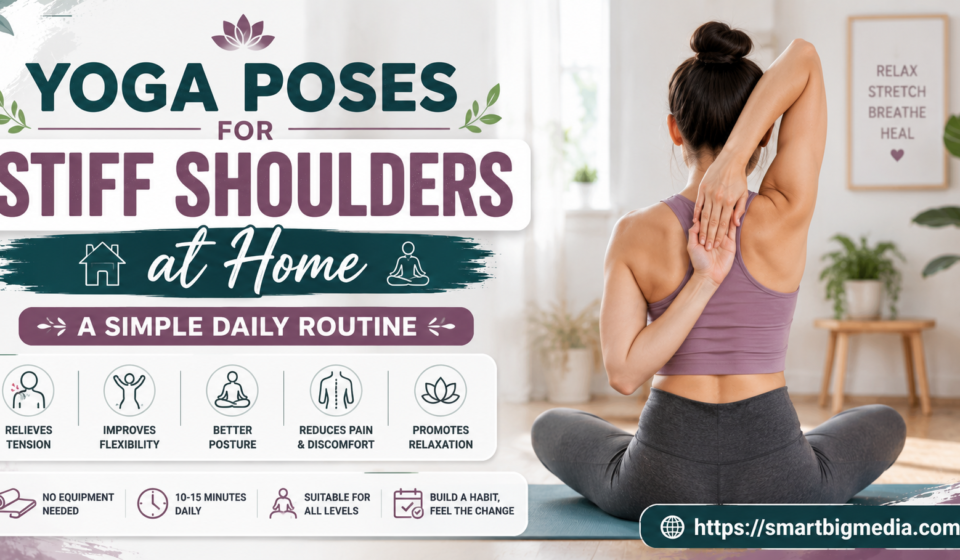
Cross right arm over left at the elbow, wrap forearms around each other if you can, palms together — or just hold opposite shoulders if the full wrap isn’t there yet, totally normal starting out. Lift elbows a touch while dropping shoulders away from your ears.
Targets the back of the shoulders directly plus that spot between your shoulder blades, an area that gets basically zero attention during a normal day of sitting and typing. Twenty, thirty seconds, switch the arm crossing, repeat.
Cow Face Pose Arms
Right arm reaches up, bends behind your head, reaching down your back. Left arm reaches down and behind, reaching up to meet it. Try clasping hands — use a towel or strap between them if they don’t reach, which, again, completely normal.
Intense one for a lot of people early on. Genuinely intense if your shoulders are pretty locked up. Don’t force the clasp, the stretch happens regardless of whether your hands actually touch.
Twenty, thirty seconds each side.
Puppy Pose
From hands and knees, walk hands forward, hips staying stacked over your knees, chest lowering toward the floor. Forehead can rest down if your neck’s comfortable with that.
Opens shoulders and chest at the same time, genuinely relaxing too, almost restorative — nice one to hold a bit longer than the others honestly. Thirty, forty-five seconds, breathing slow and deep the whole way through.
Reverse Prayer Pose
Both arms behind your back, palms together if flexibility allows, fingers pointing up your spine. If that’s not there yet, hold opposite elbows behind your back instead, works fine as a starting point.
Directly opens the front of the shoulders and chest, an area that gets tight and short from years of rounded, forward-hunched posture. Twenty, thirty seconds.
Shoulder Rolls With Breath
Simple. Almost too simple to count as a real pose, but it genuinely works either as a warm-up or something to close a session with. Roll shoulders slowly backward, big circles, ten times, then forward, ten more, breathing deep and on purpose the whole time.
Sounds too basic to matter. Does help though, mostly as a way to actually notice tension you’ve been unconsciously holding all day without realizing it until right now.
Child’s Pose With Side Reach
Standard child’s pose first, hips toward heels, arms extended forward. Then walk both hands over to the right, feeling a stretch along your left side and shoulder. Hold, switch to the left side, opposite stretch.
Adds a lateral component that plain forward stretches tend to skip completely — hits the sides of your shoulders and torso in a way most routines just never touch.
A Realistic Daily Setup
You don’t need every single pose here, every single day, to see real change. A simple rotation you’ll actually keep doing beats an overwhelming routine you quit after a week from sheer exhaustion.
Morning: cat-cow, ten rounds, shoulder rolls, twenty total. Three minutes maybe. Barely counts as effort.
Evening, or whenever there’s a slightly longer window: thread the needle, eagle arms, cow face arms, reverse prayer, one side then the other. Ten, fifteen minutes, doable most days even when busy.
Weekend, more time available: full sequence, puppy pose and child’s pose with side reach included, moving slower, holding a bit longer than during the week.
Consistency Wins Over Intensity, Same as Always
Five minutes daily just beats a heroic thirty-minute session once a week that leaves you sore and skipping the next attempt. Shoulders respond to repeated gentle signals that a range of motion is safe. Not occasional aggressive stretching, which can actually trigger more guarding instead of less.
When to Actually Slow Down
Diagnosed shoulder injury, sharp pain instead of a normal stretch sensation, rotator cuff issue specifically — check with a doctor or physical therapist before just diving into these on your own. Gentle stretching helps most general stiffness, sure, but real injuries sometimes need something more targeted than a generic routine can offer.
Normal stretching feels like gradual tension release. Not sharp, not genuinely painful. Something hurts sharp instead of just feeling tight — back off right away, don’t push through it.
What to Actually Expect
First week or two, you’ll feel looser right after a session, then it fades back toward baseline by the next day. Completely normal, not a sign it’s failing. Three, four weeks of consistent practice, improvements start actually holding between sessions instead of resetting each time. Two months in, for most people, baseline stiffness itself has genuinely dropped — not just the temporary post-stretch feeling anymore.
Questions People Ask
How often should I actually do this? Daily, ideally, even just five minutes. Consistency matters way more than one long intense session weekly ever will.
Do I need to already be flexible to start? No, not remotely. These poses work specifically because they meet you wherever you currently are. Use a towel or strap if your hands can’t reach yet in poses like cow face or reverse prayer.
Can yoga fix chronic shoulder pain on its own? For general stiffness from posture and desk work, often yes, genuinely helps quite a bit. For a diagnosed injury or persistent sharp pain, see a professional rather than relying purely on stretching to fix something more serious than that.
Bottom Line
Stiff shoulders aren’t something you’re just stuck with forever because of how much time you spend at a desk. A handful of yoga poses, done consistently at home, zero equipment required, can genuinely loosen things up over a matter of weeks. Start small. Stay consistent. Don’t force anything. Range of motion comes back on its own timeline once you actually give your shoulders a reason to trust moving through it again.



[…] time. That was the excuse, every time, for years honestly. Ninety minute classes sounded lovely in theory, sure, but who’s got an hour and a half floating around most […]