

Stepped off a curb wrong. Nothing dramatic, small stumble really, but it rattled me more than it should have. Forties by then, and it was the first time I genuinely thought, huh, balance isn’t what it used to be. Never thought about balance as something that could decline honestly. Figured it was just there, automatically, always had been.
Not really how it works, turns out. Balance starts slipping gradually for a lot of people starting around their thirties, and by forties the decline gets noticeable if nothing’s actively pushing back against it. Good news though, genuinely good news — responds really well to targeted practice. This is yoga for improving balance after 40, built around what actually rebuilds stability, not generic stretching advice repeated everywhere.
Why Balance Declines With Age
Few things happen slowly as you age. Muscle strength, legs and ankles and core especially, declines without active maintenance. Proprioception — your body’s sense of joint position without looking — gets less sharp too. Inner ear function, handling a chunk of your actual balance sense, can shift subtly over time as well.
None of it overnight. Gradual enough most people don’t notice until a small stumble makes it obvious. The way mine did.
Reassuring part — all three, strength, proprioception, even the vestibular system to some extent, respond to consistent practice. Balance isn’t fixed. Trainable at basically any age, forties included, fifties too.
Why This Actually Matters
Falls become a much bigger deal as you age. Embarrassing stumble at twenty-five, sure, whatever. Same stumble decades later can mean a genuinely serious injury, since bone density and recovery capacity shift too. Working on balance now, before it’s a problem, might be one of the more underrated things you can do for long-term independence honestly.
Beyond fall prevention specifically — better balance just makes everyday movement feel more confident. Uneven ground, groceries up stairs, playing with grandkids on the floor, all easier when balance is solid instead of something you’re quietly worried about in the back of your mind.
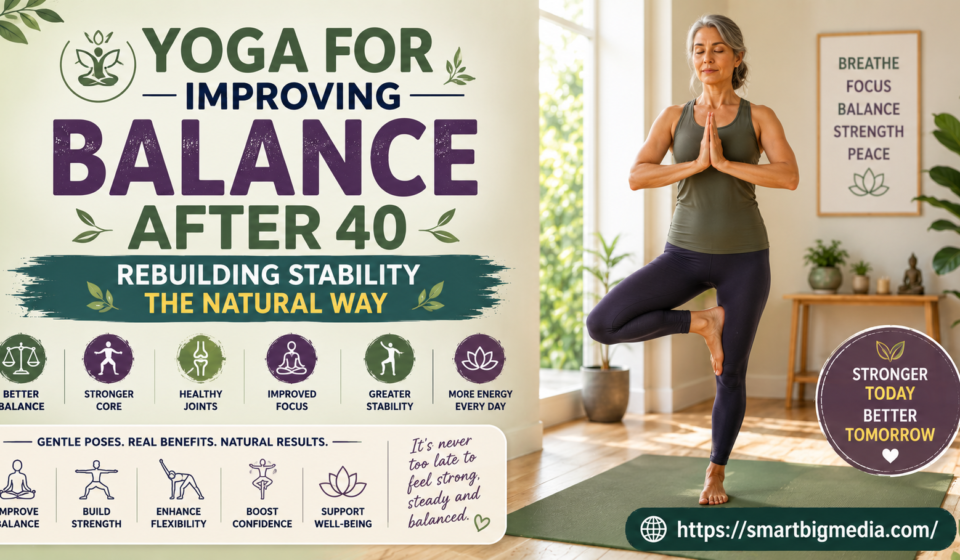
Tree Pose, The Starting Point
Nearly every balance routine starts here, for good reason. Standing tall, weight shifts to one foot, other foot against the inner calf or thigh, never directly on the knee. Hands at chest, prayer position, or reach overhead if steady enough.
Start lower on the leg if full tree feels shaky. No rush here — lower variations build the same fundamental skill regardless.
Fifteen, thirty seconds, switch sides. Daily practice, genuine improvement within a couple weeks usually, faster than most people expect honestly.
Warrior III
More advanced. Worth building toward gradually, not attempting cold. From standing, hinge forward at the hips, lift one leg straight back, arms extend forward, body forms something close to a T parallel to the floor.
Challenges balance while building real strength through the standing leg, hips, core, all at once. Too much initially? Keep a hand on a wall or chair for light support while building the coordination needed for the unsupported version.
Ten, twenty seconds, switch.
Eagle Pose
Cross one leg over the other, wrapping the foot behind the standing calf if flexibility allows, or just crossing at the thigh otherwise. Arms cross in front similarly, wrapping if possible.
Challenges balance specifically while limbs sit in an unusual, slightly compressed position — trains a kind of stability simpler poses don’t really touch. Fifteen, twenty seconds, switch.
Half Moon Pose
From a standing forward fold, weight shifts to one leg, the other lifts straight back, torso rotates open to the side, one hand reaching toward the floor or a block for support, the other reaching up.
Genuinely challenging. Completely fine keeping a hand on a wall here while building toward the full version over weeks, months even. Ten, fifteen seconds, switch.
Chair Pose
Feet together or hip-width, knees bend, hips lower as if sitting into an invisible chair, arms reach overhead. Not a classic “balance pose” exactly, but builds the leg and core strength everything else actually relies on.
Twenty, thirty seconds. Legs will work hard. That’s the point.
Standing Hand to Big Toe Pose
Standing on one leg, opposite knee lifts toward the chest, then extends forward, holding the big toe if flexibility allows or the calf or thigh otherwise. Standing leg stays strong and steady underneath.
Genuinely hard for a lot of people. Don’t get discouraged by the wobbling early on. Ten, fifteen seconds, switch.
A Realistic Weekly Setup
Three sessions weekly, fifteen to twenty minutes each, realistic starting point for most people honestly.
Session one: tree, chair, eagle. Foundational strength and basic balance mostly.
Session two: warrior III, half moon, standing hand to toe. More advanced, done with wall support as needed while confidence builds.
Session three: mix of everything, moving through each pose once, holding a bit longer than earlier in the week.
Using a Wall Isn’t Cheating, Worth Repeating
Real emphasis needed here because plenty of people feel embarrassed needing support and end up avoiding balance work entirely, which is genuinely counterproductive. Using a wall or chair while building strength and coordination is completely normal, not failure of any kind. Everyone starts somewhere. Support gets needed less and less over consistent weeks.
What to Actually Expect
First couple weeks, poses feel shaky, maybe frustratingly so if you’re used to feeling generally capable. Normal, genuinely, not a sign you’re doing anything wrong. Four to six weeks consistent practice, most people notice real improvement — less wobbling, longer holds, more confidence generally. Three months in, improvement often extends beyond yoga itself into everyday movement, uneven sidewalks, stepping off curbs, catching yourself instead of actually falling.
Beyond the Mat Itself
Balance work doesn’t only happen during a dedicated session. Brushing teeth on one leg, standing on one foot waiting for coffee, small moments throughout an ordinary day genuinely add up and reinforce what’s built during actual practice.
Safety Notes Worth Taking Seriously
Diagnosed inner ear condition, vertigo, significant existing balance disorder — check with a doctor first, some poses may need modification specific to your situation. Practice near a wall or sturdy furniture the first several times with new, more advanced poses, just in case. Stop immediately if you feel genuinely dizzy rather than the normal wobble that comes with balance training — different signal entirely.
Questions People Ask
How long before balance actually improves? Most notice real change within four to six weeks, three sessions weekly. Continued improvement extends to three months and beyond with ongoing practice.
Too late to start in my forties or fifties? No, not remotely. Balance responds to training at essentially any age. Starting later just means starting now instead of waiting, which matters more than the age you begin at.
Do I need to already be flexible? No. Balance and flexibility are related but distinct things. Plenty of inflexible people have excellent balance and vice versa. These poses build the specific skill directly, regardless of current flexibility.
Bottom Line
Balance isn’t something that just disappears with age and stays gone forever. Trainable skill, responsive to consistent practice, and yoga offers a genuinely effective, low-impact way to rebuild it starting wherever you currently are. A curb stumble doesn’t have to be the wake-up call it was for me. Start now, be patient with the early wobbling, and stability comes back steadily over the following weeks and months.