
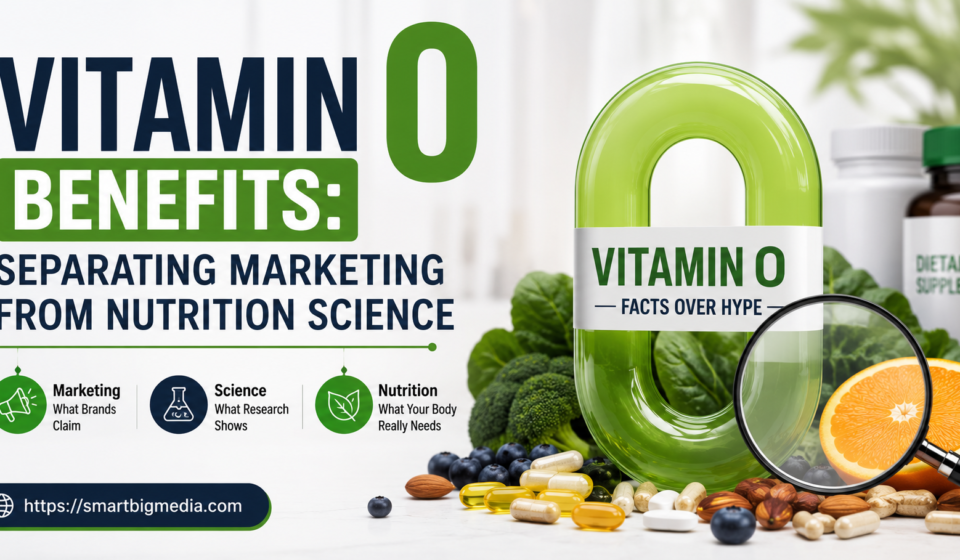
What People Mean by “Vitamin O”
People type “vitamin O benefits” into search bars a lot more than you’d think, and it almost always leads back to the same place: a wave of liquid supplements from the late 90s and early 2000s promising “stabilized oxygen” delivered straight into the bloodstream. A few drops under the tongue, more energy, stronger immunity — that was the pitch. Simple, clean, easy to believe. The label stuck around long after the science underneath it got picked apart.
Why It Isn’t a Real Vitamin
Real vitamins get defined by what happens when you’re missing them. Skip vitamin C long enough, and you get scurvy. Skip vitamin D, and rickets shows up. There’s a documented, named condition tied to each deficiency. Nothing like that exists for vitamin O — no deficiency disease, no biochemical pathway anyone’s mapped, nothing in the peer-reviewed literature.
The mechanism itself is the real problem, honestly. Oxygen enters your blood through your lungs, through tiny air sacs called alveoli, binding to hemoglobin from there. That’s the only route. Drinking something doesn’t open up some alternate path where oxygen slips past digestion and straight into circulation — your stomach acid breaks food down, it doesn’t function as a second respiratory system. This is more or less why the FTC eventually stepped in and took action against companies selling these products over unsupported claims.
Where the Idea Came From
There was a broader cultural moment around it too — oxygen got treated almost like a wellness miracle for a while, loosely tied to older, never-really-proven ideas about oxygen therapy from earlier decades. People wanted a quick fix for feeling run-down, and “vitamin O” offered one that sounded scientific. That word, vitamin, did most of the persuading. Borrowed credibility, basically, without any of the research to back it up.
What Actually Supports Energy and Immunity
If energy and immunity are the real goal here, and for most people searching this, they are, there are legitimate answers worth chasing instead.
Iron comes up first, since it’s directly tied to how oxygen actually moves through your blood — low iron is one of the most common, measurable causes of fatigue that doctors see. B12 matters too, closely linked to red blood cell production and nerve health. Vitamin D keeps showing up in immune research, with low levels connected to a higher risk of catching infections. Vitamin C plays a role as well, supporting immune cells directly and working as an antioxidant, with decades of actual research behind it. Magnesium gets overlooked a lot, but it’s involved in hundreds of the enzyme reactions that keep energy metabolism running smoothly.
The Bottom Line
Vitamin O just isn’t real, and the claims built around it don’t survive contact with basic biology. Feeling tired or catching every cold going around? Worth getting actual bloodwork done — iron, B12, vitamin D — rather than reaching for something built on a name that was never more than clever marketing to begin with.


[…] their effect on lipid levels. However, that’s something to pursue only under a doctor’s supervision, since side effects can appear at those […]
[…] things were discovered rather than how anyone planned them out. Through the early-to-mid 1900s, scientists kept isolating compounds one by one, each tied to a deficiency disease they’d already noticed […]