
Somewhere around hour six of a drive to my cousin’s wedding last summer, I ate an entire bag of gas station gummy worms and then felt genuinely awful for the next two hours — sluggish, kind of headachy, that specific sugar-crash fog where you’re technically awake but your brain’s running at about sixty percent.
That’s basically the whole problem with road trip snacking. It’s not that healthy snacks don’t exist. It’s that by the time you’re two hours in and hungry, and the next exit has a Sheetz and nothing else, you’ll eat whatever’s in front of you. The fix isn’t willpower. It’s packing better stuff before you leave, so the bad options never really come up.
I’ve done enough long drives now — some solo, some with kids in the back asking “are we there yet” every eleven minutes — to have a decent system for this. None of it’s complicated. Most of it just requires thinking a day ahead instead of grabbing whatever’s near the register at a rest stop.
Why Road Trip Snacking Goes Wrong So Easily
A few things stack up against you on a long drive. You’re sitting still for hours, which messes with your normal hunger cues — you get bored-hungry way more than actually-hungry. The car gets hot, so anything that melts, wilts, or goes soft is basically ruined by hour three. And gas stations are designed, deliberately, to sell you chips and candy because that’s what’s cheap to stock and easy to sell in bulk.
So the fix really is just packing ahead. Not a huge production. Just a cooler bag and twenty minutes the night before.
What Actually Makes a Good Road Trip Snack
Before getting into specific foods, it helps to know what you’re even looking for, because “healthy” alone isn’t enough of a filter — plenty of healthy foods are a nightmare to eat one-handed at sixty miles an hour.
It Needs to Survive Heat
Cars get hot, even with the AC running, especially anything is sitting in a cup holder or door pocket rather than a cooler. Chocolate melts. Cheese sweats. Anything with mayo or dairy that isn’t kept cold is just asking for trouble on a long enough drive.
It Needs to Be One-Handed
If you’re driving, or even if you’re not but you’re wedged into a passenger seat with a bag on your lap, you want stuff you can grab and eat without needing a fork, a napkin situation, or two free hands. Anything drippy, anything that needs assembly, gets messy fast in a moving car.
It Should Actually Fill You Up
This is where a lot of “healthy” snacks fail honestly. Rice cakes, some of those low-calorie granola bars — fine in theory, but twenty minutes later you’re hungry again and reaching for something else anyway. You want a mix of protein, fiber, and some fat in there, because that combination is what actually keeps you satisfied for a few hours instead of fifteen minutes.
It Shouldn’t Crumb Everywhere
Not a health thing exactly, but anyone who’s driven with crackers has learned this the hard way. Crumbs get into the seats, the console, places you will find them weeks later. Not the end of the world, just worth factoring in if you care about your car’s interior even a little.
Protein-Based Snacks That Travel Well
Hard-Boiled Eggs
Boil a batch the night before, peel or don’t, pack them in a small cooler. Protein-dense, keeps you full, doesn’t need refrigeration for a few hours if it’s cool enough in the car. The smell can be a little much in an enclosed space though, so maybe not the first thing to eat if you’ve got someone sensitive to that riding shotgun.
Beef or Turkey Jerky
Shelf-stable, doesn’t need a cooler at all, packed with protein, and it lasts basically forever in a glove box. Worth checking the label though — a lot of the gas station stuff is loaded with sugar and sodium way beyond what you’d expect. The better ones exist, just read the back before grabbing whatever’s on the rack near checkout.
String Cheese or Cheese Cubes
Needs a cooler to stay firm and not get weirdly warm and soft, but it’s an easy grab-and-eat protein source that most people actually enjoy, kids included. Pair it with some crackers or an apple, and it’s a real mini-meal, not just a snack.
Roasted Chickpeas or Edamame
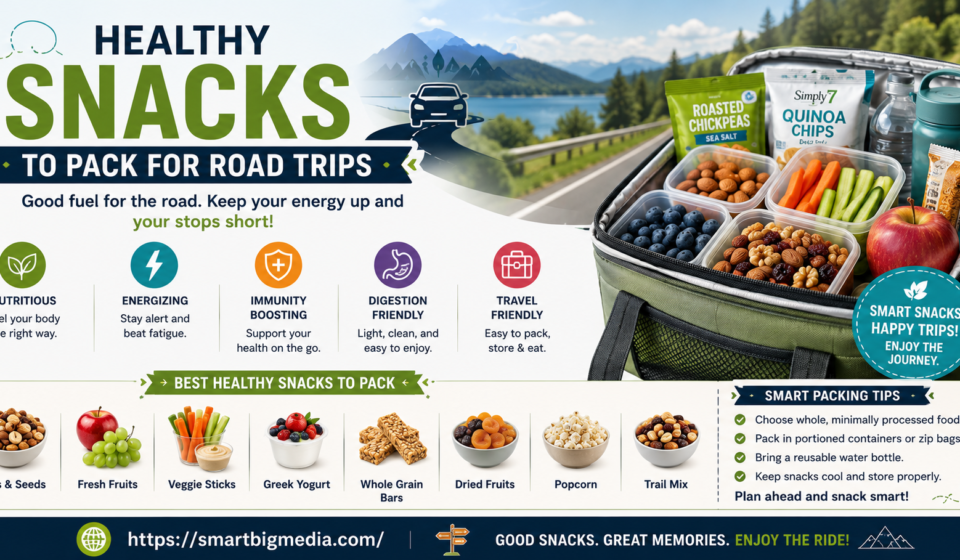
Crunchy, satisfying in a way that scratches the same itch as chips, but with actual fiber and protein behind it. Doesn’t need refrigeration, doesn’t crumble much, holds up in a bag for the whole drive without going stale too fast.
Fruit That Doesn’t Fall Apart in a Hot Car
Apples and Grapes
About as close to foolproof as road trip fruit gets. Apples don’t bruise easily, grapes are already bite-sized and mess-free, and neither needs much more than a bag or small container. Bananas, by contrast, are a terrible road trip fruit — they bruise if you look at them wrong and turn to mush by hour two. Learned that one the hard way, brown banana mush in a cup holder is not a good afternoon.
Dried Fruit, in Moderation
Dried mango, apricots, raisins, that kind of thing — shelf-stable, doesn’t need a cooler, satisfies a sweet craving without going full candy. Worth watching portions though, dried fruit is calorie-dense and it’s easy to eat way more than you’d think because there’s no water weight slowing you down.
Orange or Clementine Segments
A little more prep the night before, but pre-peeling and bagging them means nobody’s dealing with sticky peel bits in the car, which — trust me — end up everywhere otherwise. Refreshing in a way that other snacks aren’t, especially a few hours in when everything starts tasting the same.
Crunchy Stuff That Isn’t Chips
Homemade Trail Mix
This is honestly the workhorse of road trip snacking. Nuts, seeds, a bit of dried fruit, maybe a small handful of dark chocolate chips if you want something sweet mixed in. Portion it into small bags ahead of time rather than one giant bag — it’s way too easy to mindlessly eat through a big bag over the course of three hours without noticing.
Roasted Nuts, Unsalted or Lightly Salted
Almonds, cashews, pistachios — good fat, good protein, satisfying crunch. Pistachios specifically are a nice one for long drives because shelling them slows you down a little, which sounds minor but genuinely helps with mindless overeating in a way you don’t expect.
Whole Grain Crackers with Nut Butter Packets
Individual nut butter packets are a small game-changer here, no jar, no knife, no mess. Pair with whole grain crackers or apple slices and it’s filling, has some protein and fiber, and doesn’t need a cooler for short stretches.
Popcorn, Air-Popped
Bring your own bag, air-popped rather than the buttery movie theater stuff, and it scratches that crunchy-salty itch without being deep fried chips. Doesn’t crumb as badly as you’d think either, at least compared to crackers.
Drinks Worth Packing Alongside the Food
Snacks matter, but hydration is honestly half the battle on a long drive — dehydration alone can make you feel sluggish and foggy in a way that mimics being tired, and it’s easy to blame the drive itself when really it’s just that you haven’t had water in four hours.
- A reusable water bottle, refilled at stops, beats buying plastic bottles the whole way
- Herbal iced tea, unsweetened, if plain water gets boring on a long stretch
- Coconut water for something with a bit of natural electrolyte content, especially on hot-weather drives
- Go easy on the energy drinks and heavy caffeine — the crash after tends to hit right around the time you actually need to stay alert
Packing It All So It Actually Works
Use a Small Cooler, Not Just a Bag
Doesn’t need to be huge. A soft-sided cooler with an ice pack keeps cheese, hard-boiled eggs, and cut fruit in decent shape for most of a day’s drive. Anything shelf-stable — jerky, nuts, dried fruit — can just live in a regular bag up front where it’s easy to reach.
Portion Things Out Ahead of Time
Small bags or containers instead of one big bag of trail mix or grapes. It sounds like a small thing but it genuinely changes how much you eat without noticing — pulling from a portioned bag makes you pause between servings in a way a giant bag just doesn’t.
Keep It Within Reach of Whoever’s Not Driving
Sounds obvious, but it’s worth actually planning — snacks buried in the trunk under luggage might as well not exist for the next four hours. Front seat, center console, somewhere the passenger can grab from without a production.
Plan for the Whole Drive, Not Just “Snacks” Generally
A quick mental sketch the night before — something protein-heavy for the first stretch, something lighter and sweeter for the afternoon lull, water throughout — beats grabbing a random assortment and hoping it works out. Doesn’t need to be rigid, just a loose plan so you’re not improvising hungry at hour five.
Final Thoughts
None of this requires a total diet overhaul or some elaborate meal-prep situation the night before a trip. It’s really just picking a handful of things that travel well, portioning them out, and having them within reach so the gas station snack aisle stops being the default. Once you’ve got a rotation you like — a cooler bag, some trail mix, a few pieces of sturdy fruit — it becomes pretty automatic, and packing for the food side of a road trip stops being an afterthought you deal with at the first rest stop.
I still buy the occasional bag of chips on a long drive, not going to pretend otherwise.



[…] matter that it’s unofficial — the compounds themselves are real and they’re in a lot of everyday food. If you want more […]
[…] it through supplements can actually cause buildup problems over time. Water-soluble group — vitamin C, all the B’s — doesn’t store the same way, flushes out through urine instead, so you […]
[…] of this works as a one-time thing you do the night before a trip and then forget about entirely. The habits that actually survive long-term travel are […]