
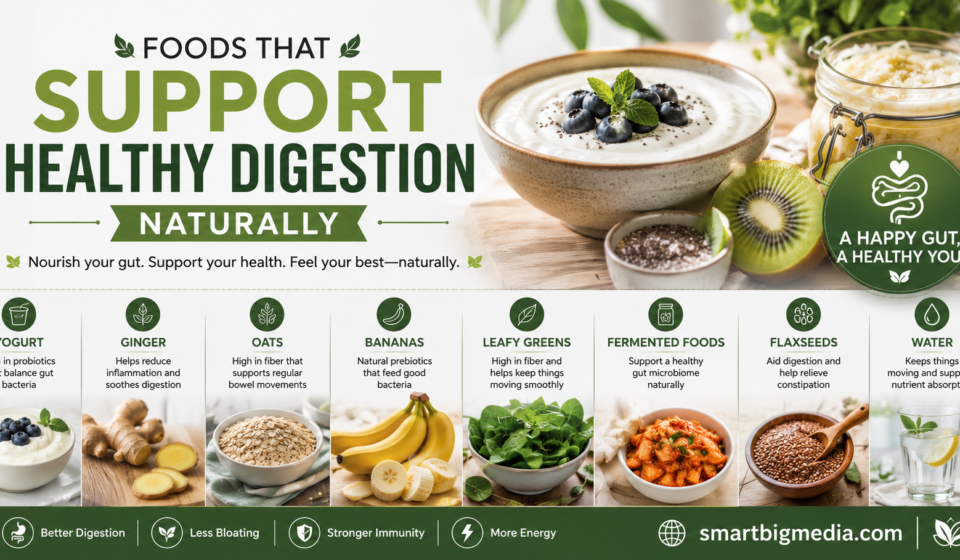
Didn’t take digestion seriously until my late twenties. A stretch of bloating, general stomach unease, bad enough that I finally sat down and actually looked at what I was eating instead of just pushing through it like usual. Turns out it was mostly the absence of things. Not some terrible food actively ruining everything, just — barely any fiber. Almost no fermented anything. A diet that was, if I’m honest, kind of beige, kind of the same five meals on rotation for years. Once I started adding things in, not cutting stuff out dramatically, just adding, the difference showed up faster than expected. A couple weeks, actually, which surprised me, because I’d figured this kind of thing took months to even notice.
So here’s a rundown of foods that genuinely support digestion, grouped roughly by what they’re actually doing down there, because “eat more fiber” gets repeated so often it’s basically lost all meaning at this point. Different foods do different jobs in your gut. Helps to know which is which instead of just tossing more roughage at the problem and hoping something sticks.
Why Digestion Deserves More Attention Than It Gets
Most people only think about digestion once something’s already gone sideways. Bloating. Discomfort. That sluggish feeling after a meal that shouldn’t have hit that hard, and somehow did anyway.
The Gut Does More Than Digest Food
Your digestive system isn’t just processing what you eat, full stop. It houses a huge portion of your immune system, plays into mood through the gut-brain connection, influences energy in ways that go way past “did I eat lunch yet.” A gut that’s not running well creates ripple effects that show up somewhere else entirely — which is part of why digestive health gets tied to so many seemingly unrelated symptoms people don’t think to connect back.
Fiber Isn’t One Thing
Trips people up constantly, this one. Soluble fiber dissolves in water, forms a gel-like substance. Insoluble fiber doesn’t dissolve, adds bulk instead. Both matter. Genuinely different jobs, which is part of why leaning hard on just one type of fiber-rich food doesn’t cover what your gut actually needs across the board.
Gut Bacteria Are Doing a Lot of the Actual Work
Trillions of bacteria live in your digestive tract, and what you feed them matters almost as much as what you feed yourself directly. Certain foods support the bacteria keeping digestion running smoothly. Others, eaten in excess, throw that balance off. Big part of why diet affects digestion so directly — not just fiber content on its own.
Fermented Foods for Gut Bacteria Support
This is probably the category that made the biggest difference for me personally. And it’s backed by a decent chunk of research at this point too, not just anecdote.
Yogurt and Kefir
Both contain live active cultures, beneficial bacteria that can help populate and support your gut microbiome over time. Kefir tends to have a wider range of bacterial strains than most yogurt, fermented with a more complex culture — though plain yogurt with live cultures is still a solid, easy option for most people who don’t want to overthink it.
Sauerkraut and Kimchi
Fermented cabbage, essentially, though kimchi usually shows up with more spice and other vegetables mixed in depending on the recipe. Both loaded with beneficial bacteria from fermentation. But — and this matters — it has to be unpasteurized. Pasteurization kills off the live cultures that made it useful for gut health in the first place, so check labels if that’s actually the goal here.
Miso and Tempeh
Fermented soy, both of them, both bringing beneficial bacteria plus a decent amount of protein along for the ride. Miso works well stirred into soups or dressings. Tempeh holds up as a meat substitute in a lot of dishes, firmer texture than tofu, more bite to it.
Fiber-Rich Foods That Actually Move Things Along
Fiber gets recommended constantly. Not all fiber sources are doing the same job though, so worth being specific here instead of lumping everything together.
Leafy Greens and Cruciferous Vegetables
Spinach, kale, broccoli, Brussels sprouts — mix of both fiber types plus decent water content, which supports smooth digestion generally speaking. Cruciferous vegetables specifically also carry compounds that support liver function, and the liver plays its own quiet role in digestion that almost never gets talked about compared to the gut itself.
Legumes
Beans, lentils, chickpeas. Genuinely some of the highest-fiber foods around, and they bring both soluble and insoluble fiber in the same package, which is rare. Worth introducing gradually if they’re not already a regular thing for you, since jumping fiber intake up too fast can cause temporary bloating before your gut catches up and adjusts.
Whole Grains
Oats, brown rice, quinoa, whole wheat. Swapping refined grains for whole versions adds meaningful fiber without requiring a total diet overhaul. Oats specifically carry a type of soluble fiber called beta-glucan, extra benefits beyond just the general fiber count.
Fruits With Skin On
A lot of the fiber in fruit actually lives in the skin. So apples, pears, and similar fruits eaten unpeeled bring more fiber to the table than the peeled version of the same fruit. Berries too — solid source, good fiber-to-sugar ratio compared to a lot of other fruit.
Foods With Natural Digestive Enzymes
Some foods come with built-in enzymes, help break down certain nutrients before your own digestive system has to shoulder all the work alone.
Pineapple
Contains bromelain, an enzyme that helps break down protein. Part of why pineapple gets traditionally paired with heavier, protein-dense meals across a lot of cuisines — not just a flavor thing, there’s an actual functional reason behind that pairing.
Papaya
Contains papain. Another protein-digesting enzyme, similar function to bromelain. Often recommended for people dealing with occasional bloating or sluggish digestion specifically, and gentle enough it usually doesn’t cause issues even for more sensitive stomachs.
Ginger
Not an enzyme source the same way pineapple and papaya are. But ginger has a long history in digestive discomfort remedies, and there’s real research behind its ability to speed up stomach emptying and ease nausea. Tea, grated into meals, chewed on in small amounts — works a few different ways.
Healthy Fats That Support the Digestive Process
Fat gets a bad reputation sometimes, unfairly, since certain fats genuinely support digestion rather than working against it.
Avocado
Fiber and healthy monounsaturated fat, same package. That fat content helps your body absorb certain fat-soluble vitamins from other foods in the same meal too — a detail that gets left out of avocado’s usual “healthy fat” reputation more often than it should.
Olive Oil
Supports the gallbladder’s release of bile, which plays into fat digestion, and it also carries some antimicrobial properties that may support a healthier gut bacterial balance overall. Extra virgin, less processed versions tend to retain more of the beneficial compounds than heavily refined stuff.
Nuts and Seeds
Chia and flaxseed in particular — fiber and healthy fat together, and both form a gel-like texture when soaked, which can have a soothing effect on the digestive tract for some people. Almonds, walnuts, fiber and fat too, just without that same gel-forming quality.
Hydrating Foods That Support Smooth Digestion
Water matters for digestion beyond just drinking enough directly. Plenty of foods bring hydration along with whatever other nutrients they’re carrying.
Cucumber and Celery
Mostly water by weight, both of them, with some fiber riding along too. Not the star of a meal on their own. But they add up, part of the overall hydration and fiber picture across a full day.
Watermelon and Other Melons
High water content again, decent fiber depending on how much of the fruit gets eaten. Good option in warmer months when hydration needs climb anyway, for obvious reasons.
Bone Broth
Not exactly a “food” in the traditional sense, but worth a mention. Contains gelatin and amino acids some people find soothing for digestion, particularly during gut sensitivity or recovery from illness.
Foods and Habits That Can Work Against Digestion
Just as important as what to add is knowing what tends to work against smooth digestion when it’s overdone.
Highly Processed Foods
Low fiber, often high in additives that some guts don’t handle well, generally missing the nutrients that support a healthy microbiome. Not about eliminating these entirely — just being aware that a diet heavy on processed food correlates with more digestive complaints, pretty consistently.
Eating Too Fast
More about habit than food choice, but comes up so often it’s worth mentioning anyway. Eating quickly means swallowing more air, which contributes to bloating, and it also means less time for your body to actually signal fullness — which leads to overeating stacked on top of the digestive strain.
Excess Alcohol
Can irritate the digestive tract’s lining, disrupt gut bacteria balance when consumed heavily or frequently. Works directly against a lot of the benefits gained from everything else on this list.
Building These Foods Into a Realistic Daily Diet
Knowing the list is one thing. Actually working it into regular meals without it feeling like a chore — that’s the part that decides whether any of this sticks past week one.
Start With Additions, Not Restrictions
Rather than overhauling an entire diet all at once, adding one or two of these foods into existing meals tends to work better long-term. A spoonful of kimchi with dinner. Berries at breakfast. Small additions add up over weeks in a way a dramatic overhaul almost never survives past the first couple of weeks.
Variety Matters More Than Perfection
No single food on this list is doing all the work by itself. A gut exposed to a wide range of fiber types, fermented foods, healthy fats tends to function better than one leaning hard on just one or two “superfood” picks, no matter how good those particular foods are in isolation.
Final Thoughts
Digestion doesn’t need a dramatic diet overhaul to improve. Often it’s just adding in what’s missing rather than eliminating everything that might possibly be a problem. Fermented foods for gut bacteria, fiber-rich vegetables and legumes for regularity, natural enzymes from pineapple and papaya, healthy fats that support absorption — these pieces work together more than any single one does alone. Worth giving it a few weeks before deciding if any of it’s actually making a difference, since gut changes, in my experience anyway, show up gradually. Not overnight. Never overnight.



[…] This is probably the biggest thing beginners get backward, often because it’s what a lot of people were taught growing up without much explanation. […]
zjhxkenkvewgdsgfxggekzpdfjuimw
lornkksphsswkzdersemggrwjtdzmp