
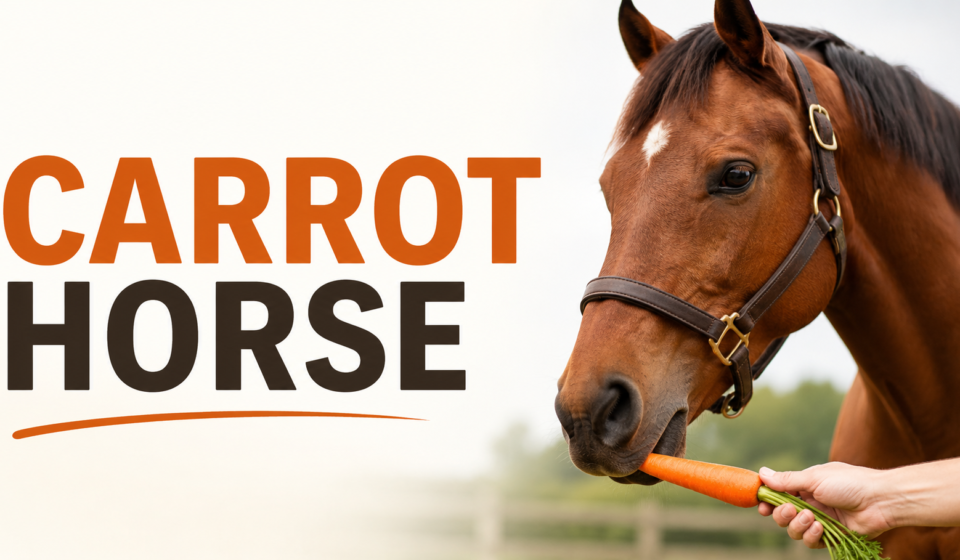
Carrots are one of the classic horse treats, and for good reason. Most horses enjoy the crunch and sweetness; they are easy to find, and they can be a simple reward during handling or training.
In general, yes, horses can safely eat carrots. The important part is how you feed them. Carrots should be washed, cut in a way that reduces the risk of choking, and offered in sensible amounts. They should be a treat, not a major part of the horse’s diet.
Are Carrots Safe for Horses?
For most healthy horses, carrots are safe when fed in moderation. They are commonly used by owners as a small snack, a reward after groundwork, or a way to make regular feed a little more appealing.
Still, “safe” does not mean a horse should eat unlimited carrots. Horses rely on forage such as hay or pasture as the foundation of their diet. Treats like carrots should be occasional and in small amounts, especially for horses that are overweight or have metabolic issues.
Why Horses Like Carrots
Many horses like carrots because they are sweet, crunchy, and easy to chew when prepared properly. They are also convenient for owners, since carrots are inexpensive and widely available.
Carrots can be useful in everyday horse care. Some owners use small carrot pieces as a reward when teaching a horse to stand quietly, load into a trailer, or respond to basic cues. They can also help build trust when offered calmly and safely.smartbigmedia.com/horse-and-foal-bonding-guide/Carrots can be useful in everyday horse care. Some owners use small carrot pieces as a reward when teaching a horse to stand quietly, load into a trailer, or respond to basic cues. They can also help build trust when offered calmly and safely.
How to Feed Carrots Safely
The main safety concern with carrots is choking. A horse can choke if it swallows a large piece before chewing it properly. Whole carrots and thick, round slices are riskier because they can get stuck in the oesophagus.
The safest approach is to cut carrots lengthwise into long, thin strips rather than round coins. Matchstick-style pieces are easier for the horse to manage and less likely to lodge in the throat.
To feed carrots safely:
- Wash the carrot first to remove dirt and residue.
- Cut it lengthwise into thin strips.
- Avoid thick round slices or whole carrots.
- Offer the treat on a flat, open palm with your fingers held together.
- Start with a small amount if the horse has not had carrots before.
Young, greedy, or inexperienced horses should be closely supervised when learning to take treats.
How Many Carrots Can a Horse Have?
There is no exact number that fits every horse, but a few carrot pieces or 1 to 3 medium carrots a day is often considered a reasonable treat amount for an average healthy horse.
Carrots should never replace hay, pasture, grain, or a balanced feeding plan. If a horse is gaining weight, has a sensitive digestive system, or is on a restricted diet, even small treats may need to be limited.
Horses with insulin resistance, equine metabolic syndrome, PPID, or a history of laminitis need extra care because carrots contain natural sugar. In those cases, ask a veterinarian before making carrots a regular treat.
Nutritional Benefits of Carrots
Carrots are not a complete feed, but they do offer some nutritional value in small amounts.
They contain water, which adds a little hydration. They also provide beta-carotene, which the body can convert into vitamin A. Vitamin A supports normal vision, immune function, and overall well-being.
Carrots also contain some fibre and are naturally low in fat. These benefits are modest because horses usually eat carrots in small portions, but they make carrots a better choice than many sugary or highly processed treats.
Risks to Keep in Mind
Carrots are generally low-risk, but there are a few things horse owners should watch for.
The biggest risk is choking, especially from whole carrots or thick round pieces. Always cut carrots into long, thin strips.
The second concern is sugar. While carrots are not candy, they do contain natural sugars. That matters for horses prone to laminitis, insulin problems, or weight gain.
Overfeeding is another issue. Too many treats can upset the balance of the horse’s diet and may encourage pushy behavior around food.
Dirty carrots should also be washed before feeding. Soil, sand, and grit are not things you want your horse eating in large amounts.
Can You Mix Carrots Into Feed?
Yes, many owners add a small amount of chopped carrot to regular feed, especially for a picky eater. Just make sure the pieces are cut safely, and the total amount stays moderate.
Some people also chill or freeze carrot strips during hot weather as a cool treat. This can be fine, but the pieces should still be thin enough for the horse to chew safely.
Frequently Asked Questions
Are carrots good for horses?
Yes, carrots can be a good treat for most healthy horses. They provide moisture, a little fibre, and beta-carotene. They should still be treated as a small addition to the diet, not a replacement for forage.
How should you cut carrots for a horse?
Cut carrots lengthwise into long, thin strips. Avoid round slices because they are closer in shape to the horse’s esophagus and may increase the risk of choking.
Can horses choke on carrots?
Yes. Horses can choke on carrots, especially if they are fed whole carrots or thick round pieces. Cutting carrots into long strips helps reduce that risk.
Can horses with laminitis eat carrots?
Horses with laminitis, insulin resistance, PPID, or other metabolic conditions may need to avoid carrots or eat only very small amounts. Because carrots contain natural sugar, it is best to ask a veterinarian before feeding them to a horse with these conditions.
How many carrots can a horse eat per day?
For a healthy average-sized horse, 1 to 3 medium carrots a day is a common practical limit. Some horses may need less depending on their weight, health, and diet.
Do horses actually like carrots?
Most horses do like carrots, but not every horse has the same taste. Some prefer apples, commercial treats, or other snacks, while a few may not be very interested in carrots at all.
Can foals eat carrots?
Foals can usually try very small amounts of carrot once they are eating solid food, but the pieces should be extra thin and easy to chew. Keep portions minimal and supervise them closely.
What is the best way to hand-feed a carrot?
Place the carrot piece on a flat palm with your fingers together. Let the horse take it with its lips. Do not hold the carrot between your fingertips, because that makes accidental nips more likely.
Final Thoughts
Carrots are a simple, affordable, and well-loved treat for many horses. They are best fed washed, cut into long strips, and offered in small amounts.
For most healthy horses, an occasional carrot is perfectly fine. The main things to remember are to prevent choking, avoid overfeeding, and be careful with horses that have metabolic conditions or a history of laminitis.



[…] is a small town, so most residents choose between a handful of established clinics rather than a long list of options. Here are the main […]