
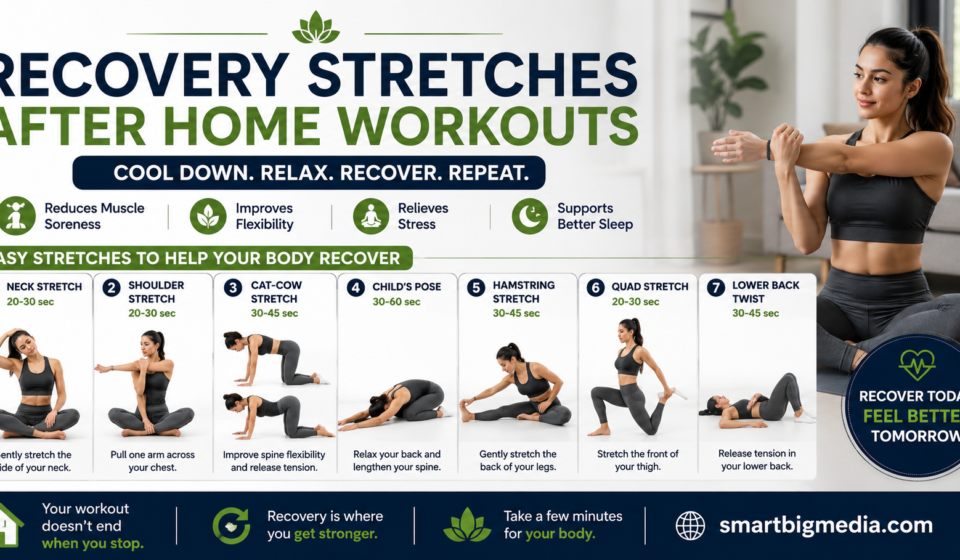
For the longest time my “cool down” after a home workout was, honestly, just stopping. Finish the last set, chug some water, sit on the floor for a minute scrolling my phone, get up, shower. No stretching. Nothing deliberate. An abrupt stop, like slamming on the brakes at full speed. Paid for it eventually — tight hips that never quite loosened up, a lower back that would seize randomly on days I hadn’t even worked out particularly hard. Took a friend pointing out, bluntly, not gently at all, that I was basically skipping half the workout for me to change anything about it. Recovery isn’t the boring afterthought tacked onto the end. Arguably as important as the workout itself, at least if the goal is doing this long-term without your body slowly falling apart underneath you.
Why Post-Workout Stretching Matters More Than People Think
A lot of people skip this step entirely, or rush through it in about thirty seconds flat, mostly because the workout itself feels like the part that counts, the part worth the effort.
Muscles Tighten as They Recover
After exercise, muscles go through a repair process, and part of that involves some natural tightening as fibers rebuild themselves. Left unaddressed, this compounds — workout after workout, gradually reducing range of motion in ways that aren’t always obvious day to day but absolutely add up over months of just… not addressing it.
It Helps With Blood Flow and Waste Removal
During exercise, muscles produce metabolic byproducts that need clearing out afterward. Gentle stretching, paired with continued light movement, supports blood flow through those tissues, which helps the clearing process along rather than letting everything sit stagnant while you’re parked on the couch for the next hour.
It’s a Chance to Actually Check In With Your Body
Overlooked a lot, this one. Stretching after a workout is a natural moment to notice if something feels off — unusual tightness on one side, a joint not moving quite the way it normally does. Worth paying attention to before it becomes a bigger issue down the line instead of after.
Stretches for the Lower Body
Most home workouts lean pretty heavily on legs and hips, whether that’s squats, lunges, or just a lot of standing movement in general, so this area usually needs the most attention afterward.
Standing Quad Stretch
Standing on one leg, pull the opposite ankle toward your glutes, knees kept close together, hips pushed slightly forward. Holding onto something for balance is completely fine, especially early on before this becomes second nature. Targets the front of the thigh, which takes a beating during any squat or lunge pattern.
Seated Hamstring Stretch
Sitting on the floor, one leg extended straight, the other bent with the foot tucked toward the inner thigh. Reaching toward the extended foot, back relatively straight rather than rounding forward aggressively. Hamstrings tighten up a lot after deadlifts, running, jumping movements — pretty much anything explosive.
Figure-Four Stretch for the Glutes and Hips
Lying on your back, cross one ankle over the opposite knee, pull the uncrossed leg toward your chest. Targets the glutes and outer hip, an area that gets worked hard during squats and lunges and honestly most lower body exercise in general, but rarely gets stretched properly afterward.
Calf Stretch Against a Wall
Hands against a wall, one foot back with the heel pressed into the floor, leaning forward gently until a stretch is felt in the back of the lower leg. Calves take a lot of impact during jumping movements or cardio work,
Hip Flexor Stretch
A kneeling lunge position, back knee on the ground, hips pressed gently forward. Targets the front of the hip — an area that gets tight from a lot of sitting during the day, on top of whatever tightness the workout itself adds. One of the more universally useful stretches on this list, regardless of what the workout involved.
Stretches for the Upper Body
Even workouts that feel leg-focused often involve the upper body more than people realize — stabilizing, bracing, general tension held throughout the whole session without noticing it building.
Cross-Body Shoulder Stretch
Bringing one arm across the chest, using the other arm to gently pull it closer, feeling the stretch through the back of the shoulder. Useful after anything involving pushing or pulling movements, which covers a huge chunk of common home workout styles.
Overhead Triceps Stretch
Reaching one arm overhead, bending the elbow so the hand drops behind the head, using the other hand to gently press the elbow further back. Targets triceps, a bit of shoulder too — worked hard during any pressing movement.
Chest Opener
Standing with hands clasped behind the back, gently lifting the arms while opening the chest forward. A lot of home workouts — especially combined with a desk-adjacent lifestyle the rest of the day — leave the chest tight and the upper back rounded, so this one’s worth prioritizing even on days when the workout wasn’t chest-focused at all.
Neck Stretches
Gently tilting the head side to side, then forward and back, holding each position briefly. Tension accumulates here from workouts involving a lot of core work or overhead movement, and it’s an area people forget almost entirely.
Stretches for the Core and Back
Core and lower back absorb a lot of stress during most home workouts, even ones that aren’t specifically ab-focused, just from the bracing and stabilizing involved in basically everything else you do.
Child’s Pose
Kneeling, then sitting back onto the heels while reaching the arms forward and letting the chest drop toward the floor. A gentle, broad stretch through the lower back, hips, and shoulders all at once — genuinely one of the more relaxing positions on this whole list, worth holding a bit longer than the more targeted stretches.
Cat-Cow Stretch
On hands and knees, alternating between arching the back upward and dropping it downward, slow and controlled. Mobilizes the whole spine, particularly useful after workouts involving a lot of core bracing, since that bracing tends to leave the back feeling stiff afterward.
Seated Spinal Twist
Sitting with legs extended, bending one knee and crossing it over the opposite leg, gently rotating the torso toward the bent knee. Targets rotational mobility in the spine — an area a lot of straightforward home workouts, bodyweight routines especially, just don’t address on their own.
Cobra Stretch
Lying face down, pressing up through the hands while keeping the hips on the floor, arching the lower back gently. Counteracts a lot of the forward-hunched positioning that shows up during core-focused exercises like planks or crunches.
How Long to Hold Each Stretch
Trips people up a fair amount, this part, mostly because advice online varies pretty widely depending on where you look.
The General Guideline
Somewhere around twenty to thirty seconds per stretch tends to be enough for a genuine benefit, without turning the whole routine into a half-hour ordeal nobody has time for right after a home workout. Shorter than that and tissues don’t get enough time to actually respond. Much longer and the benefit doesn’t really scale up proportionally for most people.
Breathing Matters More Than People Realize
Holding a stretch while holding your breath at the same time tends to work against the whole point, since tension in the breath often mirrors tension in the muscle itself. Slow, steady breathing through each stretch helps the muscle actually release instead of just being pulled on while staying tight and resistant the whole time.
It’s Fine to Repeat Tighter Areas
If one side or one muscle group feels noticeably tighter than the rest — and it usually does, for most people, on one side more than the other — nothing wrong with spending extra time there, even repeating that particular stretch a second time after moving through the rest of the routine.
Building This Into a Realistic Routine
Knowing individual stretches is one thing. Actually doing them consistently after every home workout is the part that decides whether any of it makes a real difference over time.
Keep It Short Enough to Actually Happen
Five to ten minutes after a workout is genuinely enough to make a meaningful difference. Keeping it in that range makes it far more likely to actually happen consistently, rather than getting skipped the second you’re tired or short on time, which, let’s be honest, is most of the time.
Pick a Handful, Not the Whole List
Rather than trying to hit every stretch mentioned here after every single workout, picking four or five that target whatever muscles got worked hardest that day tends to be more sustainable. And honestly more useful than cramming in everything regardless of what the workout actually involved that particular day.
Pair It With Something You’re Already Doing
Stretching while a post-workout smoothie is blending, or right as a favorite show’s intro is playing — gives the routine a natural home in your day rather than something that has to be remembered and scheduled separately every single time.
Final Thoughts
Recovery stretches after home workouts aren’t just a nice-to-have tacked onto the end of a session. They’re part of what keeps a home workout routine sustainable long-term, rather than something that quietly grinds your joints and muscles down over months of repetitive movement without ever addressing the tightness building up underneath it the whole time. A handful of well-chosen stretches, held long enough to actually matter, done consistently rather than perfectly — that makes a real difference.


[…] alone. A minute or two is usually enough at this stage, since the goal here is still general activation, not […]
[…] is a walk through actual, usable ideas for AI-assisted health habit tracking, what tends to work, what tends to backfire, and how to set something up that […]