
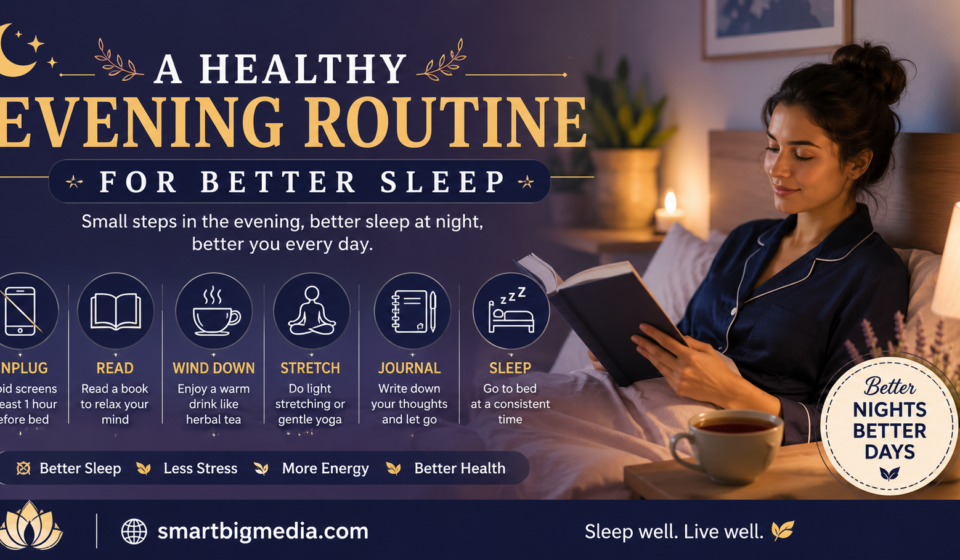
For a long time my evenings looked like this: work until whenever, dinner eaten in front of a screen, more screen after that, and then straight into bed expecting sleep to just show up on command. It never did, not really, not the good kind anyway. I’d lie there for what felt like an hour, mind still running at full speed from the day, wondering why “I’m tired” wasn’t translating into “I’m actually falling asleep.” Took a while — longer than I want to admit — to realize that sleep isn’t a switch. It’s more like a landing, and you need a runway before the plane actually touches down. Going straight from full alertness into “now sleep” just doesn’t work for most people, no matter how tired they are.
Why Evenings Matter So Much for Sleep Quality
It’s tempting to think sleep starts when your head hits the pillow. It doesn’t, really. A lot of what determines how well you sleep gets set up hours earlier.
The Wind-Down Isn’t Optional, Even If It Feels Like It Is
Your body needs a transition period between “active daytime mode” and “asleep.” Skip that transition and you’re essentially asking your nervous system to slam on the brakes from sixty to zero, which it’s not great at doing on command, especially after a stressful or busy day where your system’s been running hot for hours.
Light Exposure Sets the Tone
Your body reads light as a signal for what time it thinks it is, biologically speaking, regardless of what the clock on the wall says. Bright light in the evening, especially the blue-heavy kind coming off most screens, tells your brain it’s still daytime, which delays the release of melatonin, the hormone that actually helps trigger sleepiness.
Body Temperature Plays a Bigger Role Than People Expect
Your core body temperature naturally drops as part of the process of falling asleep. Things that keep your body warm right before bed — a hot room, intense exercise too close to bedtime, a heavy meal — can work against that natural drop, making it harder for your body to get the signal that it’s time to shut down for the night.
Setting a Consistent Wind-Down Start Time
This is probably the single most underrated piece of advice in this whole space, mostly because it sounds boring compared to specific tips and tricks.
Why Consistency Beats Any Individual Technique
You could do every single thing on this list perfectly and still struggle if your wind-down starts at a wildly different time every night. Your body relies heavily on pattern and predictability to regulate its internal clock, and an erratic schedule undercuts a lot of the other effort you’re putting in.
Picking a Realistic Start Time
Work backward from when you actually need to be asleep, and give yourself somewhere between thirty minutes and an hour of wind-down before that target. Doesn’t need to be exact to the minute. Just needs to be roughly the same window most nights, so your body starts to anticipate it rather than being caught off guard every time.
What to Do If Your Schedule Is Unpredictable
Shift workers, parents of young kids, anyone with a schedule that shifts around a lot — a rigid clock-based routine isn’t always realistic. In that case, anchoring the routine to a sequence of actions rather than a specific time can work better. The same steps, in the same order, whenever the evening actually starts for you.
Dimming the Lights, Literally
Sounds almost too simple to be worth a whole section, but this one genuinely moves the needle for a lot of people.
Why Dim Light Matters So Much
Bright overhead lighting in the hour or two before bed keeps signaling “daytime” to your brain, which delays melatonin release exactly when you want that process ramping up instead. Switching to dimmer, warmer lighting mimics the natural drop in light that would’ve happened outdoors before artificial lighting existed at all.
Practical Ways to Do This
Lamps instead of overhead lights. Warm-toned bulbs if you can swap them in. Some people use dimmer switches, others just turn off half the lights in the house starting at a certain point in the evening. Doesn’t need to be elaborate — the goal is just less bright, less blue-toned light as bedtime gets closer.
Screens Are the Trickier Part
Phones, tablets, laptops, TVs — all of them emit that same blue-heavy light that works against melatonin. Night mode settings help somewhat, cutting down some of the blue light, but they don’t fully replicate actually stepping away from a screen. If cutting screens out completely isn’t realistic, even dimming the brightness and using night mode consistently helps more than doing nothing.
Building in a Physical Wind-Down
Your body holds tension, and a lot of that tension doesn’t just disappear because you’ve decided it’s bedtime.
Gentle Movement or Stretching
Nothing intense here — intense exercise too close to bedtime actually raises your core temperature and alertness, working against the sleep process rather than helping it. Light stretching, though, can help release physical tension that’s built up over the day, particularly in the neck, shoulders, and lower back, which tend to hold stress for a lot of people without them noticing until they actually stop and check.
A Warm Shower or Bath
This one connects back to that body temperature point from earlier. A warm bath or shower raises your temperature briefly, and then the drop afterward, as your body cools back down, mimics and can actually help trigger the natural temperature drop tied to sleep onset. Timing matters a bit here — somewhere around an hour or so before bed tends to work better than right before getting under the covers.
Progressive Muscle Relaxation
A technique where you deliberately tense and then release different muscle groups, working through the body one section at a time. Sounds a little clinical described that way, but it’s genuinely effective for people who carry a lot of physical tension without realizing it, and it doesn’t require any equipment or much space, just a few quiet minutes.
Quieting a Busy Mind
For a lot of people, the physical side of winding down is the easier half. The mental side — the racing thoughts, the mental to-do list that suddenly gets loud right when you’re trying to sleep — is the harder part to manage.
Writing Things Down
A lot of nighttime racing thoughts are really just your brain trying to make sure you don’t forget something important. Writing down tomorrow’s to-do list, or just whatever’s rattling around your head, before getting into bed can quiet a surprising amount of that mental noise, since the information’s now stored somewhere external instead of being held onto by your brain out of fear it’ll get lost.
A Consistent Reading Habit
Reading something low-stakes — not work material, not anything that ramps up stress or anxiety — can help ease the transition into sleep mode. Physical books tend to work a bit better here than e-readers with backlit screens, for the same light-exposure reasons mentioned earlier.
Some Form of Quiet Reflection or Meditation
Doesn’t have to be a formal meditation practice with an app and a timer, though that works fine for people who like structure. Even just a few minutes of sitting quietly, breathing slowly, letting the day settle, can help create some separation between “still processing the day” and “ready to actually sleep.”
What to Avoid in the Hour or Two Before Bed
Just as important as what you add to an evening routine is what you deliberately leave out.
Heavy Meals Close to Bedtime
Digestion raises body temperature and keeps your system more active than it needs to be right before sleep. Doesn’t mean going to bed hungry, but a large, heavy meal right before lying down tends to work against the process rather than for it.
Doom-Scrolling or Stressful Content
Beyond the blue light issue, the content itself matters. News, work email, anything that spikes stress or anxiety, right before bed keeps your nervous system activated exactly when you’re trying to wind it down. Worth being deliberate about what you’re actually consuming in that last hour, not just how bright the screen is.
Making the Bedroom Itself Part of the Routine
The environment you’re stepping into matters just as much as what you did to get there.
Temperature
A cooler room generally supports sleep better than a warm one, tying back again to that natural body temperature drop. Most people sleep better somewhere on the cooler side of comfortable, even if it takes some adjusting to get used to.
Darkness
Blackout curtains, an eye mask, whatever gets the room genuinely dark — this matters more than people tend to give it credit for, since even small amounts of light can interfere with the melatonin release your body’s trying to manage.
Keeping It Consistent
A bedroom that’s used for sleep, and mostly just sleep, tends to build a stronger mental association between “this space” and “time to sleep.” Doesn’t mean never bringing a laptop in there under any circumstances, but the more consistently the space is tied to actual sleep, the stronger that association becomes over time.
Final Thoughts
A healthy evening routine isn’t about doing everything on this list perfectly every single night — that’s not realistic, and chasing perfection here tends to backfire, adding its own kind of stress to something that’s supposed to be calming. It’s more about picking a handful of pieces that actually fit your life, doing them consistently enough that your body starts recognizing the pattern, and giving yourself that runway instead of expecting sleep to just appear the second you decide you’re ready for it. Worth remembering that this kind of routine builds gradually. A few nights won’t transform anything dramatically, but a few weeks of consistency usually will.



[…] along for the ride. Miso works well stirred into soups or dressings. Tempeh holds up as a meat substitute in a lot of dishes, firmer texture than tofu, more bite to […]
[…] not right before explosive activity. Research over the last couple decades has shown that static stretching right before intense exercise can actually temporarily reduce power output and muscle […]
[…] fitness matters, obviously. But skipping strength training means missing out on muscle maintenance, bone density support, and metabolic benefits that cardio […]