
There was a stretch a few years back — a bad one, honestly — where I white-knuckled through most weekdays feeling like my chest was permanently a little tight. Like I’d forgotten how to take a full breath without doing it on purpose, consciously, which sounds dramatic written down but didn’t feel dramatic living it. Just this low hum of tension that never fully switched off, day after day. A friend, not a doctor, not a therapist, just a friend who happened to know more about this stuff than I did, told me to try something almost embarrassingly simple. Breathe out longer than you breathe in. That was basically the whole tip. And it actually worked, which annoyed me a little if I’m being honest, because I’d been expecting something more complicated to be the actual fix.
Turns out there’s real science behind why something this basic does anything at all, and there’s a decent handful of breathing techniques beyond just “breathe slower,” each one doing something slightly different to your nervous system depending on how you structure it. So here’s the rundown. The why first, then a bunch of specific exercises you can actually use — none of which need an app, a subscription, or more than a couple of free minutes stolen from your day.
Why Breathing Actually Affects Stress in the First Place
Not just a mental trick. Or, well, not only a mental trick — there’s a physical mechanism underneath it, wired directly into your nervous system.
The Nervous System Connection
Your body runs on two main modes when stress is involved — sympathetic, the fight-or-flight gear, and parasympathetic, the rest-and-digest gear. Breathing happens to be one of the only bodily functions that’s both automatic and something you can consciously override at will, which makes it a strange kind of backdoor into a system you otherwise can’t touch directly. Slow, controlled breathing nudges the body toward parasympathetic mode, even before your brain’s fully caught up to the idea that things are actually fine.
The Vagus Nerve’s Role
A lot of this traces back to the vagus nerve, running from your brainstem down through the chest and abdomen, touching the heart, lungs, and digestive system along the way. Slow exhales in particular seem to stimulate it, and that stimulation is tied to a drop in heart rate and a general calming effect that spreads through the body. Not immediate magic. But it’s a real, measurable physiological response — not just a story people tell themselves to feel better.
Breaking the Feedback Loop
Stress and shallow, fast breathing feed each other, back and forth, in a loop that keeps running long after it should’ve stopped. Stress speeds up breathing, and fast shallow breathing keeps signaling to the brain that something’s still wrong, even once the original stressor’s passed and there’s technically nothing left to react to. Deliberately slowing the breath interrupts that loop. Sends a different signal up the chain than the one your body’s been running on autopilot.
Box Breathing
Popular with military and first-responder communities, which tells you something about how it holds up under real pressure. Not just in a quiet room with candles going.
How It Works
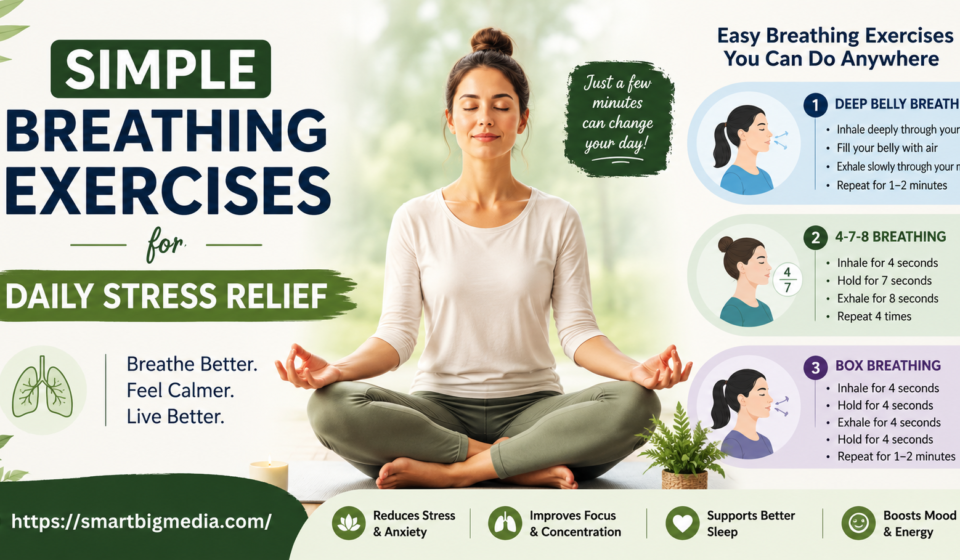
Inhale for a count of four. Hold for four. Exhale for four. Hold again for four. Repeat. The name comes from tracing four equal sides — a box — with the breath pattern itself.
Why the Structure Helps
Having a rigid count to focus on gives your mind something concrete to grab onto, which genuinely helps when thoughts are racing and “just relax” isn’t something you can act on directly. The counting becomes a small anchor. Pulls attention away from whatever’s spinning through your head at the moment.
When to Use It
Good for acute stress. Right before a hard conversation. Before walking into a meeting that’s stressing you out. Or honestly, anytime you notice your breathing’s gone shallow and fast without you meaning it to.
4-7-8 Breathing
Popularized by Dr. Andrew Weil, though the underlying pattern draws on breathing traditions much older than any single doctor’s name attached to it. This one leans harder into the exhale than box breathing does.
The Pattern
Inhale through the nose for four counts. Hold for seven. Exhale slowly through the mouth for eight. One full round. Most people do about four rounds when starting out, give or take.
Why the Long Exhale Matters
The extended exhale is really the whole point — most directly tied to that vagus nerve response mentioned earlier. Short inhale, much longer exhale, sends a stronger calming signal than equal-length breathing manages on its own.
A Quick Note
Some people feel a little lightheaded the first few times, especially going through several rounds back to back without pausing. Not dangerous. Just a sign to ease in rather than diving straight into ten rounds on day one like you’re training for something.
Diaphragmatic Breathing (Belly Breathing)
Less a specific counted pattern, more a foundational skill that a lot of the other techniques quietly rely on underneath.
What Makes It Different
Most people, especially stressed ones, breathe shallow and high in the chest without ever noticing. Diaphragmatic breathing means actively engaging the diaphragm — letting the belly push outward on the inhale instead of keeping everything tight and high up in the chest the whole time.
How to Practice It
Lying down is easiest to learn with, at least at first. One hand on the chest, one on the belly. The goal is for the belly hand to rise more than the chest hand, which feels backward for a lot of people who’ve spent years unconsciously doing the opposite without realizing it.
Why It’s Worth Building as a Base Skill
Once this feels more natural, it improves almost everything else on this list. A lot of people trying box breathing or 4-7-8 for the first time are still breathing shallow into the chest the entire time, which blunts a good chunk of the calming effect they’d otherwise get out of it.
Alternate Nostril Breathing
Comes out of yogic breathing traditions. Looks a little strange if someone walks in on you mid-practice, not going to pretend otherwise, but it’s genuinely effective for a lot of people who stick with it.
The Basic Technique
Thumb closes one nostril, inhale through the open side. Close that nostril with a finger, release the thumb, exhale through the other side. Inhale through that same side, then switch again. Slow, deliberate rhythm — takes some practice before it feels smooth instead of fumbly and awkward.
What It’s Supposedly Doing
Beyond the general calming effect of slow controlled breathing, some research suggests it may help balance activity between the two sides of the brain — though that specific claim is more debated, less firmly settled, than the general stress-reduction piece, which rests on sturdier ground.
Best Used When
Takes more focus and coordination than the others on this list, so it works best in a quieter moment. Not necessarily mid-crisis at your desk. More of a wind-down practice, morning or evening.
Physiological Sigh
Newer to mainstream conversation, popularized more recently through some viral explanations online, though the underlying mechanism’s actually been studied for a while now, longer than the internet attention would suggest.
How to Do It
Two inhales through the nose, back to back, no exhale in between — a normal inhale followed right away by a second, shorter, sharper inhale stacked on top of it. Then one long, slow exhale through the mouth. That’s it. Often done just once or twice, not stretched into extended rounds the way some of the others are.
Why It Works So Quickly
The double inhale helps re-inflate collapsed air sacs in the lungs — alveoli — which can improve oxygen exchange in a short window. Paired with the long exhale, it seems to drop physiological stress markers fast, sometimes within one or two rounds, which makes it a solid option when there genuinely isn’t time for anything longer.
When to Reach for This One
Right before a stressful moment, or honestly mid-way through one, when a five-minute breathing session just isn’t realistic given whatever’s actually happening around you.
Building a Daily Habit Around Breathing Exercises
Knowing the techniques is one thing. Actually doing them consistently is a whole different challenge, and it’s the part most advice skips right past.
Attaching It to an Existing Routine
Same principle that works for a lot of habits applies here too — attach the new thing to something already running on autopilot. A few rounds of box breathing while the coffee brews. 4-7-8 lying in bed before actually getting up. The existing routine becomes the reminder, so you’re not relying on remembering out of nowhere, which never really works long-term anyway.
Starting Smaller Than Feels Necessary
Common mistake — committing to ten minutes of daily practice right out of the gate, which sounds reasonable on paper and tends to fall apart within a week or two once real life gets in the way. Starting closer to sixty seconds, once a day, sticks far more often, and can always get stretched out later once the habit itself is solid.
Using It Reactively, Not Just Proactively
Beyond a scheduled daily practice, worth using these reactively too — the moment tension creeps in, tight jaw, shallow breathing, that restless feeling, that’s the actual cue to run a round or two right then. Not saving it exclusively for a set time of day like it’s a chore on a checklist.
Which Technique Should You Actually Use?
Fair question with this many options, and the honest answer is: depends on the situation, depends on the person.
For Acute, In-the-Moment Stress
Physiological sigh or box breathing tend to work fastest when something’s actively stressing you out right now and relief needs to land in seconds, not minutes.
For Winding Down at Night
4-7-8 or alternate nostril breathing suit a slower, more deliberate evening routine better, since both take a bit more time and focus to actually do right.
For Building a Foundation
Diaphragmatic breathing’s worth practicing regularly no matter which other technique you end up gravitating toward, since it quietly improves how well all the others work.
Final Thoughts
None of these need special equipment, a quiet retreat somewhere, or much time at all — most take under two minutes, some under thirty seconds. What they do need is actually doing them. Consistently enough that your body starts recognizing the pattern as a real signal to calm down, rather than just something you read about once and never tried. Strange thing, honestly, how something as basic and automatic as breathing can be steered on purpose to shift how stressed or calm you feel. But it holds up. Worth testing for yourself rather than taking anyone’s word for it. Mine included.


[…] body reads light as a signal for what time it thinks it is, biologically speaking, regardless of what the clock on the wall says. Bright light in the evening, especially […]
[…] decent water content, which supports smooth digestion generally speaking. Cruciferous vegetables specifically also carry compounds that support liver function, and the liver plays its own quiet role in […]
[…] Reaching one arm overhead, bending the elbow so the hand drops behind the head, using the other hand to gently press the elbow further back. Targets triceps, a bit of shoulder too — worked hard during any pressing movement. […]