
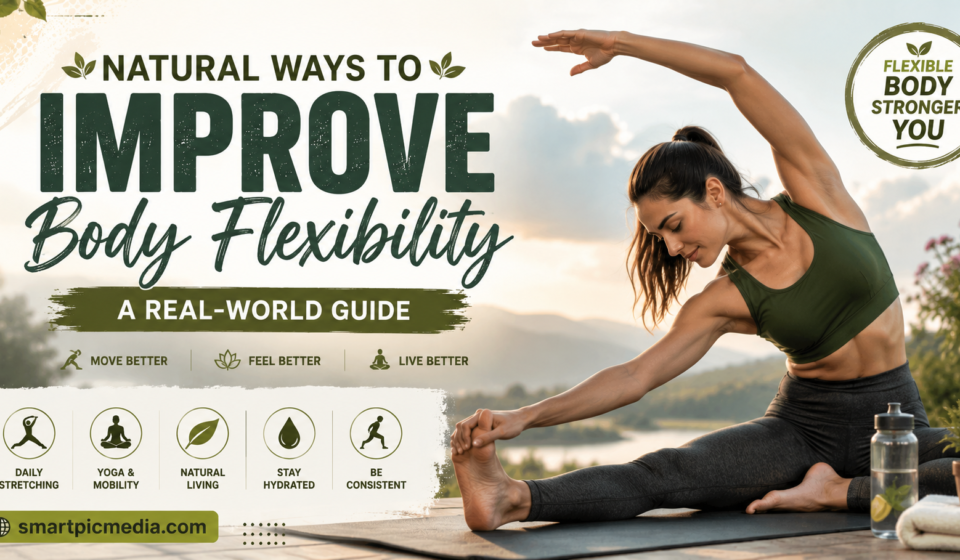

Couldn’t touch my toes. Not even close, knees bent and everything, still short by a few inches. Gym class, ninth grade maybe, and everyone else just folded forward like it was nothing while I stood there hunched, telling myself some genetic excuse about “not being built that way.” Which. Wasn’t true. Took me way longer than it should have to figure that out.
What actually changed things wasn’t dramatic. No yoga retreat, no coach, nothing like that. Just stopped ignoring it for once. Ten minutes here and there, most days, for a while, and now I can put my palms flat on the floor without even really trying. So if you’re stiff — desk job, phone neck, whatever it is — here’s what natural ways to improve body flexibility actually look like when you strip away the fluff. Not a miracle stretch. That doesn’t exist, sorry.
Why You’re Stiff (Probably Not Genetics)
People love blaming genetics for this. Some truth to it sure, joint structure does vary, some folks are naturally loose. But most adult stiffness? Comes down to just not moving through full range anymore. You sit eight hours, your hip flexors shorten up. You hunch over a phone, shoulders round forward and just kind of stay there.
Your body adapts to whatever position it’s in most. That’s really the whole mechanism. Boring but true.
Here’s the actually encouraging part though — this works backwards too. Body adapts to movement just as readily as it adapts to sitting still. Takes longer than people want, that’s the catch.
Stretch Every Day, Not Once a Week
Big mistake, and I made it for years. Stretch hard during a Sunday gym session, ignore it the rest of the week, wonder why nothing’s changing six months later.
Flexibility responds to frequency way more than intensity. Ten minutes daily just crushes one long session weekly, it’s not even close honestly. Your nervous system needs repeated exposure before it stops resisting a stretched position so much, and — this part matters — that resistance is mostly protective, not physical. Muscles aren’t too short. Your nervous system’s just being cautious.
Which is kind of a relief once you get it. Means gentle daily work retrains that caution instead of forcing tissue through brute force.
Morning, evening, whatever. Pick something you’ll actually keep doing.
Full Range Strength Training Counts Too
Surprised me when I first learned this. You don’t need separate stretching sessions exclusively. Training through full range during regular strength work builds flexibility, sometimes better than static stretching alone does.
Deep squats. Lunges that actually go deep. Overhead presses that go overhead, not stopping at your ears. These force joints through ranges they’d never see otherwise.
Explains why some powerlifters end up weirdly flexible despite never touching a yoga mat in their life. Just moving through full range under load, consistently, which teaches the body those positions are fine, nothing to guard against.
Dynamic Before, Static After
Timing matters. Holding a stretch thirty seconds cold, before intense activity — actually can hurt performance short term and doesn’t do much for lasting flexibility on its own.
Dynamic stretching, the moving kind, leg swings, arm circles, walking lunges — better before activity. Warms tissue while moving through range at the same time.
Save the long held stretches for after. Or a separate session. Muscles are warm by then, nervous system’s more willing to let go a little.
Breathing Changes How Far You Can Actually Stretch
Sounds a bit much, I know. There’s real physiology though. Hold your breath mid-stretch, your whole body tenses, including exactly the muscle you’re trying to lengthen. Doesn’t help.
Slow exhale during a stretch triggers something closer to a relaxation response. Try it next time you’re stretching hamstrings — exhale slow as you deepen instead of gritting your teeth and holding your breath. You’ll probably notice you go a little further almost right away. Just from breathing differently. Weird but it works.
Foam Rolling, Actually Worth It
Gets treated as some optional extra thing, the foam roller collecting dust in the corner. It genuinely helps though, especially for tight fascia from sitting all day or repetitive movement.
Roll slowly. Pause on the tender spots, twenty or thirty seconds. Loosens stuff static stretching alone sometimes just doesn’t reach.
Uncomfortable at first — sometimes really uncomfortable on the bad spots. Fades with time. Give it a few weeks before writing it off.
Water. Yes, Really, Water
Muscle’s mostly water. Dehydrated tissue is stiffer tissue, less pliable. Not the biggest factor by any stretch (pun sort of intended) but it’s free. Costs nothing. If you’re chronically underhydrated your stretching routine’s fighting a handicap it doesn’t need.
Where People Actually Need Work
Hips
Sitting destroys hip flexors specifically. Kneeling hip flexor stretch, daily if you can — front knee at ninety, back knee down, push hips forward gently till you feel it up front on the back leg’s hip. Thirty seconds, both sides.
Hamstrings
Forward folds, standing or seated, knees soft not locked. Let gravity do the work instead of yanking yourself down with your arms like some people do.
Shoulders
Cross-body stretches, doorway chest stretch, plain old arm circles. Counteracts years of hunching over a laptop, which, yeah, most of us are guilty of.
Lower Back
Cat-cow. Gentle seated twists. Knee to chest. Nothing aggressive needed here, this area’s often already a bit sensitive.
Consistency Over Intensity — Genuinely the Whole Point
If there’s one thing to actually take from this article, it’s this. Aggressive stretching once in a while does far less than gentle daily work. Body responds to repeated patterns, not occasional intense sessions that leave you sore and skipping the next three days out of soreness or just avoidance.
Think toothbrushing, not workout. Small. Unremarkable. Boring even. Results stack quietly over months until one day, out of nowhere almost, you realize you can touch your toes and didn’t even think about it.
Sleep Matters More Than You’d Guess
Tissue repair happens mostly during sleep. Flexibility gains included, apparently. Chronically bad sleep keeps your nervous system a little more guarded, a little more tense, which makes stretching feel harder than it should and less productive too. If progress has stalled despite consistent effort — check your sleep honestly before blaming your routine.
Mistakes That Slow You Down
Bouncing during a stretch, ballistic stretching, can trigger a protective contraction instead of helping — works against you, not for you, in most situations. Holding your breath, covered that already. Comparing yourself to some flexible person on Instagram, fast way to feel bad about something unrelated to your actual progress. And only stretching once something already hurts instead of doing it as regular maintenance beforehand.
A Realistic Weekly Setup
Nothing elaborate needed. Ten, fifteen minutes daily, mostly hips, hamstrings, shoulders, lower back — covers most of what causes stiffness for anyone sitting at a desk all week. Longer session once or twice a week if there’s time, but daily consistency wins over any single longer session, every time.
Questions People Ask
How long until I actually notice something? Most people feel a real difference within three or four weeks daily. Bigger changes, the kind you actually notice without thinking about it, closer to two or three months in.
Can I still improve flexibility if I’m older? Yes. Slower, sure, takes longer than it would at twenty. But the body stays adaptable basically throughout life. Age slows it, doesn’t stop it.
Do I need yoga specifically? Helps, no doubt. Not required though. Daily stretching, full range strength training, decent breathing and hydration — gets you most of the way there without ever unrolling a mat.
Bottom Line
Improving flexibility naturally isn’t one perfect stretch or some intense weekend routine you do once and forget. It’s daily, unglamorous, kind of boring consistency — breathing right while you stretch, moving through full range during regular training, sleeping and hydrating enough that your body can actually adapt to what you’re asking of it. Stick with it a couple months. You’ll probably be surprised.




[…] embarrassingly long to connect the dots. Wasn’t random at all — it was blood sugar crashing from whatever carb-heavy lunch I’d had two hours […]
[…] joint honestly, more mobile than nearly anything else in your body, which ironically makes it more prone to getting stuck in bad positions than something more stable […]