
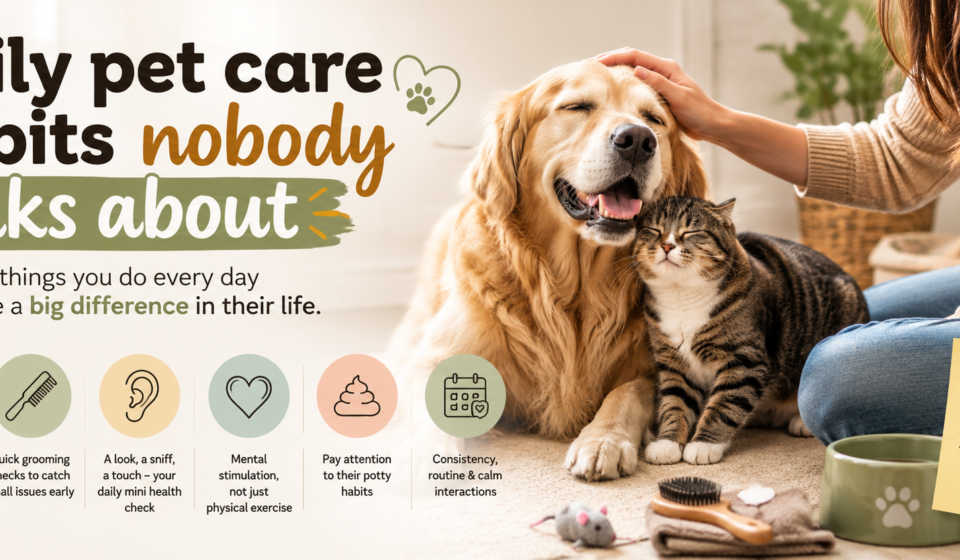

Daily Pet Care Habits Nobody Talks About (But Every Owner Should Know)
Ask most people what “taking care of a pet” means, and you’ll get the same short list every time: feed them, walk them, take them to the vet once a year, maybe brush them occasionally. All of that is true and necessary, but it’s also incomplete. The habits that actually shape a pet’s long-term health, comfort, and even lifespan tend to be smaller, quieter, and far less talked about.
None of what follows requires special equipment or a huge time investment. Most of these habits take less than two minutes a day. But together, they build a far more accurate, ongoing picture of your pet’s health than a single annual vet visit ever could — and they often catch problems early enough to make treatment simpler and cheaper.
Checking Paws and Paw Pads Daily
It sounds almost too simple to matter, but a quick daily glance at your dog or cat’s paws catches problems long before they become obvious limping or licking. Cracked pads, small cuts, embedded debris like grass seeds or tiny stones, and early signs of allergic reactions between the toes are all things that show up on the paws first — often days or weeks before an owner notices anything else is wrong.
Cats are especially good at hiding paw discomfort, since limping obviously would draw attention, so many cats compensate subtly instead. Dogs that suddenly seem a little “off” on walks, hesitant on certain surfaces, or reluctant to jump are worth a paw check before anything else.
Weighing Your Pet at Home, Regularly
Vet visits happen once or twice a year for most healthy pets, which means gradual weight changes — the kind that matter most for long-term health — often go completely unnoticed until they’ve become significant. A pet scale is inexpensive, but you don’t even need one: simply weighing yourself while holding your pet, then subtracting your own weight, works perfectly well for smaller and medium-sized animals.
Doing this every week or two turns weight into an ongoing data point instead of a once-a-year surprise. Slow weight gain is one of the earliest and most common signs of a metabolic issue, joint pain limiting activity, or a diet that’s quietly too calorie-dense. Slow weight loss, particularly in cats, can be an early indicator of several serious conditions that are far easier to manage when caught early.
Refreshing Water Bowls Twice a Day, Not Once
Most owners fill a water bowl in the morning and don’t think about it again until it’s empty. But water left out for 8 or more hours accumulates bacteria and a biofilm on the inside of the bowl faster than most people expect, especially in warm weather. Pets are more sensitive to this than we give them credit for — many will drink less from a bowl that smells or tastes “off” to them, quietly leading to mild, chronic under-hydration that doesn’t show any dramatic symptoms but affects everything from digestion to kidney health over time.
Refreshing water in the morning and evening, and giving the bowl a real wash (not just a rinse) every day or two, is a small habit with outsized long-term impact.
Brushing Teeth, Not Just Relying on Dental Chews
Dental disease is one of the most common — and most under-treated — health issues in both dogs and cats, and it’s frequently invisible until it’s already advanced. Dental chews and treats marketed as supporting oral health can help at the margins, but they’re not a substitute for actual brushing, which physically disrupts plaque before it hardens into tartar.
Brushing a pet’s teeth two to three times a week, using a pet-safe toothpaste, makes a measurable difference over months and years. It doesn’t need to be a fight — most pets can be gradually introduced to it with short sessions and positive reinforcement, starting with just touching their mouth and building up from there.
Watching How They Settle Into Rest
Most owners pay close attention to how a pet plays and moves, but far less attention to how they rest. A pet that circles repeatedly before lying down, shifts positions frequently through the night, avoids putting weight on one side, or seems unable to get comfortable is often signaling early joint or muscle discomfort — sometimes well before any limping appears during activity.
This is particularly relevant for larger dog breeds prone to joint issues and for aging cats, who are notoriously good at masking pain during activity but often reveal discomfort in how they rest instead.
Rotating Toys Instead of Leaving Everything Out
Constant, unlimited access to every toy a pet owns tends to reduce their overall interest and engagement over time — the novelty simply wears off when nothing is ever new or unavailable. Rotating a smaller selection of toys every few days, keeping the rest put away, keeps enrichment meaningfully higher without spending anything extra.
This matters more than it sounds like it should. Mental stimulation is closely tied to behavioral issues in both dogs and cats — a bored, understimulated pet is far more likely to develop destructive habits, excessive vocalization, or anxious behaviors than one whose environment stays lightly varied.
Briefly Observing Bathroom Habits
This one gets skipped for obvious reasons — nobody wants to make a habit out of examining their pet’s waste. But a quick, few-second observation each day is one of the single earliest indicators of digestive, urinary, or even systemic health issues. Changes in frequency, straining, color, or consistency often show up here well before any other visible symptom.
You don’t need to inspect closely or keep records unless something seems off. Just noticing — genuinely noticing, rather than glancing past on autopilot — is enough to catch a pattern change early.
Making These Habits Actually Stick
The reason most owners don’t do these things isn’t a lack of care — it’s that none of them feel urgent in the moment, so they’re easy to skip on a busy day. The trick is attaching each one to something you’re already doing. Check paws while you’re putting on their leash. Weigh them on the same day you refill their food container. Brush teeth right after your own bedtime routine, so it becomes part of an existing pattern rather than a new thing to remember.
None of this replaces regular veterinary care — it complements it. A vet sees a snapshot once or twice a year. You see your pet every single day, which means you’re in the best position to notice the small, early signals that matter most. These habits just make sure you’re actually paying attention to them.




[…] dull, dry, flaky, or thinning coat is often chalked up to needing a better shampoo, more frequent brushing, or a seasonal shed. And sometimes that’s exactly […]
[…] you search “pet carrier” online. Hundreds of options show up, most claim to be “airline approved,” and almost none of them tell you which airline they mean. Airlines don’t share one […]
[…] Plier-style clippers are somewhere in between — sturdier, and often used by people with multiple cats or breeds that have thicker claws. They’re bulkier, though, which isn’t great if your cat already hates having its paws touched in the first place. […]