
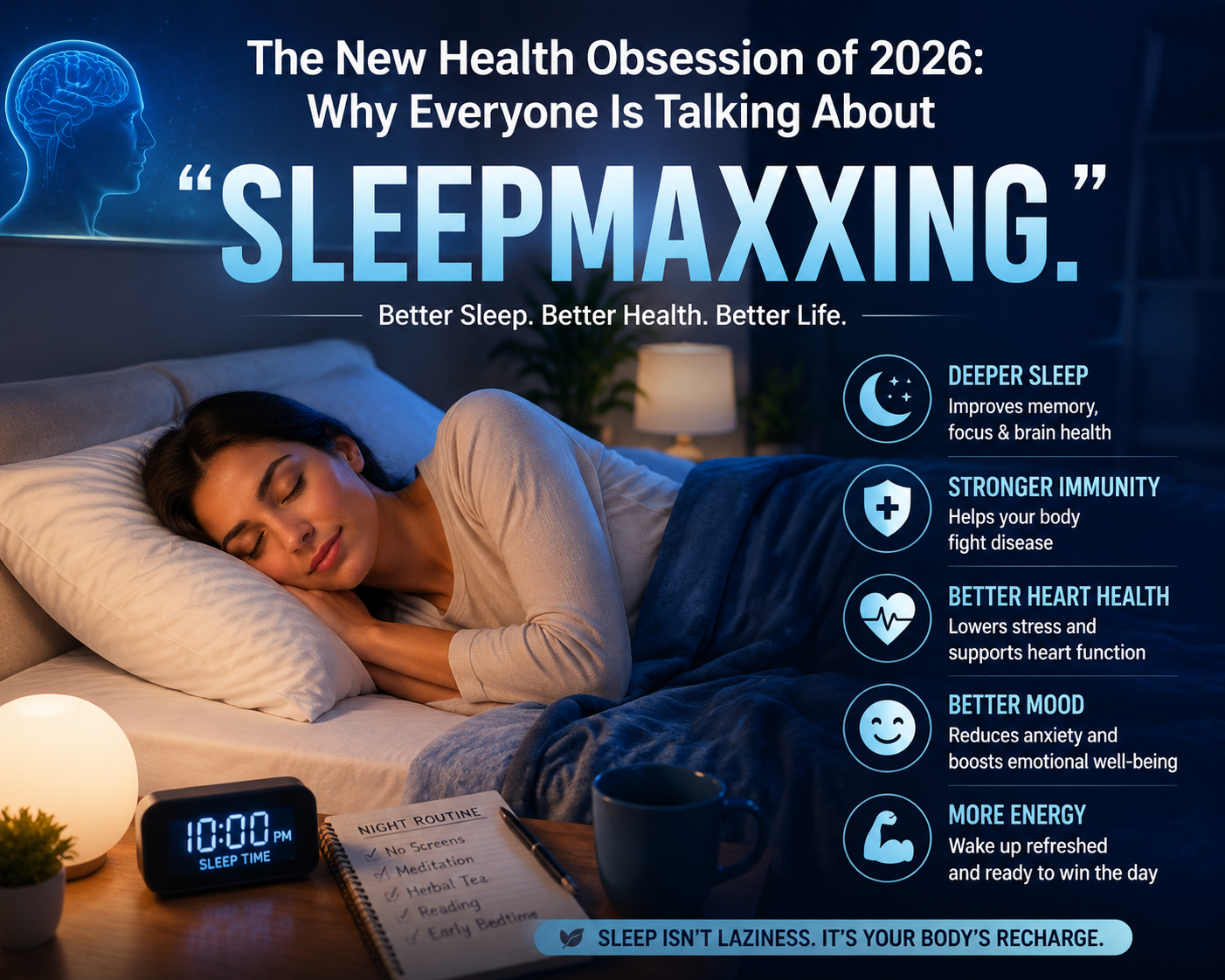
For years, health trends focused mostly on fitness, dieting, weight loss, and workout routines. Social media platforms were filled with gym transformations, strict meal plans, and expensive supplements promising fast results. But now, a completely different wellness movement is taking over online conversations, Google searches, and health discussions worldwide.
The new trend is called “Sleepmaxxing.”
Although the word sounds modern and unusual, the idea behind it is simple: improving sleep quality as much as possible to boost health, energy, focus, appearance, and mental well-being. Searches related to deep sleep habits, nighttime recovery, sleep optimization, and natural energy improvement have started growing rapidly across search platforms and social media communities.
Unlike many past health trends that relied on extreme diets or unrealistic routines, Sleepmaxxing focuses on something every human already needs — proper rest.
Doctors and health experts have warned for years that poor sleep can affect nearly every part of the body. However, many people ignored those warnings while prioritizing work, social media, entertainment, and busy schedules. Now, younger generations are beginning to understand that sleep may actually be one of the most powerful forms of self-care.
This shift is changing how people think about health entirely.
Instead of asking only, “How many calories should I eat?” many people are now asking questions like, “How can I wake up with more energy naturally?” or “How can I improve deep sleep without medication?” These conversational searches are becoming increasingly common online.
One reason Sleepmaxxing is gaining attention is because modern lifestyles have damaged healthy sleeping habits more than many people realize.
Smartphones, streaming platforms, late-night scrolling, and constant notifications keep the brain active long after the body feels tired. Many individuals sleep for seven or eight hours but still wake up exhausted because their sleep quality remains poor.
Health specialists explain that deep sleep is when the body repairs muscles, balances hormones, strengthens the immune system, and restores brain function. Without enough quality sleep, even healthy eating and regular exercise may not deliver full results.
This realization is pushing more people toward healthier nighttime routines.
Across social media platforms, users are sharing “sleep rituals” that include reducing screen time before bed, drinking calming herbal tea, lowering room temperature, avoiding heavy late-night meals, and following consistent sleeping schedules. Some people even wear sleep-tracking devices to monitor their rest patterns and recovery levels.
The trend has become especially popular among young professionals and university students struggling with stress, burnout, and mental exhaustion.
Many people say they no longer want temporary energy from caffeine alone. Instead, they are searching for sustainable energy through better recovery and healthier lifestyles.
Another reason Sleepmaxxing is trending is that sleep affects appearance as well as health.
Dermatologists often describe quality sleep as a natural beauty treatment. During deep sleep, the body repairs skin cells, reduces inflammation, and improves blood circulation. Poor sleep, on the other hand, may contribute to dark circles, dry skin, dull appearance, and early signs of aging.
This connection between sleep and beauty has helped the trend spread rapidly online.
Fitness experts are also discussing the importance of recovery more openly than before. In the past, many workout programs focused heavily on training intensity while ignoring rest. Now, trainers increasingly emphasize that muscle growth and physical recovery happen during sleep, not only during exercise.
As a result, many athletes and fitness influencers are encouraging followers to prioritize recovery just as much as workouts.
Mental health discussions are also connected closely to this trend.
Research continues to show strong links between sleep deprivation, anxiety, stress, and emotional instability. People who consistently sleep poorly often report lower concentration, mood swings, irritability, and difficulty managing pressure. On the other hand, healthier sleep patterns may improve focus, emotional balance, and overall mental clarity.
For many individuals, Sleepmaxxing is not only about sleeping longer. It is about creating a healthier relationship with rest itself.
Interestingly, the trend is also influencing the wellness industry. Companies are now selling products designed specifically for better sleep, including blackout curtains, cooling mattresses, white-noise machines, aromatherapy oils, sleep-friendly lighting, and wearable sleep trackers.
However, health experts warn that expensive products alone cannot solve poor sleeping habits.
Simple daily routines often



-
-
-
-
-
Show Comments[…] major reason companionship is becoming a wellness trend is the increasing discussion around mental health. Anxiety, burnout, depression, and emotional exhaustion are now openly […]
[…] recent political discussions, one of the more debated and speculative topics has been the future of Tulsi Gabbard in any high-level intelligence or national security leadership role. The phrase “Tulsi Gabbard […]
[…] but Everton’s compact defensive structure forces them into sideways passing rather than vertical penetration. Meanwhile, Everton look for quick transitions but struggle to maintain clean attacking […]
[…] Caffeine has a longer half-life than most people account for — roughly five to six hours on average, though it varies by individual. A cup of coffee at 2pm can still have a meaningful amount of caffeine active in your system at 8pm, even if you don’t consciously feel wired. It doesn’t necessarily stop you from falling asleep, but it often reduces the depth and quality of sleep once you do, which is why some people feel like they “slept” but still wake up tired. […]
[…] Toddlers’ circadian rhythms are still developing, and they rely heavily on external cues — daylight, mealtimes, nap routines — to regulate their internal clock. Adults can partially override jet lag through willpower, caffeine, or simply pushing through a rough day. Toddlers don’t have that override. Their body is telling them it’s 3am back home, and there’s no reasoning with that signal. […]