
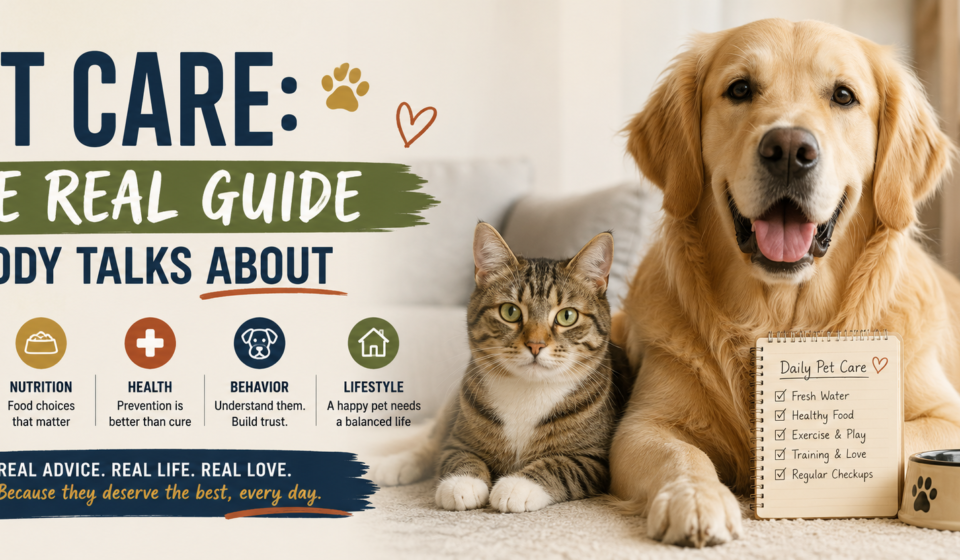
Most pet care advice sounds the same. Feed them twice a day. Visit the vet once a year. Give them water. Thanks — groundbreaking stuff.
But anyone who’s actually lived with a pet knows the truth is messier, more emotional, and a lot more rewarding than any checklist can capture. Pets aren’t accessories. They’re not hobbies. They’re living creatures who depend on you completely — and that responsibility is both heavy and deeply beautiful.
This is the pet care guide for real people. The ones who’ve Googled “why is my cat staring at the wall at 3am” or “is it normal that my dog eats grass.” The ones who genuinely want to get this right.
You’re Not Just a Owner — You’re Their Whole World
Let’s start here, because everything else flows from this.
Your pet doesn’t experience time the way you do. When you leave for work in the morning, they’re not scrolling their phone and waiting for you. They’re just… waiting. That eight-hour workday feels very different on their end of the leash.
This matters for pet care because mental and emotional wellbeing is just as important as physical health. A dog who eats premium food but spends 10 hours alone every day is not a thriving dog. A cat who has all the toys but never gets a warm lap to curl up on is missing something essential.
Before diving into food charts and vaccination schedules, ask yourself: does my pet feel safe? Do they feel loved? Are they bored? These questions will take you further than most advice columns ever will.
Feeding — It’s More Complicated Than the Bag Says
Walk into any pet store and you’ll find shelves stretching from floor to ceiling, all promising to be “the best” for your animal. So who do you believe?
Start with your vet. Not the internet. Not the loudest voice in the dog park. Your actual veterinarian, who has examined your specific animal and knows their weight, age, activity level, and any underlying conditions.
That said, here are some things most packaging won’t tell you:
Ingredients order matters. The first ingredient listed is the most abundant in the product. If it’s a named protein — like “chicken” or “salmon” — that’s a good sign. If it’s “meat by-product meal” or “corn syrup,” keep walking.
Life stage matters more than brand. A puppy needs different nutrients than a senior dog. A kitten’s dietary needs are nothing like an adult cat’s. Many pet health issues trace back to people feeding the wrong formula for the wrong life stage, regardless of how expensive or well-marketed the food is.
Treats are not nutrition. They’re wonderful training tools and great for bonding, but they shouldn’t make up more than 10% of your pet’s daily caloric intake. It’s easy to get loose with treats — especially when they give you that look — but overfeeding is one of the leading causes of pet obesity, which shortens lifespans significantly.
Fresh water is non-negotiable. This sounds too obvious to say, but many pets don’t drink enough because their bowl is stale, placed in an uncomfortable spot, or simply not refreshed often enough. Cats especially are biologically inclined to distrust still water — many do better with a pet water fountain that keeps it moving.
Vet Visits — Don’t Wait Until Something Is Wrong
Here’s an uncomfortable truth: most people only take their pets to the vet when something is obviously wrong. By that point, what could have been a minor issue caught early has sometimes become a serious and expensive one.
Annual wellness exams exist for a reason. They’re not just about vaccines (though those matter too). A good vet is physically examining your pet from nose to tail, checking for lumps, dental disease, heart murmurs, weight changes, and dozens of other things that aren’t visible to the untrained eye.
Dental health is one of the most overlooked areas in pet care. By age three, most dogs and cats show signs of dental disease. Left untreated, it doesn’t just cause pain — it can lead to heart, kidney, and liver problems as bacteria from the mouth enters the bloodstream. Brushing your pet’s teeth regularly, or at minimum providing dental chews and professional cleanings, is not optional pampering. It’s healthcare.
Parasite prevention is another area where consistency is everything. Fleas, ticks, heartworm, intestinal worms — these aren’t just gross inconveniences. They cause real suffering and some, like heartworm, can be fatal if untreated. Monthly preventatives are widely available and relatively inexpensive compared to treating an active infestation or infection.
Exercise — Match the Energy, Not the Expectation
People adopt energetic dog breeds thinking they’ll become the active person they’ve always meant to be. Sometimes it works. Often, the dog ends up bouncing off the walls of an apartment while their owner feels guilty scrolling Instagram.
Be honest about your lifestyle before choosing a pet, and if you already have one, be honest about what they actually need versus what they’re getting.
A Border Collie needs serious mental and physical stimulation — we’re talking hours of activity daily. A Basset Hound? Much more laid-back. A Persian cat will mostly nap. A Bengal cat will systematically dismantle your home if under-stimulated.
Exercise isn’t just about burning calories. It’s about mental enrichment, socialization, and the kind of deep tiredness that produces a calm, content animal. A well-exercised dog is a well-behaved dog — not because they’ve been trained into submission, but because they’re genuinely satisfied.
For dogs: daily walks are the minimum, not the goal. Vary the routes so they get new smells (sniffing is mentally exhausting for dogs in the best possible way). Play fetch. Try agility or nose work if your dog has energy to burn. Let them socialize with other dogs when possible.
For cats: indoor cats especially need play. Not the toy you dangle once and leave on the floor — active, engaged play with you, mimicking hunting behavior. Fifteen to twenty minutes twice a day makes a significant difference in a cat’s mood, weight, and behavioral problems.
Grooming — The Overlooked Health Check
Grooming often gets filed under “maintenance” when it’s really one of the best ways to catch health issues early and keep your pet comfortable.
Regular brushing does more than prevent mats. It removes dead hair, distributes natural oils through the coat, improves circulation, and gives you a chance to feel for anything unusual — new lumps, skin irritation, parasites, or soreness when you touch a certain area.
Nail trims are not cosmetic. Overgrown nails change the way a pet walks, putting strain on joints that compounds over time. Many pets hate nail trims, and many owners dread them too. Go slowly, use treats generously, and if it’s genuinely too stressful, a groomer or vet can handle it for a small fee.
Ear cleaning, particularly for floppy-eared dogs, prevents infections that can become chronic and painful. Check the ears weekly — they should look clean and smell neutral. If there’s redness, discharge, or an odor, get it checked.
Bathing frequency varies by breed and lifestyle. Most dogs don’t need weekly baths — in fact, too-frequent washing strips the coat of natural oils. But when they do need one, use a pet-specific shampoo. Human shampoo — even baby shampoo — has a different pH and can cause skin irritation.
Understanding Behavior — They’re Talking, Are You Listening?
Animals communicate constantly. The problem is most of us aren’t fluent in their language.
A cat who bites after being petted isn’t “mean.” They’ve likely given several subtle signals — a flicking tail, skin rippling, pupils dilating — that they were overstimulated, and those signals went unread.
A dog who barks aggressively at the front door isn’t broken. They may be anxious, under-socialized, territorial, or all three — and the solution isn’t punishment. It’s understanding the root cause and addressing it, usually with patience and consistent training.
Separation anxiety in pets is real and can be debilitating. Signs include destructive behavior, excessive vocalization, and bathroom accidents that only happen when you’re away. This isn’t “spiteful” behavior — it’s distress. Management tools like puzzle feeders, calming supplements, training programs, and in severe cases, veterinary support, can all help.
Pay attention to changes in behavior. An unusually quiet dog, a cat who stops grooming, or a previously social pet who starts hiding — these shifts are often the first sign that something is physically or emotionally wrong. Animals can’t tell you they’re in pain. Behavior changes are the closest thing they have to words.
The Emotional Side of Pet Care
This doesn’t always make it into care guides, but it should.
Pets need to feel secure. Routines matter to them. A consistent feeding time, regular walks, reliable bedtime rituals — these things create a sense of safety that reduces anxiety and builds trust. When life gets chaotic and routines fall apart, pets feel it. They may not know why, but they absolutely feel it.
And you feel them too. Research has consistently shown that pet ownership reduces stress, lowers blood pressure, and combats loneliness. But that relationship works both ways — it requires showing up for them even on the days you don’t feel like it. The walk when it’s raining. The play session after a long day. The ear scratch at 11pm when they pad over and sit next to you.
That’s the real heart of pet care. Not the premium food or the orthopedic bed or the Instagram-worthy photo. It’s the daily, quiet commitment to another living being who trusts you completely.
Final Thoughts
There’s no perfect pet owner. Everyone makes mistakes — gives too many treats, misses a vet appointment, buys the wrong food. The goal isn’t perfection. It’s attentiveness.
Keep learning. Stay curious about your specific animal’s needs, personality, and quirks. Build a relationship with a vet you trust. Ask questions. Notice things.
Because at the end of the day, your pet isn’t looking for a perfect caretaker. They’re looking for you — consistent, present, and genuinely trying.



[…] one gets skipped for obvious reasons — nobody wants to make a habit out of examining their pet’s waste. But a quick, few-second observation each […]
[…] a new dog food causes an obvious, immediate reaction — vomiting shortly after eating, sudden diarrhea, visible hives — it’s fairly easy to connect the […]
[…] think any small clipper would work fine — it’s just a nail. Except cat claws aren’t shaped like human nails at all. […]