
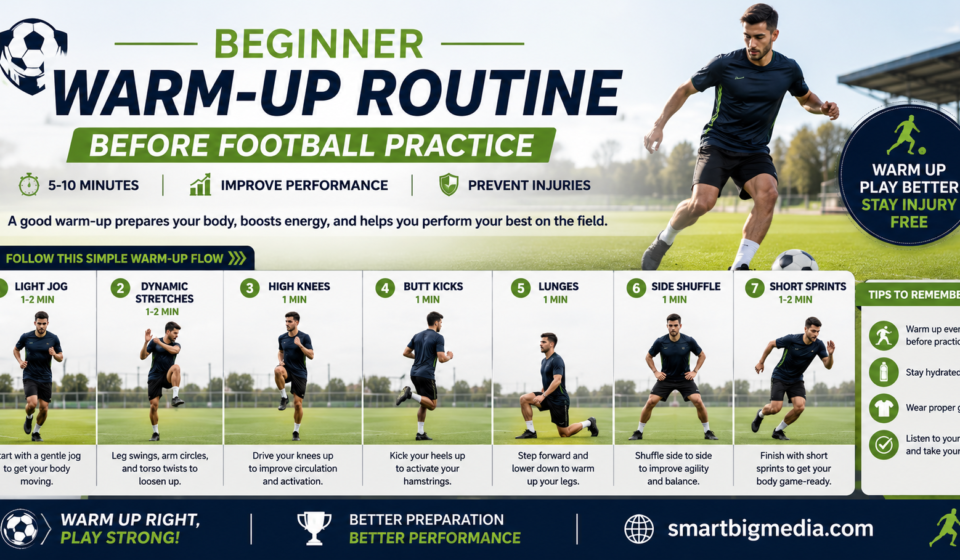
First real practice I ever showed up to, I skipped the warm-up basically entirely. Jogged a lap, maybe stretched for thirty seconds, figured I was fine because I was young and felt fine standing there in the parking lot before we even started. Pulled something in my hamstring about fifteen minutes in, first real sprint of the day, and spent the next two weeks watching from the sideline wondering what exactly I’d done wrong. Turns out — a lot. Warming up isn’t some optional extra tacked onto the front of practice to waste ten minutes. It’s the thing that actually determines whether your body’s ready to do what you’re about to ask of it.
So here’s a beginner-friendly walkthrough of what an actual warm-up should look like before football practice, broken into the pieces that matter and why each one’s there, not just a list of exercises with no explanation behind them.
Why Warming Up Actually Matters, Not Just as a Formality
A lot of beginners treat warm-up as the boring part before the “real” practice starts. Understandable, honestly. But skipping it or rushing it is a big reason a lot of preventable injuries happen, especially early in a season.
Cold Muscles Don’t Perform Well
Muscles that haven’t been warmed up are stiffer, less elastic, and more prone to strains when suddenly asked to sprint, cut, or take contact. A proper warm-up gradually raises muscle temperature and blood flow, which makes the tissue more pliable and better able to handle sudden, explosive movement without tearing.
It Wakes Up Your Nervous System Too
This part gets overlooked a lot. Warming up isn’t just physical — it primes the connection between your brain and your muscles, so your reaction time and coordination are sharper once drills actually start. Skip this and the first ten or fifteen minutes of practice often feel sluggish and uncoordinated, even if you’re physically capable.
It Sets the Mental Tone for Practice
There’s a psychological shift that happens during a good warm-up too, moving from “regular day” mode into “focused, ready to work” mode. Beginners especially benefit from this transition period, since football requires a level of alertness and readiness that doesn’t just switch on the second you step onto the field.
Starting With General Movement
Before anything specific to football, the goal is just raising your heart rate and body temperature generally.
Light Jogging
A few minutes of easy jogging, nothing intense, just enough to get blood moving and start raising your core temperature. Doesn’t need to be structured or timed precisely — a lap or two around the field, at a pace where you could hold a conversation, is plenty to start.
Jumping Jacks or Similar Full-Body Movement
Something that gets your arms and legs moving together, raising your heart rate a bit further than jogging alone. A minute or two is usually enough at this stage, since the goal here is still general activation, not intensity.
Why This Comes First
Jumping straight into stretching or football-specific drills on cold muscles defeats a lot of the purpose. General movement first raises the internal temperature enough that everything you do after this point is actually more effective and safer.
Dynamic Stretching, Not Static
This is probably the biggest thing beginners get backward, often because it’s what a lot of people were taught growing up without much explanation.
Why Static Stretching Isn’t the Move Here
Holding a stretch for thirty seconds, the classic reach-and-hold approach, has its place, but not right before explosive activity. Research over the last couple of decades has shown that static stretching right before intense exercise can actually temporarily reduce power output and muscle responsiveness, which is the opposite of what you want heading into a sprint or a hard practice.
Leg Swings
Standing next to something for balance, swing one leg forward and back in a controlled motion, then side to side. This actively moves the hip through a range of motion while keeping the muscle engaged and warm, rather than just passively stretching it.
Walking Lunges With a Twist
Step forward into a lunge, and as you do, rotate your torso toward the front leg. This combines a lower body stretch with some core engagement and rotational movement, which mimics a lot of what football actually demands during play.
High Knees and Butt Kicks
Both classic drills for a reason. High knees drive the hip flexors through a full range of motion while raising heart rate. Butt kicks do something similar for the hamstrings. Neither needs to be done fast or far — twenty to thirty yards of each, at a controlled pace, is plenty.
Carioca Steps
A lateral, crossover-step movement down the field, alternating which leg crosses in front. This works the hips and groin through a rotational pattern that static stretching just doesn’t replicate, and it’s directly relevant to the kind of lateral movement football requires constantly.
Football-Specific Movement Prep
Once the body’s generally warmed up, it helps to start layering in movements that mimic what practice itself will actually demand.
Backpedaling
Jogging backward for a short distance, controlled, not at full speed. This activates muscles differently than forward movement and gets the body ready for the kind of quick direction changes football involves constantly, especially for defensive positions but genuinely useful for everyone.
Shuffle Steps
Side-to-side shuffling, staying low, knees bent. Mimics the defensive stance and lateral movement patterns that show up throughout practice and games, and it’s a good way to activate the smaller stabilizing muscles around the hips and ankles that don’t get much attention from straight-line jogging.
Short Sprints, Building Intensity Gradually
A handful of short sprints, maybe ten to twenty yards, starting at maybe fifty or sixty percent effort and building up gradually over a few reps to closer to full speed. This is the piece that actually prepares your body for the explosive, all-out movement practice is going to demand, rather than asking your first full-speed sprint of the day to be the first sprint of the drill itself.
Change-of-Direction Drills
Simple cone drills, or even just a coach calling out directions, where you have to plant and change direction quickly. Football involves a ton of sudden stops and redirection, and warming up that specific movement pattern reduces the risk of rolling an ankle or straining something when it happens for real during a drill.
Position-Specific Considerations for Beginners
Not every position demands exactly the same things, though the core warm-up principles apply across the board.
Linemen
Warming up the shoulders, hips, and lower back matters more here, given the amount of pushing, blocking, and close-contact work linemen deal with. Adding in some shoulder circles and hip openers on top of the general routine tends to help.
Skill Positions
Receivers, running backs, defensive backs — anyone doing a lot of sprinting and cutting benefits from spending a little extra time on the sprint progression and change-of-direction work specifically, since that’s closer to what their actual role demands most heavily during practice.
Quarterbacks
Shoulder and arm warm-up matters more here than for most other positions. Arm circles, light throwing at increasing distance and intensity before full-speed throws, and some rotational core work all help prepare the specific mechanics quarterbacks rely on.
How Long Should a Warm-Up Actually Take?
Beginners often either skip warm-up almost entirely or, on the other end, feel like they need to spend half an hour on it before practice even starts.
A Reasonable Target
Somewhere around ten to fifteen minutes is typically enough for a solid, complete warm-up covering general movement, dynamic stretching, and football-specific prep. Doesn’t need to eat into practice time significantly, but it also shouldn’t get rushed down to two or three minutes just to save time.
Adjusting Based on Conditions
Colder weather generally calls for a slightly longer warm-up, since muscles take longer to reach an effective working temperature when the air itself is cold. Hot weather can sometimes allow for a slightly shorter general warm-up phase, though the dynamic stretching and football-specific pieces are still worth keeping in full.
Common Mistakes Beginners Make
A handful of patterns show up again and again with people newer to structured practice.
Rushing Through It
Treating warm-up as an obstacle to get past rather than a genuinely useful part of practice. Moving too fast through the movements defeats a lot of the purpose, since the whole point is gradual, controlled preparation, not just going through the motions to check a box.
Skipping It When Running Late
Understandable impulse when you’re behind schedule, but it’s exactly the wrong moment to cut corners, since a rushed body going straight into intense drills is a genuinely higher injury risk than a slightly late arrival to a drill.
Copying Advanced Players’ Routines Exactly
More experienced players sometimes have shorter, more efficient warm-ups because their bodies are already conditioned and used to the demands of practice. Beginners generally benefit from a slightly longer, more thorough routine while their bodies are still adapting to the sport’s specific demands.
Building the Habit Over Time
A warm-up routine gets more valuable the more consistently it’s done, not just as a one-off before a single practice.
Consistency Builds Body Awareness
Doing roughly the same warm-up before every practice helps you start noticing when something feels off — tightness in a specific area, a joint that’s not moving the way it usually does — which is genuinely useful information for catching small issues before they become bigger ones.
It Becomes Faster and More Natural Over Time
What feels like a long, deliberate process in the first few weeks tends to become quicker and more automatic as the routine becomes familiar, without losing any of the actual benefit.
Final Thoughts
A proper warm-up before football practice isn’t about wasting time before the “real” work starts — it is part of the real work, just the part that happens to prevent injuries and improve performance rather than build skills directly. General movement to raise temperature, dynamic stretching to prep the muscles the right way, football-specific drills to bridge into practice intensity — that sequence, done consistently, makes a genuine difference. Would’ve saved myself two weeks on the sideline if I’d known that back at my first practice instead of learning it the hard way.



[…] straight into intense movement on cold muscles significantly raises injury risk. Particularly for anything explosive — sprinting, jumping, heavy lifting. A few […]
[…] A lot of people treat hydration as something that starts once activity begins. But the groundwork laid beforehand matters just as much. Arguably more. […]
[…] because they live permanently at home and your brain just doesn’t register them as “packable” — they’re just always there, so why would you think to grab […]