
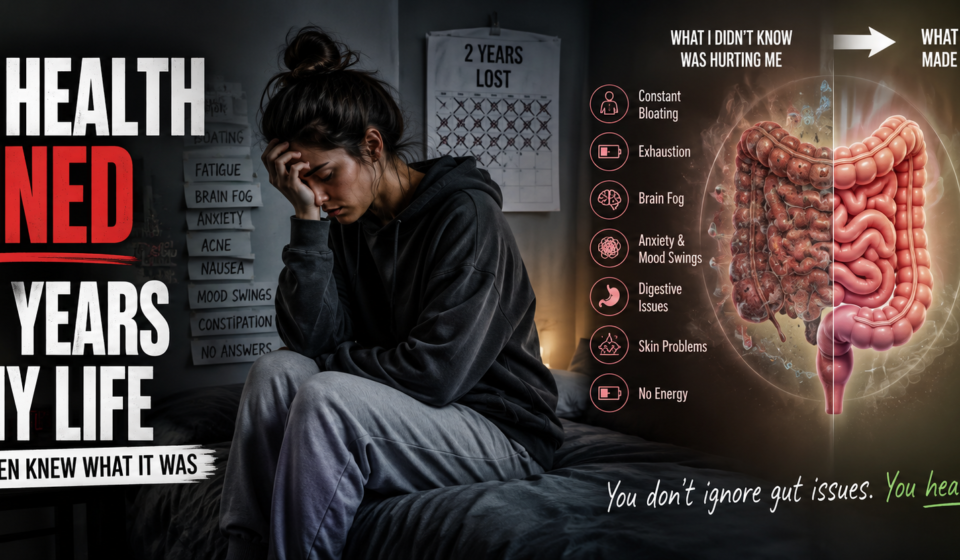

I want to be upfront about something. I am not a doctor. I am not a nutritionist. I am somebody who felt horrible for almost two years, went to three different doctors, got told my labs were fine every single time, and eventually figured out on my own that my gut was the problem.
If that sounds familiar to you, keep reading.
If you landed here because you saw “gut health” trending somewhere and you’re curious, also keep reading. Because I genuinely think this is one of those topics that sounds like a wellness buzzword until the day it stops sounding like that and starts sounding like the explanation for everything that’s been going wrong with your body.
This is what I found out.
Your Gut Is Doing Way More Than You Think It Is
It’s Not Just Digestion. It’s Almost Everything.
When most people hear the words gut health they picture, I don’t know, digestion. Stomach stuff. Whether things are moving along okay or not. That is true but it is maybe five percent of the actual picture.
Inside your intestines right now there are trillions of microorganisms. Bacteria mostly but also fungi and viruses and things that don’t even have common names. All of them living together in something researchers call the microbiome. And this is not a bad thing. These organisms are doing work your body cannot do without them.
They break down foods your own body cannot break down alone. They manufacture vitamins. They have an enormous role in keeping your immune system running properly. And they talk to your brain. Not in a vague way. In a literal, documented, biological way through a system called the gut-brain axis which runs through your vagus nerve and involves hormones and neurotransmitters and all kinds of signals going back and forth constantly.
Your gut and brain are in a conversation that never stops. What your gut does affects your brain. What your brain does affects your gut. This is not a theory. This is anatomy.
The Second Brain Thing Is Real
People call the gut the second brain and I used to roll my eyes at that. Sounds like something on a kombucha label. But the nerve cell count in your gut is higher than the nerve cell count in your spinal cord. Your gut can operate independently of your brain. It has its own nervous system called the enteric nervous system.
This is why stress gives you stomach problems. This is why gut problems make you feel emotionally unstable. The connection is direct and physical. Not symbolic.
Most of Your Immune System Is In Your Gut
Here is the one that made me put my phone down for a second.
Somewhere between 70 and 80 percent of your immune cells live in your gut. Not distributed evenly around your body. In your gut specifically. Which means if your gut microbiome is unhealthy or imbalanced, your immune system is working with bad infrastructure.
You catch more things. You stay sick longer. Inflammation goes up and stays up. And inflammation is connected to basically every chronic health problem researchers are trying to understand right now. Heart stuff, metabolic stuff, mental health stuff, autoimmune stuff. All roads keep circling back to inflammation and a lot of inflammation starts in the gut.
How I Knew Something Was Wrong Before I Knew It Was My Gut
The Symptoms I Actually Noticed
Bloating. God, the bloating. After basically every meal for months. I’d eat a completely normal amount of food and look like I’d eaten three times that. It was uncomfortable and embarrassing and I started avoiding social eating because of it.
Constipation that would flip to the opposite without warning. Stomach cramps that didn’t seem connected to anything specific I ate. Heartburn even when I ate things that had never caused it before.
Those are the obvious gut symptoms. I noticed them. I mostly ignored them because I thought they were just my body being annoying.
The Symptoms I Did Not Connect to My Gut at All
The fatigue was the one that got me. I was sleeping. I was going to bed at a reasonable hour, waking up after eight hours, and feeling like I had not slept at all. My energy was just gone. Not in a tired way. In a cellular way, if that makes sense. Like my body wasn’t getting fuel even though I was eating.
Turns out that’s a real thing. A gut that’s inflamed or imbalanced absorbs nutrients poorly. You can eat a perfectly reasonable diet and still end up deficient in things because your gut isn’t processing them correctly. You’re running on empty not because you’re not eating but because what you eat isn’t getting used.
My skin broke out constantly. I’m not a teenager. This was not supposed to still be happening. I tried different products, different diets in a vague way, more water. Nothing worked consistently. I didn’t find out until later that there’s actual documented research on something called the gut-skin axis. Gut inflammation shows up on your skin. Eczema, acne, redness. The face is apparently one of the first places you see it.
And my mood. I was irritable in a way I couldn’t explain. Anxious on days when nothing anxious was happening. Low in a way that didn’t track with my circumstances. I assumed I just needed therapy or a vacation or both. I did not assume my gut was making less serotonin
than it should be.
But here’s the thing I learned. Around 90 percent of your body’s serotonin is produced in the gut. Not the brain. When your gut bacteria are off, serotonin production is off. You feel it as mood stuff and you never in a million years think to look at your stomach.
What Was Actually Wrecking My Gut
The Food Thing Is Real and I Hated Admitting That
Cooked most of my meals. Wasn’t going crazy with junk.
But I ate the same things constantly. Not much variety. Not many different plants. And variety is the thing. The bacteria in your gut don’t all eat the same things. Different strains need different types of fiber from different types of plants. If you eat the same five or six vegetables every week, you are feeding the same strains and starving the rest.
Diversity of food leads to diversity of bacteria. Diversity of bacteria is what a healthy gut actually looks like.
Antibiotics Did More Damage Than I Realized
I’d been on antibiotics twice in the year before I started feeling bad. Once for a respiratory thing, once for something skin-related. Both times I finished the prescription and moved on without thinking about it.
What I didn’t know is that antibiotics don’t have much precision. They kill the bacteria making you sick, yes, but they also take out a lot of your beneficial gut bacteria at the same time. And nobody told me to do anything after to help my gut recover. No guidance at all.
Some people bounce back fast. Some don’t. Especially if the microbiome was already not in great shape going in.
Stress Is Not Just Mental. It’s Physical in Your Gut.
I was going through a stressful period professionally during those two years.
When your body is in stress mode, digestion gets deprioritized. Blood flow to the gut drops. Gut motility changes in ways that cause problems. The gut lining becomes more vulnerable. Bacterial populations shift toward strains that thrive under stress, which are not the strains you want dominating.
Do that for a year and a half and the gut adapts to operating in a stressed state. That becomes its baseline. Getting out of that takes deliberate effort not just reducing stress but actively rebuilding what the stress damaged.
Sleep Wasn’t Something I Connected to This Either
My sleep was inconsistent. Late nights, early mornings, irregular schedule. I thought the fatigue was causing the bad sleep.
It was both directions. Your gut microbiome has its own circadian rhythm. Its own daily schedule of activity. When your sleep is erratic, that schedule breaks down. Bacterial diversity drops. And disrupted gut bacteria then make sleep quality worse. The two things feed each other and both get worse together unless you interrupt the cycle deliberately.
What I Actually Did That Helped
The 30 Plants a Week Thing Changed How I Shop
Someone mentioned this to me and I thought it was insane. Thirty different plants in a week. But then I started counting and realized garlic counts. Onions count. The herbs I throw on things count. Walnuts count. Seeds count.
It became a kind of game. How many different things can I get in this week. And that shift in how I thought about food, not more food just more different food, made a real difference in how I felt within a few weeks. More consistent energy. Less dramatic digestive swings.
The science behind it is that different plants contain different fibers and compounds that feed different bacterial strains. Variety in what you eat creates variety in who’s living in your gut. And variety is health.
I Started Eating Fermented Foods and It Felt Weird at First
Kimchi. Kefir. Plain yogurt with live cultures. Miso in soup. I started slowly because some of these things are genuinely an acquired taste.
Stanford researchers found in a study that a diet consistently including fermented foods increased gut bacterial diversity and reduced inflammatory markers more than just eating more fiber alone. Both matter but the fermented food finding was significant.
I’m not saying eat a vat of kimchi. I’m saying a spoonful with dinner a few times a week is not nothing. It adds up.
I Stopped Eating Standing Over the Kitchen Counter
This sounds embarrassing to admit but I ate a lot of my meals in a hurry. Standing up, scrolling something, half paying attention. Inhaling food basically.
Your body digests food better when your nervous system is calm. When you’re in rushed stressed mode you’re in fight or flight. Fight or flight is not the state your gut does its best work in. Rest and digest is. Those are the two actual modes of your autonomic nervous system and they’re not both available at the same time.
Sitting down. Eating slower. Actually chewing. These are not revolutionary but they changed things more than I expected.
Moving My Body Even a Little Bit Helped
Not for weight reasons. Just movement. Walking after dinner. A bike ride a few times a week. Physical activity has been shown in research to increase microbial diversity independent of diet. The body in motion does something for the gut that sitting all day simply does not.
About Probiotics and Supplements
The Marketing Is Way Ahead of the Science
The gut health supplement market is enormous. Every other product claims to support your microbiome or restore balance or boost gut immunity. Most of it is not well supported by research for the average healthy person.
When Probiotics Actually Make Sense
Specific probiotic strains for specific conditions, yes. After antibiotics, certain strains have shown real benefit in speeding up microbiome recovery. For diagnosed conditions like IBS, specific evidence-based strains have clinical support.
But grabbing a random probiotic because the bottle looks trustworthy? That’s mostly guessing.
Prebiotics First
Prebiotics are fibers that feed your existing bacteria. Garlic, onions, oats, asparagus, lentils, bananas. Eating these is usually more effective than importing new bacteria through a capsule when you haven’t yet built an environment where they can survive.
Feed what you have. Then consider adding more.
How Long Before You Actually Feel Different
First Few Weeks
Honestly some people feel worse before they feel better. The microbiome shifting can cause temporary digestive changes while things adjust. Don’t panic if week one feels weird.
By weeks two and three most people notice digestion becoming more predictable. Less dramatic bloating. Energy feeling slightly more even. Mood a little more stable. Nothing dramatic but something.
After a Few Months
This is where it gets more noticeable. Two to three months of eating more variety, adding fermented foods, managing stress even imperfectly, moving regularly, sleeping more consistently. People look back from that point and realize they feel genuinely different.
Not cured of anything. Just functioning better. Which is all you’re really after.
The Honest Timeline for Deeper Repair
If your gut lining is damaged, if you’ve had years of poor diet or multiple rounds of antibiotics or chronic high stress, it takes longer. This is not a three week fix in those cases. Months. Possibly close to a year of consistent effort before things feel really stable.
But every week of doing the right things moves the needle. It’s not all or nothing. It’s cumulative.
What I Know Now That I Didn’t Know Then
Gut Health Is Not a Trend
I know it sounds like one. The word microbiome is everywhere. Probiotic is on every food label. Influencers are selling fermented everything. That surface level noise makes it easy to dismiss.
But the research underneath it is serious. Scientists are finding connections between the gut microbiome and type 2 diabetes, heart disease, depression, Parkinson’s, certain cancers. These are early findings, not definitive conclusions. But the direction of the evidence is clear enough that dismissing it entirely would be a mistake.
You Don’t Need a Complicated Protocol
More plants. More variety. Some fermented food. Less eating in a rush. Decent sleep. Some movement. Deal with your stress as best you can.
That’s most of it. The fundamentals are not complicated. They’re just easy to skip when nothing seems urgently wrong. Until it does.
The Bottom Line About Gut Health
Your gut is running a huge amount of your health quietly in the background. Your energy, your immune system, your mood, your skin, your ability to absorb the nutrients from the food you actually eat. All of it has a gut component.
When the gut is struggling it doesn’t always announce itself as a gut problem. It shows up as fatigue, as anxiety, as skin stuff, as getting sick too often, as feeling off in ways you can’t quite name.
The good news is the gut responds to change faster than almost any other system in the body. You give it what it needs and it starts working better. Not immediately. But faster than you’d expect.
Start somewhere small. Add one new vegetable this week. Eat one thing fermented. Sit down for one meal a day. Pick one thing and do it consistently.
Your gut has been working for you your whole life without you paying much attention to it. A little attention back goes a long way.




[…] log on, talk to a real nurse practitioner or doctor who actually studied this stuff (instead of skimming one lecture on it back in med […]