
Introduction
Crows are some of the smartest birds you’ll ever meet, and learning how to befriend a crow can turn your backyard into the site of a genuinely fascinating relationship. Unlike many wild animals, crows can recognize individual human faces, remember who fed them, and even pass that memory on to other crows in their family group.
That said, befriending a crow isn’t instant, and it isn’t about taming a wild bird into a pet. It’s a slow process built on consistency, patience, and respect for the bird’s space. This guide walks through exactly how crow trust-building works, what to expect at each stage, and the mistakes that most commonly slow the process down or scare a crow off entirely.
How Do You Actually Befriend a Crow?
Befriending a crow comes down to one core principle: consistency builds trust. Crows are naturally cautious around humans, for good reason, since many people see them as pests. But crows are also remarkably good at remembering who treats them well.
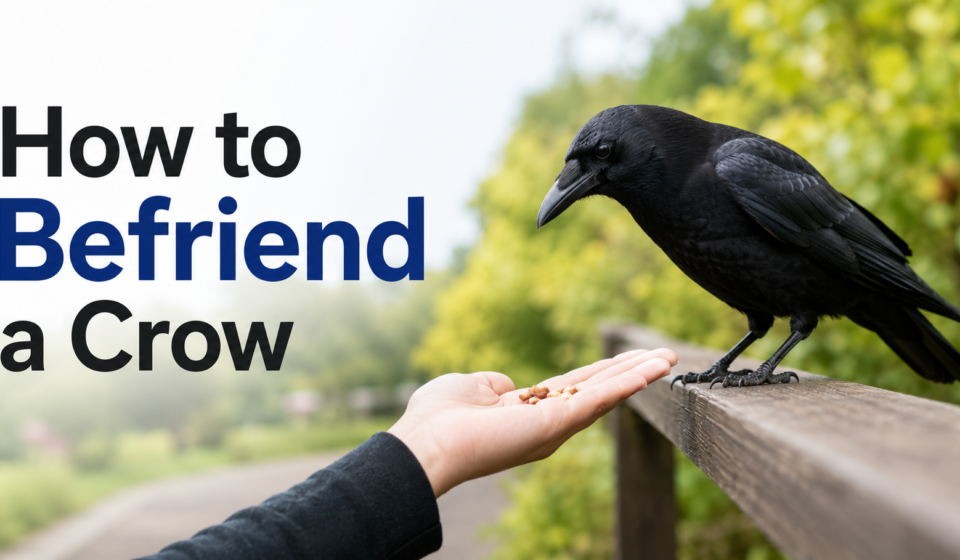
The general approach involves offering food in the same spot at the same time each day, staying calm and predictable in your movements, and gradually reducing the distance between you and the bird as it becomes more comfortable. Over weeks or months, a crow may start recognizing you specifically, approaching more confidently, and even bringing you small trinkets or objects, a behavior some crows display toward humans they trust.
What Does It Mean to “Befriend” a Crow?
Befriending a crow doesn’t mean domesticating it or making it dependent on you. Crows remain wild animals, and a truly healthy relationship respects that. What it actually means is building enough familiarity and trust that a crow feels safe around you specifically, distinguishing you from strangers or potential threats.
This is different from simply attracting crows with food. Attracting crows is easy, since they’re intelligent foragers always looking for an easy meal. Genuine befriending involves the crow recognizing you as an individual, tolerating your presence at close range, and potentially interacting with you beyond just grabbing food and leaving.
Why Is Befriending a Crow Worth the Effort?
Crows are among the most cognitively advanced birds on the planet, with problem-solving abilities that rival some primates. Building a relationship with one gives you a front-row seat to genuinely remarkable behavior.
For example, researchers have documented crows using tools, solving multi-step puzzles, and remembering human faces for years after a single negative encounter. If a crow learns to trust you specifically, you may witness some of this intelligence firsthand, from the bird recognizing your car to seemingly “checking in” at consistent times of day.
There’s also a quieter benefit. Many people who befriend crows describe it as a meaningful, low-pressure way to connect with nature, especially in urban or suburban areas where larger wildlife encounters aren’t realistic.
How Does the Crow Trust-Building Process Work?
Building trust with a crow generally happens in stages, and rushing any of them tends to backfire.
Step One: Establish a Predictable Feeding Routine
Start by placing food, such as unsalted peanuts, in the shell, or small bits of cooked, unseasoned meat, in the same visible spot each day, ideally at a similar time. Avoid bread and heavily processed foods, since crows do better with more natural, protein-rich options. Consistency matters more than quantity here. A crow needs to associate the specific time, place, and eventually you with a reliable food source.
Step Two: Reduce Distance Gradually
Once a crow reliably visits your feeding spot, start decreasing the distance between you and the food, a little at a time. Move slowly and avoid direct eye contact for too long, since prolonged staring can read as threatening to a wary bird. If the crow flies off, that’s normal. Simply continue the routine the next day without changing your approach.
Step Three: Let the Crow Set the Pace
Eventually, a trusting crow may approach closer, wait for you to arrive before eating, or vocalize when it sees you. Some crows go further, dropping small objects like buttons, bottle caps, or shiny trinkets near their trusted humans, a behavior that isn’t fully understood but is well documented anecdotally. Let this progression happen naturally rather than trying to force closer interaction.
What Are the Main Benefits of Befriending a Crow?
A genuinely reciprocal relationship. Unlike simply feeding wildlife, a befriended crow often shows recognition and even a form of loyalty, sometimes defending “their” human from perceived threats like other aggressive birds.
Natural pest control. Crows eat a wide variety of insects, grubs, and small pests. A crow that frequents your yard regularly can help reduce populations of ticks, grubs, and other unwanted insects.
A window into complex animal cognition. Watching a crow solve a problem, remember a routine, or interact with its family group offers a rare, close-up look at non-human intelligence that few backyard animals can match.
Community-wide recognition. Because crows share information within their family groups, a human trusted by one crow may become recognized by several others in the same area over time.
What Problems or Mistakes Should You Avoid?
Moving too fast. Trying to hand-feed a crow or get too close too soon almost always backfires. Crows are cautious by nature, and pushing the pace can undo weeks of progress in a single encounter.
Being inconsistent. If you feed a crow regularly and then stop for an extended period, the trust you’ve built can fade. Crows adapt to reliable patterns, so irregular feeding sends mixed signals.
Feeding inappropriate food. Salty, sugary, or heavily processed foods aren’t good for crows and can cause health problems over time. Stick to natural, unsalted options like peanuts in the shell, unseasoned cooked meat, or occasional fruit.
Ignoring local regulations. Some areas have specific rules about feeding wildlife, including corvids, due to concerns about overpopulation or nuisance behavior. It’s worth checking local guidelines before starting a regular feeding routine.
Forgetting they’re still wild animals. Even a well-trusted crow can behave unpredictably, especially around its nest during breeding season. Respecting distance during these periods protects both you and the bird.
How Can You Get Better Results When Befriending a Crow?
Pay attention to individual behavior rather than treating all crows the same. Crows have distinct personalities, and some will warm up faster than others. Patience with the specific bird in front of you matters more than following a rigid timeline.
Use consistent visual and vocal cues, such as wearing a particular jacket or making a soft, repeated call when you set out food. Crows are excellent at pattern recognition, and these small consistencies help them identify you faster.
Avoid punishing or startling a crow, even accidentally, since crows have long memories for negative encounters and may associate you with the incident for years.
Consider that a family group of crows may all begin recognizing you together, since crows communicate information about trusted or threatening humans within their social groups.
Frequently Asked Questions About How to Befriend a Crow
How long does it take to befriend a crow?
It varies widely, but most people report meaningful progress over several weeks to a few months of consistent, daily interaction. Some crows warm up faster, especially juveniles, while more cautious adults may take longer.
What is the best food to offer a crow?
Unsalted peanuts in the shell are a popular, reliable choice. Small amounts of unseasoned cooked meat, eggs, or fruit also work well. Avoid bread, salty snacks, and heavily processed foods.
Can a crow really recognize my face?
Yes. Research on American crows has shown they can distinguish and remember individual human faces for years, associating specific people with either safety or danger based on past encounters.
Is it safe to befriend a wild crow?
Generally, yes, as long as you maintain reasonable distance and avoid handling the bird directly. Crows are not typically aggressive toward humans who feed them consistently, though caution is still warranted near active nests.
Will a crow bring me gifts if we become close?
Some crows do this, offering small objects like buttons, bottle caps, or shiny items to trusted humans, though this behavior isn’t guaranteed and isn’t fully understood by researchers. It’s considered a bonus, not something to expect from every crow.
Final Thoughts
Learning how to befriend a crow comes down to patience, consistency, and respecting the bird’s pace rather than your own. Start with a reliable feeding routine, gradually close the distance, and let the relationship develop naturally over weeks or months.
If you stay consistent and avoid rushing the process, there’s a good chance you’ll end up with a genuinely attentive, intelligent neighbor who recognizes you specifically, and maybe even greets you the next time you step outside.



[…] consistent sport time is one of the most common struggles for people who want to stay active but feel like their schedule simply doesn’t allow […]
[…] products refer to the physical equipment and fixtures installed along roads, streets, and walkways to manage traffic flow, protect […]