
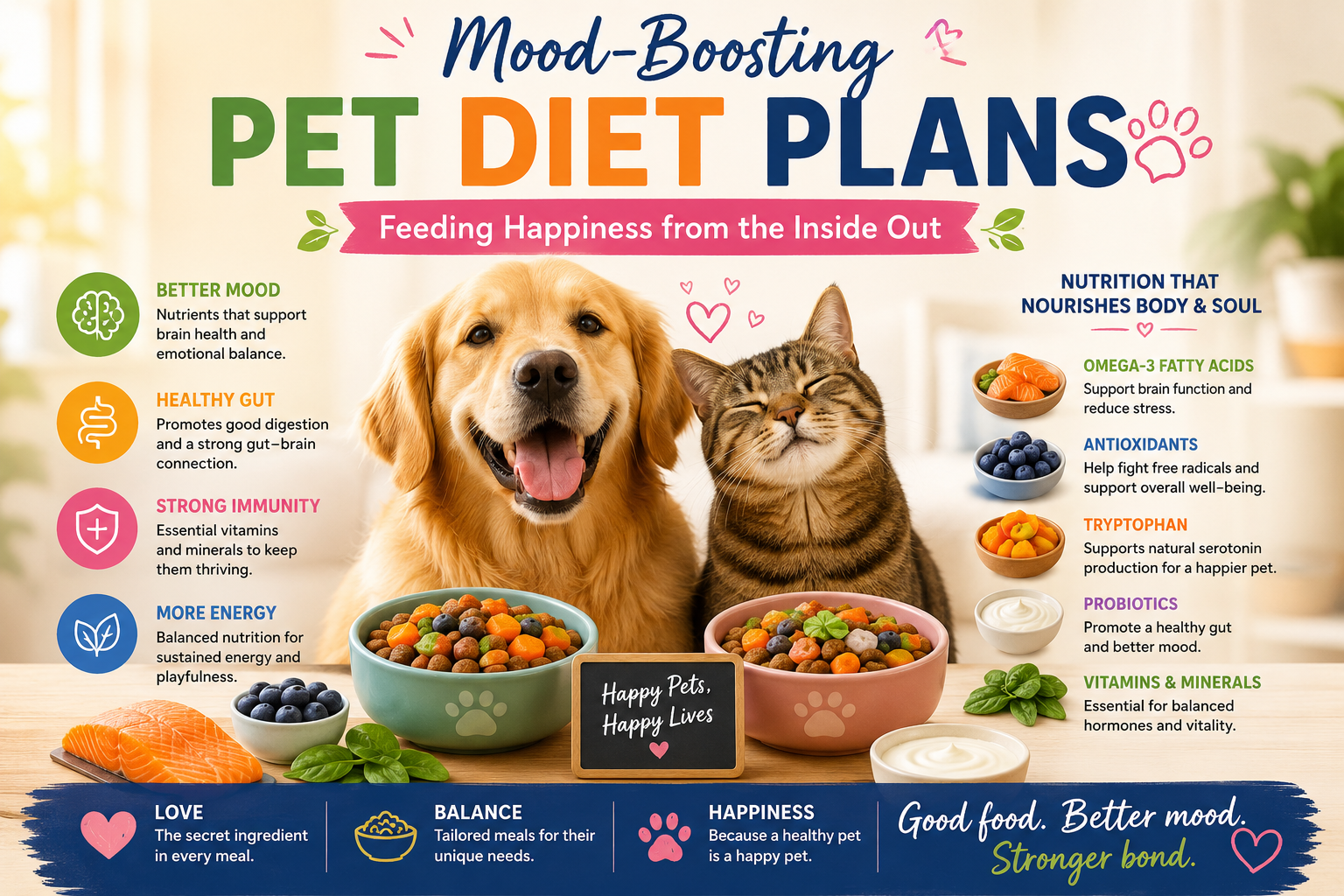
Pets are more than animals living in our homes—they are emotional companions, stress relievers, and silent supporters of our daily lives. Whether it is a dog waiting at the door after a long day or a cat curling up beside you during a quiet evening, their presence has a powerful impact on human mood. But what many pet owners often overlook is that a pet’s own mood and behavior are deeply connected to what they eat.
This is where the idea of Mood-Boosting Pet Diet Plans becomes important. It is a modern approach to pet nutrition that focuses not only on physical health but also on emotional well-being. Just like humans, pets can experience stress, anxiety, boredom, and low energy. The right diet can help improve their mood, behavior, and overall quality of life.
Understanding Mood and Nutrition in Pets
Food is more than fuel. It directly affects brain chemistry, energy levels, and emotional stability in both humans and animals. In pets, certain nutrients play a major role in regulating mood-related hormones like serotonin and dopamine.
When pets are fed a balanced and nutrient-rich diet, they tend to show:
- More playful behavior
- Better sleep patterns
- Reduced anxiety and aggression
- Higher energy levels
- Stronger bonding with owners
On the other hand, poor nutrition can lead to irritability, lethargy, and behavioral issues.
Mood-Boosting Pet Diet Plans are designed to support emotional balance by using ingredients that naturally enhance brain function and overall well-being.
Why Pet Mood Matters More Than Ever
Modern pet lifestyles have changed significantly. Many pets today live indoors, spend more time alone, and have limited physical activity compared to their natural instincts. This can sometimes lead to boredom, stress, or even depression-like behaviors.
Common signs of low mood in pets include:
- Loss of interest in play
- Excessive sleeping or hiding
- Aggressive or anxious behavior
- Changes in appetite
- Restlessness or destructive habits
A well-designed diet can help reduce these issues by supporting brain health and energy balance.
Key Nutrients That Influence Pet Mood
Mood-Boosting Pet Diet Plans focus on specific nutrients that directly affect emotional health.
1. Omega-3 Fatty Acids
Found in fish oil and certain seeds, Omega-3s help support brain function and reduce anxiety. They are known to improve learning ability and calmness in pets.
2. Amino Acids (Like Tryptophan)
Tryptophan helps produce serotonin, often called the “feel-good hormone.” It plays a key role in reducing stress and improving mood stability.
3. B Vitamins
B-complex vitamins support energy production and nervous system health. A deficiency can lead to fatigue and irritability in pets.
4. Protein-Rich Foods
High-quality protein helps maintain muscle strength and supports brain function. It also keeps pets active and alert.
5. Antioxidants
Fruits and vegetables rich in antioxidants help reduce inflammation and protect brain cells from damage.
Building a Mood-Boosting Pet Diet Plan
Creating a balanced diet for pets does not have to be complicated. It is about combining the right ingredients in the right proportions.
Morning Meal: Energy and Focus
The first meal of the day should provide steady energy.
- Lean protein (chicken, turkey, or fish)
- Small portion of whole grains like brown rice or oats
- A few vegetables such as carrots or spinach
This combination helps pets start their day active and focused.
Afternoon Snacks: Calm and Balance
Healthy snacks help maintain stable energy levels throughout the day.
- Small pieces of apple (without seeds)
- Carrot sticks
- Natural pet-safe treats with Omega-3
These snacks prevent mood dips and boredom.
Evening Meal: Relaxation and Recovery
Dinner should support rest and recovery.
- Light protein source
- Easily digestible vegetables
- A small amount of healthy fat (like fish oil supplement)
This helps pets relax and sleep better.
Foods That Naturally Boost Pet Mood
Certain foods are especially effective in improving emotional well-being in pets:
- Salmon and sardines for brain health
- Pumpkin for digestion and calmness
- Blueberries for antioxidants
- Sweet potatoes for steady energy
- Chicken for high-quality protein
When included regularly, these foods can make noticeable improvements in behavior and energy levels.
Foods to Avoid for Better Mood Stability
Just as some foods help, others can negatively affect pet mood.
Avoid feeding pets:
- Processed human junk food
- Excess sugar or salt
- Artificial additives and preservatives
- Chocolate, caffeine, and toxic human snacks
- Low-quality commercial fillers
These can lead to hyperactivity, anxiety, or digestive issues that indirectly affect mood.
The Connection Between Gut Health and Mood
Recent understanding of pet nutrition shows that gut health plays a huge role in emotional balance. A healthy digestive system supports better absorption of nutrients and improves brain function through the gut-brain connection.
Foods rich in fiber and probiotics help maintain healthy gut bacteria, which in turn supports stable mood and behavior.
Lifestyle Factors That Support Mood-Boosting Diets
Diet alone is powerful, but it works best when combined with a healthy lifestyle.
Pets need:
- Daily exercise or playtime
- Mental stimulation through toys or training
- Social interaction with humans or other animals
- A consistent daily routine
When combined with a good diet, these habits create a stable and happy emotional state.
Tailoring Diet Plans for Different Pets
Not all pets have the same needs.
Dogs often require higher protein and active meal plans due to their energy levels. Cats, on the other hand, need more protein-focused diets with controlled portions.
Older pets may benefit from softer foods with joint-supporting nutrients, while younger pets need more energy-rich meals for growth and play.
Understanding these differences is important for creating effective mood-boosting diets.
The Role of Pet Owners in Emotional Nutrition
Pet owners play a central role in maintaining their pet’s emotional health. Choosing quality food, maintaining feeding schedules, and observing behavior changes are all part of responsible care.
Even small changes, like switching to healthier treats or adding fresh ingredients, can improve a pet’s mood over time.
The Future of Pet Nutrition
The future of pet care is moving toward personalized nutrition. Just like humans, pets may soon have diet plans designed based on their age, breed, lifestyle, and emotional needs.
Mood-Boosting Pet Diet Plans are already part of this evolution, focusing on emotional wellness as much as physical health.
This shift reflects a deeper understanding that pets are not just animals—they are emotional beings who deserve balanced and thoughtful care.
Conclusion
Mood-Boosting Pet Diet Plans represent a new way of thinking about pet nutrition. Instead of focusing only on physical health, this approach recognizes the emotional lives of pets and how deeply food influences their happiness.
By choosing the right nutrients, avoiding harmful foods, and maintaining a balanced lifestyle, pet owners can help their animals live healthier, calmer, and more joyful lives.
A happy pet is not just well-fed—it is well-understood, well-cared-for, and emotionally supported.


[…] often gets filed under “maintenance” when it’s really one of the best ways to catch health issues early and keep your pet […]