
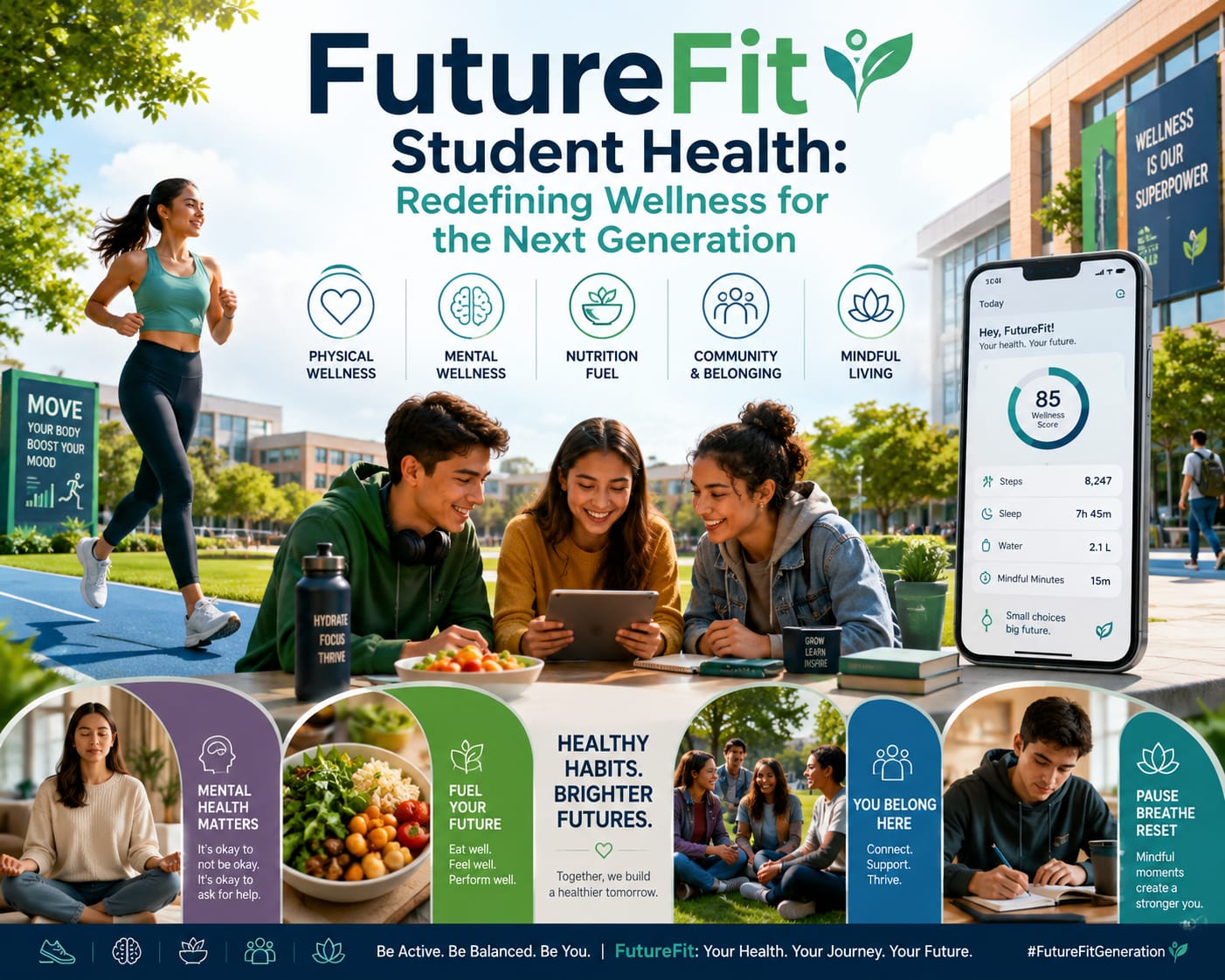
In today’s fast-changing world, students are facing a completely different lifestyle than previous generations. Long screen hours, academic pressure, reduced physical activity, and irregular routines are quietly reshaping how young people live, think, and feel. In response to this growing challenge, a new concept is emerging in modern wellness discussions: FutureFit Student Health.
This idea is not just about fitness or dieting. It is a complete approach to helping students build a balanced, sustainable, and healthy lifestyle that supports both body and mind. FutureFit Student Health focuses on preparing students not only for exams and careers but also for lifelong well-being.
Understanding the Concept of FutureFit Student Health
FutureFit Student Health is a modern wellness framework designed specifically for students in schools, colleges, and universities. It combines physical education, mental wellness, emotional balance, and healthy daily habits into one integrated lifestyle approach.
Unlike traditional health education that focuses mainly on exercise or basic nutrition, FutureFit Student Health looks at the bigger picture. It asks a simple but powerful question: How can students stay healthy in a future that is more digital, more competitive, and more stressful?
The answer lies in creating habits that are flexible, realistic, and sustainable.
Why Student Health Needs a New Approach
Over the past decade, student lifestyles have changed dramatically. Many students now spend more time sitting than moving. Online learning, gaming, social media, and digital entertainment have reduced physical activity levels significantly.
At the same time, academic expectations continue to rise. Exams, assignments, and competition often create mental pressure. This combination of physical inactivity and mental stress can lead to:
- Fatigue and low energy levels
- Poor concentration in studies
- Anxiety and stress-related issues
- Irregular sleep patterns
- Weak physical fitness
Traditional physical education alone is no longer enough to solve these problems. That is why FutureFit Student Health has become an important concept for modern education systems.
The Core Pillars of FutureFit Student Health
FutureFit Student Health is built on several key pillars that work together to support overall well-being.
1. Physical Activity Integration
Movement is at the heart of this concept. Instead of limiting exercise to a single class period, students are encouraged to stay active throughout the day. This can include walking between classes, stretching during study breaks, or participating in sports and fitness activities.
The goal is not intense training, but consistent movement.
2. Mental Wellness Support
Mental health is just as important as physical health. Students are taught techniques to manage stress, stay focused, and build emotional resilience. Simple practices like deep breathing, mindfulness, and short relaxation breaks can make a big difference.
3. Balanced Nutrition Awareness
FutureFit Student Health promotes simple and practical eating habits. Students learn how food affects energy, concentration, and mood. The focus is not strict dieting, but balanced and mindful eating choices.
4. Digital Wellness Habits
Since technology is a major part of student life, digital balance is essential. This includes reducing unnecessary screen time, avoiding late-night device use, and creating healthy boundaries with social media.
5. Sleep and Recovery
Proper rest is often ignored but plays a critical role in student performance. FutureFit Student Health emphasizes consistent sleep routines to improve memory, focus, and emotional stability.
How Schools Can Apply FutureFit Student Health
Educational institutions play a key role in shaping student habits. Schools and colleges can integrate FutureFit Student Health in simple yet effective ways.
For example, short activity breaks between classes can improve focus and reduce fatigue. Teachers can also include wellness discussions in regular lessons to build awareness.
Sports programs can be made more inclusive so that every student participates, not just athletes. Even light physical activities like stretching sessions or walking groups can improve overall energy levels.
Counseling support is another important part. When students feel emotionally supported, their academic performance naturally improves.
The Role of Teachers and Parents
Teachers and parents are the foundation of a student’s lifestyle. Their guidance helps shape long-term habits.
Teachers can encourage movement in classrooms, reduce long sitting periods, and support stress-free learning environments. Instead of focusing only on grades, they can also appreciate effort, participation, and improvement.
Parents, on the other hand, can support FutureFit Student Health at home by:
- Encouraging outdoor activities
- Setting consistent sleep schedules
- Providing healthy meals
- Limiting excessive screen time
- Creating a supportive emotional environment
When both school and home work together, student health improves naturally.
Benefits of FutureFit Student Health
The advantages of adopting this approach are long-lasting and meaningful.
Students experience better concentration in studies because their minds are less stressed and more focused. Physical activity improves energy levels, helping them stay active throughout the day.
Mental wellness practices reduce anxiety and improve emotional balance. Over time, students develop stronger discipline and self-awareness.
Another important benefit is confidence. When students feel healthy and balanced, they perform better academically and socially.
Real-Life Example of the FutureFit Lifestyle
Imagine a student who starts their day with a short morning walk or stretching routine. During school hours, they take short breaks to relax their mind. They drink enough water, eat balanced meals, and avoid excessive junk food.
After school, instead of spending hours on screens, they engage in sports, hobbies, or outdoor activities. At night, they follow a consistent sleep schedule.
This simple lifestyle represents the essence of FutureFit Student Health. It is not complicated, but it is powerful when practiced consistently.
Challenges in Implementation
Even though the concept is effective, there are challenges in applying it widely.
Many students are deeply attached to digital devices. Academic pressure also makes it difficult to prioritize physical activity. In some cases, schools may lack proper resources for wellness programs.
However, these challenges can be solved gradually through awareness, small changes, and consistent effort. Even minor improvements can lead to big results over time.
The Future of Student Wellness
As education continues to evolve, student health will become even more important. FutureFit Student Health represents a shift toward a more balanced and human-centered approach to learning.
Instead of focusing only on academic success, future education systems will likely emphasize overall well-being. Healthy students are not only better learners but also more creative, confident, and capable individuals.
Conclusion
FutureFit Student Health is more than just a concept—it is a lifestyle vision for the next generation. It brings together physical activity, mental wellness, nutrition, digital balance, and emotional support into one unified approach.
In a world that is becoming faster and more demanding, students need more than just academic knowledge. They need strength, balance, and resilience.
By adopting FutureFit Student Health, schools, parents, and students can work together to build a healthier and more successful future.