
Most people think hamsters are simple pets with simple routines. They eat, run on a wheel, hide food in corners, and sleep somewhere inside their cage. But hamster owners who spend enough time watching these tiny animals quickly realize something surprising — hamsters live according to a completely different rhythm than humans.
Many first-time owners become confused when their hamster sleeps all day, ignores them in the afternoon, or suddenly becomes active late at night. Some even worry their pet is sick because it spends so much time hidden away. In reality, this unusual behavior is connected to one of the most fascinating parts of hamster biology: their sleep cycle.
Understanding how hamsters sleep can completely change the relationship between owners and their pets. It can improve a hamster’s mood, reduce stress, increase activity, and even help extend its lifespan. While many pet guides focus on cages or food, hamster sleep habits are often overlooked, even though they play a major role in overall health.
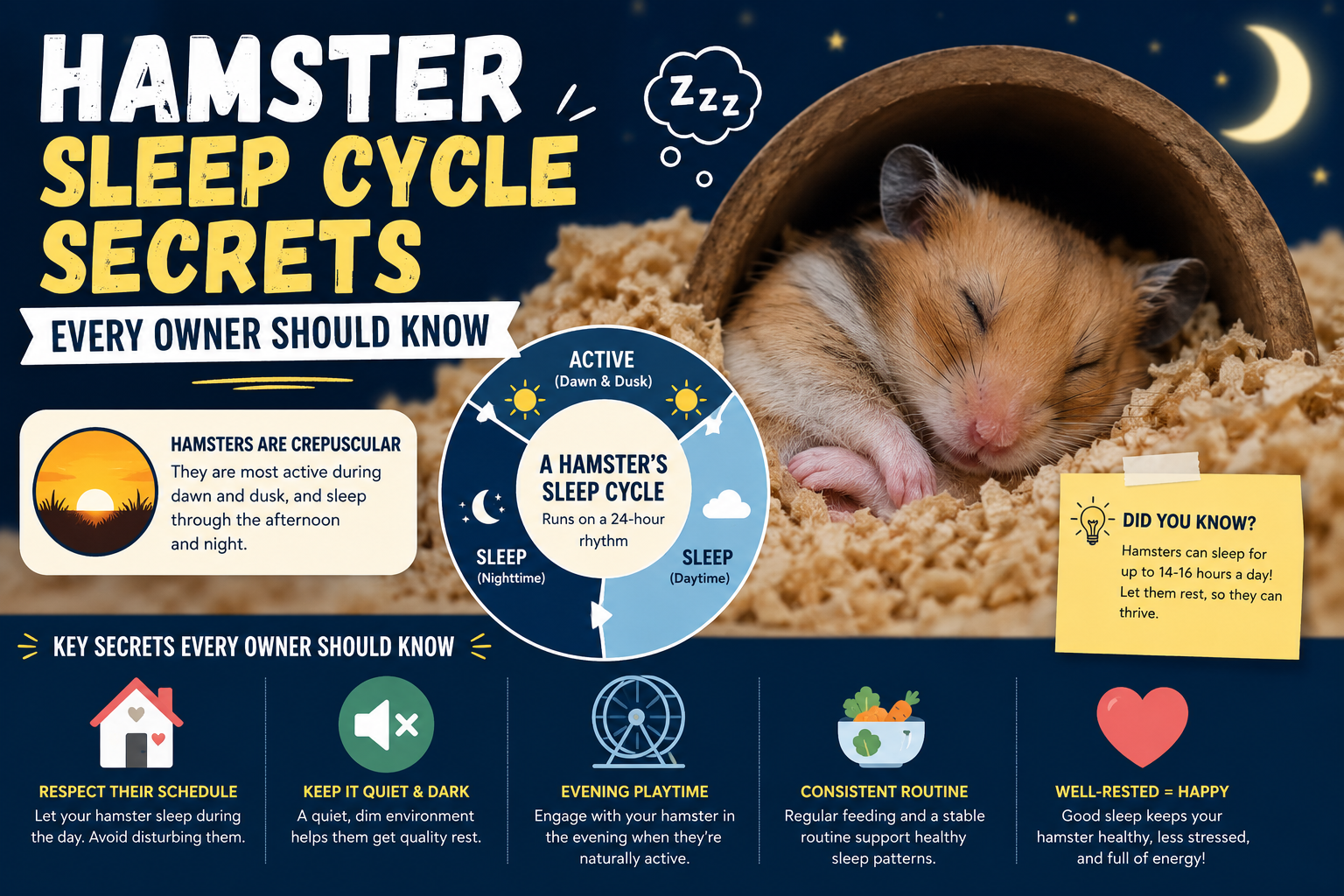
Unlike humans, hamsters are naturally nocturnal or crepuscular animals. This means they become most active during the evening, nighttime, or early morning hours. In the wild, this sleeping pattern helps them avoid predators and extreme daytime temperatures. Even domesticated hamsters still carry these instincts today.
Because of this natural rhythm, forcing a hamster to stay awake during the day can create stress and confusion for the animal. Some hamsters may become irritated, nervous, or less social when their sleep is constantly interrupted. Others may begin hiding more often or avoiding interaction altogether.
One of the biggest mistakes new owners make is expecting hamsters to follow a human schedule. People often try to play with them during the afternoon because that is when they are awake themselves. However, waking a sleeping hamster repeatedly can negatively affect its behavior over time.
Experienced hamster owners understand that patience is important. A hamster that wakes naturally during the evening is usually more energetic, curious, and friendly than one suddenly pulled from deep sleep during the daytime.
Another interesting secret about hamster sleep is that not all hamsters follow the exact same routine. Syrian hamsters, dwarf hamsters, and Roborovski hamsters often show slightly different activity patterns. Some become active just after sunset, while others may wait until midnight before fully exploring their environment.
This is why some owners describe their hamsters as “tiny nighttime roommates.” Once the house becomes quiet and dark, the hamster suddenly comes alive. Wheels start spinning, tunnels become busy, and food gathering begins.
Hamsters are surprisingly busy creatures during their active hours. Many spend time organizing bedding, rearranging food storage areas, cleaning themselves, and exploring every corner of their habitat. To humans, this nighttime energy may seem random, but for hamsters it is completely natural behavior.
Lighting also plays a major role in hamster sleep quality. Bright lights during nighttime can sometimes confuse their natural internal clock. Constant exposure to artificial lighting may interfere with their activity patterns and rest cycles.
For this reason, many hamster owners now create calmer nighttime environments. Soft room lighting, reduced noise, and stable surroundings help support healthier routines. Some owners even place cages in quieter areas of the home where daytime interruptions are limited.
Temperature is another hidden factor affecting hamster sleep. Hamsters prefer comfortable environments that are neither too hot nor too cold. Extreme temperatures can disrupt sleeping patterns and increase stress levels. In colder conditions, hamsters may become less active, while excessive heat can lead to exhaustion or dangerous health problems.
A comfortable sleeping space inside the cage is equally important. Hamsters naturally enjoy burrowing and nesting. Soft bedding materials allow them to create hidden sleeping chambers where they feel protected and secure. Many hamsters spend significant time building cozy underground sleeping areas before resting.
Interestingly, hamsters do not always sleep continuously for long periods the way humans often do. Some hamsters take multiple rest periods throughout the day and night. Owners may occasionally notice short bursts of activity during daylight hours followed by another return to sleep.
This flexible sleeping style is one reason hamsters can appear unpredictable to people unfamiliar with their behavior.
Noise sensitivity is another important but rarely discussed topic. Hamsters have very sensitive hearing. Loud televisions, constant movement, barking dogs, or noisy children can interrupt rest and create anxiety. Over time, excessive noise may even cause some hamsters to become shy or defensive.
Calm environments help hamsters feel safer and more relaxed. When hamsters feel secure, they are more likely to interact positively with humans during their active periods.
Technology is also quietly affecting hamster sleep habits in modern homes. LED lights, phone screens, gaming setups, and televisions often remain active deep into the night. Because hamsters are highly sensitive to light and environmental changes, these modern habits can sometimes disturb their natural cycle.
Some hamster owners are now adopting what they call “low-stimulation evenings” for their pets. This includes dimming lights, lowering sound levels, and avoiding unnecessary cage disturbances during nighttime activity hours.
Diet can influence sleep quality as well. Hamsters that receive balanced nutrition and proper hydration often maintain healthier energy patterns. Fresh vegetables, quality hamster food, seeds, and occasional healthy treats help support normal activity levels.
Meanwhile, poor diets filled with sugary snacks or unhealthy foods may contribute to sluggish behavior and lower nighttime energy.
Exercise is another essential part of healthy sleep behavior. Hamsters are naturally active animals that need physical movement to stay mentally and physically balanced. Wheels, tunnels, climbing toys, and exploration spaces allow them to release energy naturally.
A bored hamster may become restless, inactive, or stressed. Some even develop repetitive behaviors due to lack of stimulation.
This is why modern hamster habitats are becoming more enrichment-focused. Instead of tiny cages with limited movement, many owners now create larger, more natural environments designed to encourage exploration and healthy nighttime activity.
Social media has also influenced hamster care in unexpected ways. Videos showing relaxing hamster nighttime routines, aesthetic cage setups, and enrichment ideas have introduced millions of people to better hamster care practices.
However, experts continue reminding owners that every hamster has a unique personality. Some are naturally social and curious, while others remain cautious and independent regardless of training or environment.
Learning a hamster’s personal rhythm takes time. Owners who observe carefully often begin recognizing patterns — when their hamster prefers waking up, what foods it enjoys most, and how it reacts to different surroundings.
This observation helps build trust between hamster and owner.
One of the most rewarding moments for hamster owners is when the pet begins approaching voluntarily during nighttime hours. A hamster that feels safe will often come forward for treats, climb onto a hand, or calmly explore nearby spaces without fear.
These small interactions may seem simple, but they reflect emotional comfort and reduced stress.
Hamster sleep habits may appear mysterious at first, but they reveal an important lesson about animal care. Many pets do not naturally fit into human schedules, and understanding their instincts creates healthier relationships.
Instead of forcing pets to adapt completely to human lifestyles, responsible owners learn how to respect the natural behaviors animals were born with.
In 2026, more pet owners are beginning to realize that good pet care involves more than feeding and cleaning cages. Emotional comfort, proper sleep, reduced stress, and environmental balance are becoming essential parts of modern small-pet wellness.
The growing interest in hamster sleep cycles reflects this larger shift in pet care culture.
People are no longer viewing hamsters as simple children’s pets. They are beginning to appreciate them as intelligent, sensitive animals with unique routines, emotional responses, and natural instincts.
Understanding those nighttime habits can completely transform how owners care for their tiny companions.
And sometimes, the quiet sound of a hamster wheel spinning late at night is not just random noise. It is the sound of a small animal living according to the rhythm nature designed for it.