
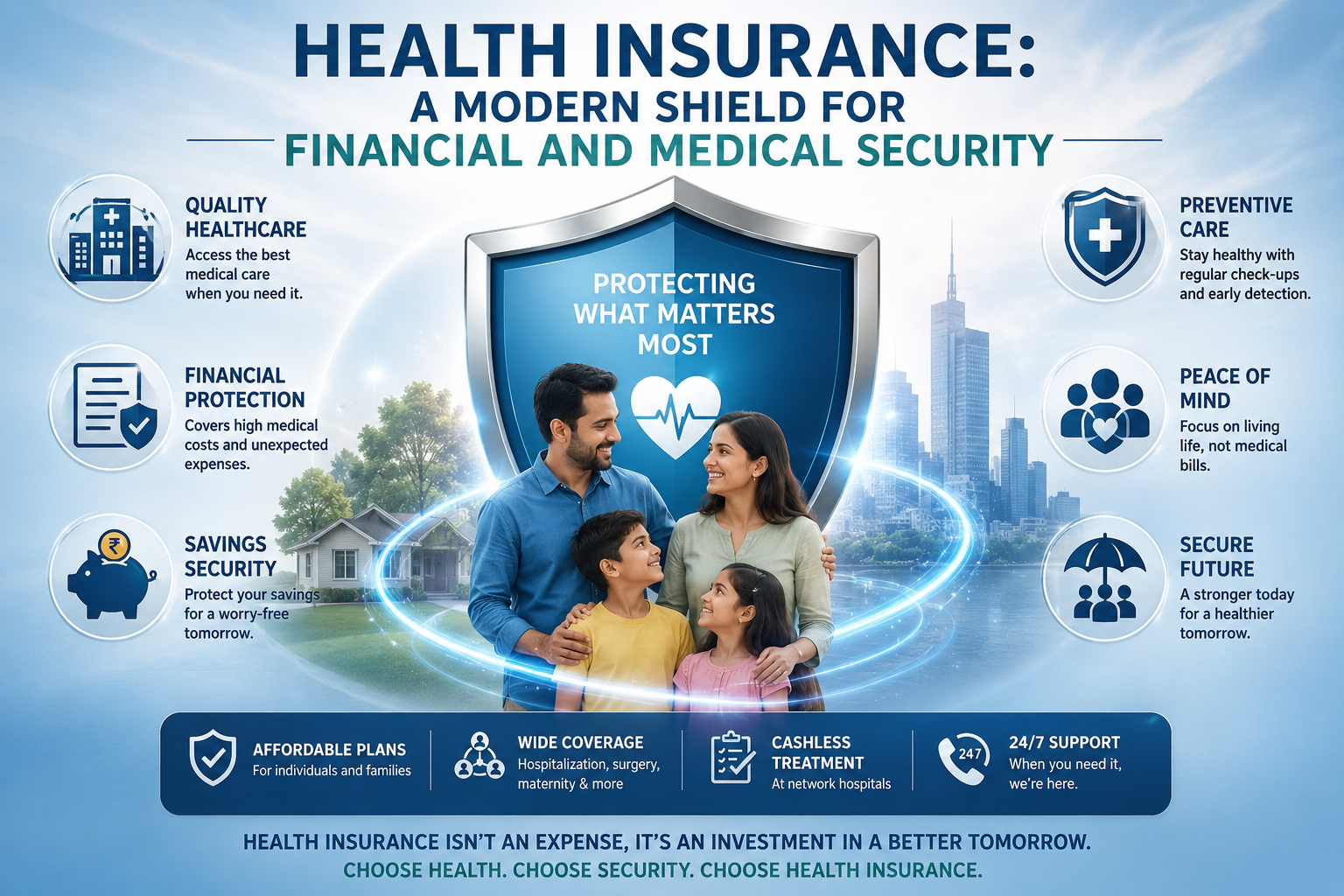
In today’s uncertain world, health has become one of the most valuable assets a person can have. At the same time, medical costs are rising faster than ever before. A simple hospital visit, a diagnostic test, or an emergency treatment can place a heavy financial burden on families. This is where health insurance plays a powerful and protective role.
Health insurance is not just a financial product. It is a safety system that helps people access medical care without worrying about immediate costs. It gives individuals and families the confidence that, in times of illness or emergency, they will not face financial collapse.
Understanding What Health Insurance Really Means
Health insurance is an agreement between a person and an insurance provider. The individual pays a fixed amount, usually monthly or yearly, known as a premium. In return, the insurance company agrees to cover a portion or all of the medical expenses when the insured person needs treatment.
These expenses can include hospital stays, surgeries, doctor consultations, diagnostic tests, medications, and sometimes even preventive care.
The main purpose of health insurance is simple: to reduce financial stress during medical emergencies and ensure access to quality healthcare.
Why Health Insurance Has Become So Important
A few decades ago, healthcare costs were relatively lower, and many people could manage expenses without insurance. But today, medical inflation has changed the situation completely.
Hospital bills can reach thousands or even millions in severe cases. Even routine treatments in private hospitals can be expensive. Without insurance, many families are forced to use savings, borrow money, or delay treatment.
Health insurance has become important because it:
- Protects savings from being drained by medical bills
- Provides access to better hospitals and doctors
- Covers emergency treatments that are unpredictable
- Reduces stress during health crises
- Encourages regular health checkups and preventive care
In simple terms, health insurance acts as a financial shield during one of life’s most stressful moments.
How Health Insurance Works in Real Life
To understand health insurance better, imagine a simple situation.
A person pays a monthly premium to an insurance company. After a few months, that person suddenly needs surgery due to an accident. The hospital bill is very high.
Instead of paying the full amount, the insurance company covers most of the expenses according to the policy terms. The patient may only need to pay a small portion, depending on the plan.
This system ensures that medical emergencies do not turn into financial disasters.
Types of Health Insurance Plans
Health insurance is not the same for everyone. Different types of plans exist to meet different needs.
1. Individual Health Insurance
This plan covers a single person. It is ideal for individuals who want personal protection against medical expenses.
2. Family Floater Insurance
This type of plan covers the entire family under one policy. The insured amount can be used by any family member. It is often more cost-effective than separate policies.
3. Group Health Insurance
Many companies provide health insurance to their employees. This is known as group insurance. It helps workers access medical care through their employer.
4. Critical Illness Insurance
This plan covers serious diseases such as cancer, heart attack, or kidney failure. It provides a lump sum amount when diagnosed with a covered illness.
5. Senior Citizen Health Insurance
This plan is designed for older individuals. It covers age-related health issues and provides financial support during medical treatment.
Key Benefits of Health Insurance
Health insurance offers more than just financial support. It provides long-term security and peace of mind.
One of the biggest benefits is financial protection. Medical emergencies can happen without warning, and insurance ensures that savings remain safe.
Another important benefit is access to better healthcare. Many insurance plans allow treatment in high-quality hospitals without worrying about cost.
Health insurance also encourages preventive care. Regular checkups, early diagnosis, and screenings are often included in plans, helping detect diseases early.
It also reduces emotional stress. During illness, families can focus on recovery instead of worrying about bills.
The Role of Health Insurance in Modern Society
In modern life, health insurance is becoming a necessity rather than a luxury. With busy lifestyles, pollution, stress, and changing diets, health risks are increasing.
Insurance systems help society manage these risks collectively. When many people contribute premiums, the risk is shared, making healthcare more affordable for everyone.
It also supports hospitals and healthcare systems by ensuring a steady flow of payments, improving medical services overall.
Common Misunderstandings About Health Insurance
Many people avoid health insurance due to misunderstandings.
One common belief is that insurance is only needed by sick or older people. In reality, insurance is most beneficial when purchased early and when a person is healthy.
Another misunderstanding is that health insurance is too expensive. While some plans can be costly, there are many affordable options available depending on coverage and budget.
Some people also believe they will never need it. However, medical emergencies are unpredictable, and anyone can face unexpected health issues.
Factors to Consider Before Choosing Health Insurance
Choosing the right health insurance plan is important. Several factors should be considered carefully.
Coverage is one of the most important aspects. A good plan should cover hospitalization, surgeries, and major treatments.
Premium cost should also match your budget. However, the cheapest plan is not always the best.
Network hospitals are another key factor. A wide network ensures easier access to treatment.
Waiting periods, claim processes, and policy terms should also be understood clearly before making a decision.
Challenges in Health Insurance Awareness
Even though health insurance is widely available, many people still do not have proper coverage.
Lack of awareness is a major issue. Some individuals do not fully understand how insurance works or why it is important.
Complex policy terms also discourage people from buying insurance. Many find it confusing and difficult to compare plans.
In some regions, affordability can also be a barrier.
However, with better education and simpler policies, these challenges can be reduced over time.
The Future of Health Insurance
The future of health insurance is becoming more digital and personalized. Online platforms now make it easier to buy and manage policies.
Technology is also improving claim processes, making them faster and more transparent. Artificial intelligence and data systems are helping companies design better plans based on individual needs.
In the future, health insurance may also focus more on wellness programs, encouraging people to stay healthy rather than only treating illness.
Conclusion
Health insurance is one of the most important tools for financial and medical security in the modern world. It protects individuals and families from unexpected medical expenses and ensures access to quality healthcare.
More than just a policy, it is a long-term investment in peace of mind and stability. As healthcare costs continue to rise, having health insurance is no longer optional—it is essential.
By understanding its importance and choosing the right plan, individuals can secure not only their health but also their financial future.



[…] the world of Mexican football, few rivalries carry the emotional weight and tactical intensity of Pumas UNAM versus Cruz Azul. While many fans focus on goals, celebrations, and dramatic moments, there is […]
[…] was an elderly woman who lived two doors down from my grandmother. During a heat wave she kept her windows shut the whole time because she didn’t want her […]